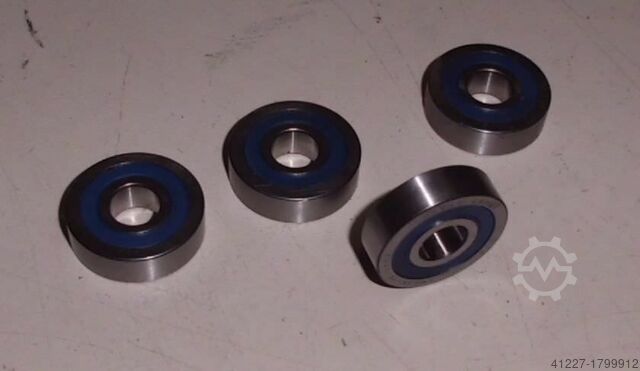
Used Self Aligning Ball Bearing for sale (7,644)
Sort results
- Lowest price Highest price
- Newest listings Oldest listings
- Shortest distance Farthest distance
- Newest year of manufacture Oldest year of manufacture
- Latest update Oldest update
- Manufacturer A to Z Manufacturer Z to A
- Relevance
- Lowest price
- Price
- Highest price
- Price
- Newest listings
- Release date
- Oldest listings
- Release date
- Shortest distance
- Distance
- Farthest distance
- Distance
- Newest year of manufacture
- Year of construction
- Oldest year of manufacture
- Year of construction
- Latest update
- Update
- Oldest update
- Update
- Manufacturer A to Z
- Manufacturer
- Manufacturer Z to A
- Manufacturer
- designation from A to Z
- Description
- designation from Z to A
- Description
- Model from A to Z
- Model
- Model from Z to A
- Model
- Lowest reference
- Ref.No.
- Highest reference
- Ref.No.
- Shortest runtime
- Runtime
- Longest duration
- Runtime
- Relevance
- Relevance
Listing
Balaguer
19,532 km
Self-aligning weld-on turners
VAPM-10Tn
Call
Condition: new, load capacity: 10,000 kg, rotational speed (distance/time): 1,000 mm/min, Capacity: 10Tn
Type: Self-aligning
Ffodpfouf A Ahsx Aa Ejw
Minimum diameter: 320 mm
Maximum diameter: 2.800 mm
Wheel dimensions: 300 x 160 mm (Diameter x Width)
Wheel coating: Polyurethane rubber
Rotation speed (Min.-Max.): 100 - 1.000 mm/min.
Motor power: 1,1 KW
Inverter: Danfoss
Electrical components: Schneider
Included: 1 motor-driven + 1 idler
Control unit with 6 meter extension pole and digital display with the speed of rotation.
Listing
Wiefelstede
18,341 km
Linear ball bearings
unbekanntØ 30/47/L68 mm
Call
Condition: excellent (used), Roller bearings, ball bearings, barrel bearings, bearings, rolling bearings, thrust bearings, linear ball bearings
Ffsdpfx Aasfgyf Ij Eew
-Linear ball bearings
-Inner diameter: 30 mm
-Outer diameter: 47 mm
-Length: 68 mm
-Price: per piece
-Quantity: 117 pieces
-Weight: 0.3 kg/piece
Listing
Wiefelstede
18,341 km
Precision universal angular contact ball bearings
IBC71944
Call
Condition: used, Ball bearings, bearings, bearing set, accurate, radial ball bearings, roller bearings
-Type: 71944CTP2HUL
-Lubricating groove
-Bore: Ø 220 mm
-Outer diameter: 300 mm
-Width: 75 mm
Fsdpfx Asd Nw H Dea Ejfw
-Number: 4x bearings available
-Price: per piece
-Weight: 14 kg

Get information now
+44 20 806 810 84
+44 20 806 810 84
List now
*per listing / month
Listing
Wiefelstede
18,341 km
Deep groove ball bearings
FAGFAG 6218MA.C3
Call
Condition: used, Cylindrical roller bearings, spherical roller bearings, deep groove ball bearings
-FAG: 6218MA.C3
-Outer diameter: 160 mm
-Inside diameter: 90 mm
-Width: 30 mm
-Price: per piece
Fodsd S Ibbjpfx Aa Ejfw
-Number: 2 pieces
-Weight: 2.7 kg
Listing
Wiefelstede
18,341 km
Axial deep groove ball bearings
FAG51164PM
Call
Condition: used, Axial deep groove ball bearings, axial deep groove ball bearings, thrust ball bearings, thrust bearings
-Manufacturer: FAG, axial deep groove ball bearing 51164PM, OVP
-Outer diameter: 400 mm
Fsdjf S Nclopfx Aa Esfw
-Dimension: Ø 400 x 65 mm
-Weight: 18.4 kg
Discover more used machines
Listing
Wiefelstede
18,341 km
Deep groove ball bearings
HOMAG Group4-006-10-2953
Call
Condition: used, Ball bearings, deep groove ball bearings
Ffsdeb A S Dkjpfx Aa Esw
-Number: 80x stock available
-Price: per piece
-Interior diameter: Ø 10 mm
-Outer diameter: Ø 28 mm
-Width: 8 mm
-Weight: 0.2 kg/piece
Listing
Wiefelstede
18,341 km
Axial groove ball bearings
ISB51144M
Call
Condition: excellent (used), Axial groove ball bearings, axial groove ball bearings, axial ball bearings, axial bearings
-Manufacturer: ISB, axial ball bearing 51144M
-Main dimensions according to: ISO 9001:2000
-Outer diameter: 270 mm
-Width: 37 mm
Ffjdef Ngcgepfx Aa Ejw
-Inner diameter: 220 mm
-Number: 4x ball bearings available
-Price: per piece
-Weight: 4.5 kg
Listing
Boxmeer
18,574 km
Ball bearing
NSK6203 C2
Call
Year of construction: 1992, condition: new, Brand NSK
Fsdpsqa Anfefx Aa Eofw
Model: 6203 C2
Year of construction: Unused
Weight (kg) approx. 12460 gross / 11880 net
Number of pieces in stock 170.280 ( approx)
Made in Japan
Comments single row deep grove ball bearing , packaging by 360 pieces in carton
Sales condition Please contact us for min quantity
Listing
Boxmeer
18,574 km
Ball bearing
NXZMix bearing lot ca 11300 kg
Call
Year of construction: 2019, condition: new, Brand NXZ
Model: 6316, 6318, 6319, 6320, 6326, 6328, 30224, 30315, 30316, 30324, 30328, 30330, 32221, 32315, 32316, 32317
Year of construction: Unused
Weight (kg) approx 11360
Made in China
Comments Single packed or wrapped, packed in cartons by multiple pieces
Ffedpfsqa An Ujx Aa Eew
Selling condition Selling as full quantity only
Listing
Boxmeer
18,574 km
Ball bearing
SKF6202-Z/QE6
Call
Year of construction: 1990, condition: new, Brand SKF
Type 6202-Z/QE6
Year of manufacture: Unused
Weight (kg) approx. 9400 gross / 8780 net
Number of pieces in stock 193.200 ( approx)
Made in France
Comments Contact us for min. quantity
Ffedpfxsqa Am Ts Aa Eew
Verkoopcondities Contact us for min. quantity
Listing
Boxmeer
18,574 km
Ball bearing
C&UTM6307/41-2RSTN2
Call
Year of construction: 2019, condition: new, Brand C&U Group Shanghai Bearing Co Ltd
Model: TM6307/41RS
Ffjdpfx Ajqa Anqja Eow
Year of manufacture: Unused
Weight (kg) approx 6790 net
Number of pieces in stock 17350 ( approx )
Made in China
Comments Contact us for min. quantity
Terms of sale Contact us for min. quantity
Listing
Balaguer
19,532 km
Self-aligning welding turner 100T
OerlikonLP100
Call
Condition: excellent (used), Year of construction: 2009, Brand: Oerlikon / SAF
Model: LP100
Year 2009
Type: Self-aligning/Self-centering
Capacity: 100T
Diameter range: 2000 to 4500 mm.
Turning speed: 100-1200mm/min.
Wheel width: 235mm
Ffodpfxolffdye Aa Eew
Wheel diameter: 450mm
Distance between translation wheels: 1930mm between tabs
Translation speed: 4m/min.
It has a cable control with buttons for the direction of rotation, speed variator and translation of the turner.
Power: Three-phase 380V
They have manual and Ce.
Listing
Rödermark
18,557 km
Induction heater / Ball bearing heating device
SKFTIH 120
Call
Condition: good (used), Year of construction: 2005, Offer 25190
Technical Data approx.:
Ffsdpfx Aaowp Exde Eow
- max. temperature 400°C
- temperature control 0 - 250°C
- time automatic 0 - 60 min.
- working space under the yoke 320 - 200 mm
- max. ball bearing weight 250 kg
- drive 400 V / 12 kVA
- space requirement approx. W 850 x D 600 x H 1150 mm
- weight approx. 150 kg
- yokes 40 + 50 + 80 mm
- mobile base
Listing
Andernach
18,604 km
Self-aligning rotating device
ArtWeldingZT20
Call
Year of construction: 2023, condition: used, machine/vehicle number: 0165780, +++Special Price+++
Robust, self-aligning container rotating device
1 used, well-maintained rotating device with a load capacity of 20 t, consisting of:
1 x drive unit
Fsdpowhc Uaofx Aa Ejfw
1 x idler unit
1 x handheld remote control with digital rotation speed display
1 x dual foot pedal for start/stop/rotate left/right
Technical Specifications
Type: ZT20
Total load: 20 t
Load per unit: 15 t
Roller diameter/width: 381 x 170 mm
Roller material: Polyurethane
Rotation speed: 100–1,000 mm/min, continuously adjustable via frequency converter
Component diameter: 400–4,000 mm
Electrical system: Freestanding control cabinet (can also be mounted on the machine upon request)
Control system: Wired handheld remote control
Connection voltage: 380/400 V, 3-phase, 50 Hz
The system can also be rented. Upon purchase, the rental fee can be credited upon request.
Photo shows a new system.
We are happy to arrange delivery throughout Europe.
Listing
Zheng Zhou Shi
10,533 km
Ball mill for powder and mining plant
Mingyuan Ball Mill For Fine PowderPowder grinding mill for coal, silica
Call
Condition: new, functionality: fully functional, power: 55 kW (74.78 HP), Year of construction: 2026, Ball Mill for Powder and Mining Plant: Structure, Function, and Technical Details
A ball mill is a key grinding machine widely used in mining, metallurgy, cement, chemical, and powder-making industries. It is designed to grind various ores and other materials into fine powder through impact and attrition between steel balls and the material inside a rotating cylindrical shell. In mining plants, ball mills are essential for ore beneficiation, preparing materials for flotation, magnetic separation, or leaching processes. In powder production, they ensure uniform particle size and high surface area for further processing.
Working Principle
The ball mill operates on a simple yet effective principle: as the cylindrical shell rotates around its horizontal axis, the grinding media (steel or ceramic balls) are lifted along the inner wall by centrifugal force and friction. When they reach a certain height, they fall freely, striking and grinding the material below. This repeated motion causes both impact and abrasion, reducing the material to the desired fineness. The grinding process can be performed in dry or wet conditions depending on the application.
Structural Composition
A standard ball mill consists of several main components:
Feeding part: Equipped with a feeder or screw conveyor to ensure uniform material input.
Discharging part: Can be grate type or overflow type, depending on the discharge method.
Rotating part: The cylindrical shell made of steel plates, lined with wear-resistant liners.
Transmission system: Includes motor, reducer, small transmission gear, and electrical control.
Grinding media: Steel balls or ceramic balls of different diameters for efficient grinding.
The internal liner design and ball size distribution are optimized to achieve maximum grinding efficiency and minimal energy consumption.
Technical Details
Typical Specifications:
Feeding size: ≤25 mm
Discharge size: 0.074–0.4 mm
Capacity: 0.65–615 t/h (depending on model and material hardness)
Cylinder speed: 18–38 r/min
Power: 18.5–4500 kW
Liner material: High manganese steel, rubber, or alloy steel
Grinding media load: 30–45% of cylinder volume
Operating Modes:
Dry grinding: Suitable for materials that must remain moisture-free, such as cement clinker, limestone, and quartz.
Wet grinding: Common in ore beneficiation, where water or slurry improves grinding efficiency and particle uniformity.
Ffedpfx Aaeq Nf U Eo Eow
Application in Mining Plants
In mining operations, ball mills are used after crushing to further reduce ore size and liberate valuable minerals. They are integrated into grinding circuits with classifiers, hydrocyclones, and flotation systems. The ground material is classified by size, and oversized particles are returned to the mill for regrinding. This closed-circuit system ensures consistent product fineness and efficient energy use.
Common Applications:
Gold, copper, iron, and zinc ore grinding
Cement clinker and slag processing
Silicate and ceramic powder production
Coal and mineral powder preparation
Conclusion
A ball mill is an indispensable piece of equipment in both powder production and mining beneficiation plants. Its ability to grind materials into fine, uniform particles makes it vital for downstream processes such as flotation, sintering, and chemical reactions.
Listing
Zheng Zhou Shi
10,533 km
Crushing equipment
Mingyuan Dry and Wet Ball MillCustomerizable Model for ball mill plant
Call
Condition: new, functionality: fully functional, Year of construction: 2026, Dry and Wet Ball Mill: Structure, Operation, and Technical Details
A ball mill is a fundamental grinding device used in mineral processing, cement manufacturing, chemical production, and other industrial applications. It works by rotating a cylindrical shell filled with grinding media—usually steel balls—causing impact and friction that reduce materials to fine powder. Based on the grinding environment, ball mills are classified into dry and wet types, each suited for specific materials and process requirements.
Working Principle
Both dry and wet ball mills operate on the same mechanical principle. The rotating cylinder, driven by a motor through a gear system, lifts the grinding media and material along the inner wall. As the rotation continues, the balls fall under gravity, striking and grinding the material. The difference lies in the presence or absence of a liquid medium during grinding.
Dry Ball Mill
A dry ball mill is used when the material must remain moisture-free or when water could affect product quality. It is commonly applied in cement clinker, limestone, quartz, and refractory material grinding. The discharge can be either grate type or overflow type, depending on the desired fineness.
Technical Features:
Fjdpoq Nx Alefx Aa Eofw
Feeding size: ≤25 mm
Discharge size: 0.075–0.4 mm
Capacity: 0.65–90 t/h
Liner material: High manganese steel or wear-resistant alloy
Drive system: Gear-driven or direct-coupled motor
Dust control: Equipped with air exhaust and dust collector
Advantages:
Suitable for materials sensitive to moisture
No drying process required after grinding
Lower corrosion risk and simpler maintenance
Easier material classification and separation
Limitations:
Dry grinding produces more dust and heat, requiring efficient ventilation and dust collection systems.
Wet Ball Mill
A wet ball mill operates with water or another liquid medium added to the material. The slurry formed during grinding improves efficiency by reducing friction and preventing excessive heat buildup. It is widely used in ore beneficiation, ceramics, and chemical industries.
Technical Features:
Feeding size: ≤25 mm
Discharge size: 0.074–0.2 mm
Capacity: 0.65–615 t/h
Liner material: Rubber or high-chromium steel
Discharge method: Overflow or grate type
Auxiliary equipment: Classifier, pump, and thickener for slurry circulation
Advantages:
Higher grinding efficiency and finer particle size
Reduced dust and noise levels
Continuous operation suitable for beneficiation circuits
Better control of particle uniformity
Limitations:
Requires drying if the final product must be in powder form and involves more complex slurry handling.
The selection between dry and wet grinding depends on the material characteristics, downstream process, and environmental conditions. Dry mills are preferred for materials that must stay moisture-free, while wet mills are ideal for fine grinding and slurry-based processes.
Conclusion
Dry and wet ball mills share the same mechanical structure but differ in their grinding environment and application scope. The dry type offers simplicity and low maintenance for moisture-sensitive materials, while the wet type provides higher efficiency and finer output for mineral and chemical processing. Understanding their technical parameters and operational differences ensures optimal equipment selection, improved productivity, and reliable performance in industrial grinding operations.
Listing
Zheng Zhou Shi
10,533 km
Mill / grinding mill
Batch Ball Mill, Silica grinding millQuartz ball mill, silica powder grinding
Call
Year of construction: 2026, condition: new, ceramic ball mill ,Batch ball mill ,also called ceramic ball mill ,it is used for fine grinding of feldspar,quartz,clay,ore and so on.The ceramic ball mill is mainly used for material mixing, grinding,uniform product fineness,and saving power.It can be dry or wet.The machine can use different liner types according to production needs to meet different needs.The fineness of the grinding operation is controlled by the grinding time
ceramic ball mill Working principle
when ball mill working,steel balls inside drum will rotate with the drum to some height,and then steel balls fall down with materials to reach the point of grinding.
Working Principle of Ceramic ball mill
ceramic ball mill ,Intermittent ball mill grinding operation is finished in the cylinder body. When the cylinder rotates, materials ascend to a certain height and then fall along a certain path due to the balls' gravity. Two forces are generated on the balls inside. One is the force on balls through tangent direction; the other is a opposite force in the contrast to the diameter of balls, as a result of the force generated when the balls slide down. These two forces will constitute a couple for the steel balls. The balls are squeezed between the cylinder and the adjacent steel balls, so the couple can make unequal-sized friction force. The balls will orbit along with the cylinder axis and then fall down, which can produce a strong impact force on the ores in the cylinder body and, as a result, the ores will be crushed. In conclusion, the ores in the cylinder body are mainly crushed by composite effect of peeling force, impact force and extrusion force.
Ceramic ball mill also named Intermittent ball mill which adopts the wet intermittent operation, is used for fine grinding and mixing the material such as feldspar, quartz, clay ceramic raw materials. The discharging and the mud size can through through 1000 sieve pore. This machine is high milling machinery, materials should be Broken in the fineness of the state into the grinding mill to get the highest efficiency and economic benefits.
The cement mill is key equipment for the grinding process of the cement clinker after the crushing process of it. It is mainly used in the cement silicate product industry. After long term design and manufacture of the cement mill, our company now has series of cement mill with various specifications to meet with different requirement from our customers.
Features of Cement Mill
Ffsdovzx Auepfx Aa Esw
Our company adopts suitable transmission methods according to different specifications. We have brim drive and center drive as transmission form. The cylinder adopts new type step lining to increase the grinding area. And it is easily repairable and changeable. The new designed separate-chambered structure adopts flexible lifting blade and fixed lifting blade and it is easily fixed and repaired.
Technical Details
We have different models and options for different requirements, please contact us for more info.
Listing
Zheng Zhou Shi
10,533 km
Glass grinding machine
Henan Mingyuan Ceramic /Silica Ball MillBatch ball mill for glass ceramic making
Call
Condition: new, Year of construction: 2026, power: 7.5 kW (10.20 HP), Batch ball mills find applications in various industries where the processing of materials in discrete batches is required. The versatility of batch ball mills makes them suitable for a range of applications. Here are some common batch ball mill applications:
1. Ceramics Industry:
- *Glaze Preparation:* Batch ball mills are extensively used in the ceramics industry for preparing glazes. Raw materials such as feldspar, quartz, and clay are ground with ceramic balls to achieve the desired particle size for glaze formulation.
Ffodpfx Aasq I N H Ns Eow
2. Chemical Industry:
- *Material Grinding:* Batch ball mills are used for grinding and blending various chemical materials. This includes the production of pigments, dyes, and other specialty chemicals where precise particle size control is crucial.
3. Pharmaceuticals:
- *Drug Formulation:* In pharmaceutical manufacturing, batch ball mills are used for grinding and blending powders to create drug formulations. The controlled environment provided by these mills is essential for maintaining the integrity of pharmaceutical compounds.
4. Food Industry:
- *Ingredient Mixing:* Batch ball mills may find application in the food industry for mixing and grinding ingredients. This can include the production of food additives, flavorings, and other powdered or granular products.
5. Mining and Minerals Processing:
- *Ore Grinding:* Batch ball mills are used in mining and minerals processing for grinding minerals and ores. The controlled grinding helps in obtaining the desired particle size for subsequent processes, such as mineral separation or extraction.
6. Paints and Coatings:
- *Pigment Dispersion:* In the paints and coatings industry, batch ball mills are employed for dispersing pigments into paint formulations. Achieving a uniform particle size is crucial for the quality and appearance of the final coating.
7. Building Materials:
- *Raw Material Grinding:* Batch ball mills are used in the preparation of raw materials for the production of building materials, such as cement and concrete. Grinding of materials like limestone and clay helps in obtaining the desired fineness for subsequent processes.
8. Electronic Materials:
- *Ceramic Powder Processing:* In the electronics industry, batch ball mills can be employed for processing ceramic powders used in the production of electronic components and insulating materials.
9. Research and Development:
- *Material Testing:* Batch ball mills are often used in research and development laboratories for testing and optimizing material formulations. They provide a controlled environment for small-scale processing and experimentation.
10. Customized Applications:
- *Specialized Processes:* Batch ball mills can be adapted for various specialized processes in different industries where precise grinding and mixing are required. Custom modifications can be made based on specific application requirements.
When using a batch ball mill, it's important to consider factors such as the type of material being processed, desired particle size, and the specific requirements of the end product. Additionally, following the manufacturer's guidelines and maintaining proper operating conditions are essential for efficient and effective milling processes.
Technical details
We have different options for different requirements, please contact our team for more info.
Listing
Zheng Zhou Shi
10,533 km
Cement mill,clinker grinding plant
Clinker grinding mill / cement ball millcement grinding with air classifier
Call
Year of construction: 2026, condition: new, functionality: fully functional, A cement clinker grinding mill is a specialized equipment used to grind the hard nodular clinker into fine powder, which is cement. Most cement is currently ground in ball mills and also vertical roller mills, which are more effective than ball mills.
Here are key features and information about cement clinker grinding mills:
1. Raw Materials:
- The main raw material for making cement is clinker, which is produced by sintering limestone and clay. Other materials such as gypsum, fly ash, or slag may also be added during the grinding process to achieve specific properties.
2. Grinding Process:
- The clinker and other additives are finely ground in the grinding mill to produce cement. The grinding process is a crucial step in cement production and contributes significantly to the final quality of the product.
3. Types of Mills:
- Ball Mills: Traditional ball mills are commonly used for grinding clinker. They operate by rotating a cylinder with steel grinding balls, causing the balls to fall back into the cylinder and onto the material to be ground.
- Vertical Roller Mills (VRM): VRM technology has become increasingly popular for clinker grinding. These mills use a rotating table with rollers to crush and grind the clinker, providing energy efficiency and a smaller footprint compared to ball mills.
4. Gypsum Addition:
- Gypsum is often added during the grinding process to control the setting time of the cement. It prevents flash setting of the clinker and facilitates the formation of a workable and pumpable cement paste.
5. Quality Control:
- Quality control measures, such as monitoring the fineness of the cement, chemical composition, and other properties, are implemented during the grinding process to ensure the final product meets the required specifications and standards.
6. Clinker Cooling:
- Before grinding, the clinker is produced by heating the raw materials in a kiln. The clinker is then cooled before entering the grinding mill to prevent excessive heat build-up during grinding.
7. Dust Collection and Environmental Considerations:
- Dust collectors and air pollution control systems are often employed to capture and control the dust generated during the grinding process, addressing environmental and safety concerns.
8. Packaging and Storage:
- After grinding, the cement is typically stored in silos before being packaged in bags or dispatched in bulk for distribution to construction sites or for sale in the market.
Ffodpfx Aaeq Nfbho Eew
Cement clinker grinding mills play a crucial role in the cement production process, and advancements in technology continue to improve the efficiency and environmental sustainability of the grinding process.
Technical details
We have different options for different requirements, please contact our team for more info.
Listing
Zheng Zhou Shi
10,533 km
Powder grinding mill
ball mill for mining &fine powder makingsilica/Barite/limestone powder plant
Call
Condition: new, Year of construction: 2026, power: 300 kW (407.89 HP), Ball Mill for Mining & Fine Powder Making:
A ball mill is a fundamental grinding device widely used in mining, metallurgy, cement, and chemical industries. It is designed to grind ores and other materials into fine powder through impact and attrition between steel balls and the material inside a rotating cylindrical shell. In mining plants, ball mills are essential for ore beneficiation, while in powder-making industries, they ensure uniform particle size and high surface area for further processing.
Working Principle
The ball mill operates on the principle of impact and friction. As the cylindrical shell rotates around its horizontal axis, the grinding media—usually steel or ceramic balls—are lifted along the inner wall by centrifugal force and friction. When they reach a certain height, they fall freely, striking and grinding the material below. This repeated motion breaks down the material into fine particles. The process can be carried out in dry or wet conditions depending on the application.
Structural Composition
A standard ball mill consists of several main components:
Feeding part: Ensures uniform material input through a feeder or screw conveyor.
Discharging part: Can be grate type or overflow type, depending on the discharge method.
Rotating part: The cylindrical shell made of steel plates, lined with wear-resistant liners.
Transmission system: Includes motor, reducer, small transmission gear, and electrical control.
Grinding media: Steel or ceramic balls of various diameters for efficient grinding.
The internal liner design and ball size distribution are optimized to achieve maximum grinding efficiency and minimal energy consumption.
Technical Details/Typical Specifications:
Feeding size: ≤25 mm
Discharge size: 0.074–0.4 mm
Capacity: 0.65–615 t/h (depending on model and material hardness)
Cylinder speed: 18–38 r/min
Power: 18.5–4500 kW
Liner material: High manganese steel, rubber, or alloy steel
Grinding media load: 30–45% of cylinder volume
Ffsdpfx Aaeq Ngafe Eow
Operating Modes:
Dry grinding: Used for materials that must remain moisture-free, such as cement clinker, limestone, and quartz.
Wet grinding: Common in ore beneficiation, where water or slurry improves grinding efficiency and particle uniformity.
Application in Mining and Powder Production
In mining operations, ball mills are used after crushing to further reduce ore size and liberate valuable minerals. They are integrated into grinding circuits with classifiers, hydrocyclones, and flotation systems. The ground material is classified by size, and oversized particles are returned to the mill for regrinding. This closed-circuit system ensures consistent product fineness and efficient energy use.
In fine powder production, ball mills are used to produce materials such as silicate, ceramic powder, refractory materials, and chemical raw materials. The uniform particle size achieved by ball milling enhances product quality and performance in downstream applications.
Conclusion
A ball mill is an indispensable piece of equipment for both mining and fine powder making. Its ability to grind materials into fine, uniform particles makes it vital for ore beneficiation and industrial powder production. With flexible configurations, high efficiency, and reliable operation, modern ball mills provide a cost-effective and energy-efficient solution for large-scale grinding, ensuring consistent quality and productivity across diverse applications.
Listing
Zheng Zhou Shi
10,533 km
Roll forming line
Rod ball mill / Rod Grinding MillFor Sand and mining beneficiation plant
Call
Condition: new, Year of construction: 2026, We have various kinds of ball grinding mill such as batch ball mill, rod mill, cement ball mill, mining ball mill, welcome to contact our team for further details according to your specific requirements.
Fodsq I Nw Ijpfx Aa Eefw
Trust Seal
Dealers certified through Machineseeker

Listing
Zheng Zhou Shi
10,533 km
Ball Mill for Ore mining & sand grinding
batch ball mill & wet mining ball mill2400X4500 ball mill
Call
Condition: new, fuel type: electric, Year of construction: 2026, machine/vehicle number: 2700x4500, Equipment: low noise, Main Technical parameters of the ball mill
Drum diameter: 2400mm
Drum length: 4500mm
Motor power: 320KW
Max input size: 25mm
Capacity:35-60 t/h
Weight: 72Tons
Ball loading: 30Tons
Besides this model, we also have the other models like 2700x4500, 3200x4500, 1830x13000mm, and so on, and we can also offer customerization service, we can also provide complete grinding solution for various industries like cement, quartz, ore beneficiation plant, and so on, welcome to contact us for more info.
A ball mill is a common grinding machine used to grind and blend materials for use in mineral processing, including ore mining and the production of silica (silicon dioxide). When it comes to ore mining and silica grinding, the characteristics of the ore and the final product requirements will play a crucial role in selecting the appropriate ball mill.
Here are some considerations for using a ball mill in ore mining and silica grinding:
1. Ore Characteristics:
- Hardness: The hardness of the ore determines the type of ball mill that is most suitable. Harder ores may require a more robust and wear-resistant ball mill.
- Particle Size Distribution: The initial particle size of the ore affects the grinding process. Different ores may require different approaches to achieve the desired particle size.
2. Silica Grinding:
- Silica Content: If the primary goal is to grind silica, it's important to consider the initial silica content and the desired final particle size. Silica grinding often requires special attention to prevent excessive wear on the milling equipment.
3. Ball Mill Type:
- Overflow vs. Grate Discharge: The type of discharge from the ball mill can impact the final product and the grinding efficiency. Overflow mills are generally used for most grinding applications, while grate discharge mills are more suitable for certain types of ores.
4. Mill Size and Capacity:
- Mill Diameter and Length: The size of the ball mill should be selected based on the amount of material to be ground and the desired throughput.
- Capacity: Ensure that the chosen ball mill has the capacity to handle the required volume of material efficiently.
Ffsdpfx Aasq Igiie Ejw
5. Grinding Media:
- Material and Size: The choice of grinding media (balls or cylpebs) and their size depends on the hardness of the ore and the desired final particle size. Different grinding media materials can impact the purity of silica during grinding.
6. Liners and Lifting Aids:
- Liners: Consider the type of liners used in the ball mill to protect the shell and optimize the grinding process.
- Lifting Aids: Some mills use lifting aids to enhance the grinding action and promote better mixing of the material.
7. Control and Monitoring Systems:
- Automation: Utilize control systems to automate the milling process and ensure optimal performance.
- Monitoring: Regularly monitor the milling process to adjust parameters as needed for consistent and efficient operation.
8. Safety Measures:
- Safety Systems: Implement safety features to protect personnel and equipment during operation.
Always follow the manufacturer's recommendations and guidelines for operation and maintenance to ensure safe and efficient use of the ball mill in ore mining and silica grinding applications.
Listing
Germany
18,384 km
Perfect Binding
Eigenbau (Self-build)Perfect binder with PUR
Call
Condition: used, The Eigenbau (Self-build) Perfect binder with PUR is a specialized binding machine designed for precise and efficient bookbinding. This machine is manufactured by Eigenbau and features a perfect binding mechanism with PUR (Polyurethane Reactive) adhesive, ensuring durable and high-quality binding. The machine has a format of 100 mm and is currently available in stock. It is located in Germany, and the price is available upon request. The delivery terms are FCA (Free Carrier), meaning the seller delivers the goods, cleared for export, to the carrier appointed by the buyer.
Key features of the Eigenbau Perfect binder include a centering function for accurate alignment, a heating roller for optimal adhesive application, and a miniature circular saw for precise cutting. Additionally, it comes with a paper unwinding mechanism and a PLC (Programmable Logic Controller) for automated control. There is also an optional INATEC BS 25002 PUR system available for an additional 1500 EUR, which can enhance the binding process. The machine is equipped with an input station that includes a plate lifting station for efficient material handling.
Format: 100 mm
Equipment:
Ffsdpfx Aovfx Rtsa Eow
Centering function
Heating roller
Mini circular saw
Paper unwinding
SPS control
Optional INATEC BS 25002 PUR ( 1500 EUR extra)
input station with plate lifting station
Listing
Wiesbaden
18,584 km
Self-levelling cross line laser
Self-leveling cross line laserWÜRTH
Call
Condition: like new (used), Range (in depending on the lighting conditions) until: 15 m
Range with laser receiver: 30 m, & more
5 m: leveling accuracy +/-1 mm
Self leveling range: 4° +-0,5 °
Accuracy of the horizontal line at 5 m: +-1.5 mm
Accuracy of vertical line at 3 m +-0.75 mm
Number of laser lines: 2
Weight: 485 g
Fsdod Ecncspfx Aa Eefw
Listing
Zheng Zhou Shi
10,533 km
Powder grinding machine
Fine powder grinding mill, clinker millSuperfine ball mill for micro powder
Call
Condition: new, Year of construction: 2026, A superfine ball mill is a type of milling machine that is used to grind materials into very fine particles. This type of ball mill has some distinctive features that make it especially suitable for processing even the hardest materials with low contamination and minimal wear. It is commonly used in various industries, including pharmaceuticals, minerals, pigments, and chemicals, for producing micro powder or nanoparticles.
Here are some key features and considerations for a superfine ball mill for micro powder:
Ffjdpfx Aajq Nf Uws Esw
1. High Grinding Efficiency: Superfine ball mills are designed to achieve high grinding efficiency by utilizing grinding media with a relatively small size, leading to a large surface area for grinding.
2. Precision Control: These mills often come with advanced control systems to regulate parameters like rotation speed, temperature, and grinding time, allowing precise control over the particle size distribution.
3. Specialized Design: The mill is typically designed with features to minimize contamination, such as using materials resistant to wear and corrosion. Some mills also have cooling systems to prevent overheating during the milling process.
4. Variety of Materials: Superfine ball mills can handle a wide range of materials, including both brittle and fibrous substances. They are often used for milling hard materials that require fine grinding, such as ceramics, minerals, or pigments.
5. Size Reduction to Micro or Nano Level: The primary goal of a superfine ball mill is to reduce particle size to the micro or even nano level. This is achieved by the intense grinding action that occurs within the mill.
6. Classifier System: Some superfine ball mills incorporate a classifier system to control the particle size distribution more precisely. This allows for the separation of fine particles from coarser ones during the milling process.
7. Batch or Continuous Operation: Depending on the specific design, these mills can operate in either batch or continuous mode, offering flexibility based on the production requirements.
8. Safety Measures: Safety features may be included, such as monitoring and control systems to prevent overloading, overheating, or other potential issues during operation.
When selecting a superfine ball mill for micro powder production, it's important to consider the specific requirements of your application, the characteristics of the materials you're working with, and the desired final particle size distribution. Always follow the manufacturer's guidelines for operation, maintenance, and safety to ensure optimal performance and longevity of the equipment.
We make it easier for you to find: "self aligning ball bearing"
You will receive new offers immediately and free of charge via e-mail
You can easily terminate the search request at any time
Used Self Aligning Ball Bearing (7,644)
Search Machineseeker now with more than 200,000 used machines:Browse through the most popular machine descriptions:
This may be of interest to you

Get information now
+44 20 806 810 84
+44 20 806 810 84
List now
*per listing / month