Used Ball Rotation Apparatus for sale (10,242)
Sort results
- Lowest price Highest price
- Newest listings Oldest listings
- Shortest distance Farthest distance
- Newest year of manufacture Oldest year of manufacture
- Latest update Oldest update
- Manufacturer A to Z Manufacturer Z to A
- Relevance
- Lowest price
- Price
- Highest price
- Price
- Newest listings
- Release date
- Oldest listings
- Release date
- Shortest distance
- Distance
- Farthest distance
- Distance
- Newest year of manufacture
- Year of construction
- Oldest year of manufacture
- Year of construction
- Latest update
- Update
- Oldest update
- Update
- Manufacturer A to Z
- Manufacturer
- Manufacturer Z to A
- Manufacturer
- designation from A to Z
- Description
- designation from Z to A
- Description
- Model from A to Z
- Model
- Model from Z to A
- Model
- Lowest reference
- Ref.No.
- Highest reference
- Ref.No.
- Shortest runtime
- Runtime
- Longest duration
- Runtime
- Relevance
- Relevance
Listing
Wiefelstede
18,341 km
Ball turning apparatus
BilzGröße 1 0-80 mm
Call
Condition: good (used), Ball turning device, ball turning device, universal ball turning device
-Manufacturer: Bilz, Universal ball turning device size 1
-Turning Ø: 0-80 mm
-Dimensions: 440/260/H230 mm
-Weight: 19.7 kg
Duodpfx Ajv Sqttoahow
Listing
Zheng Zhou Shi
10,533 km
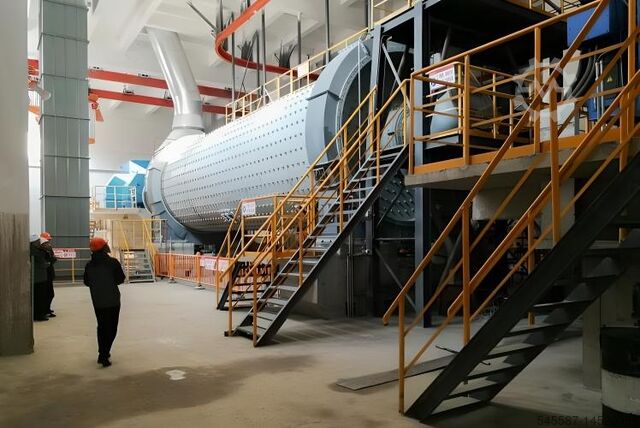
Ball mill for powder and mining plant
Mingyuan Ball Mill For Fine PowderPowder grinding mill for coal, silica
Call
Condition: new, functionality: fully functional, power: 55 kW (74.78 HP), Year of construction: 2026, Ball Mill for Powder and Mining Plant: Structure, Function, and Technical Details
A ball mill is a key grinding machine widely used in mining, metallurgy, cement, chemical, and powder-making industries. It is designed to grind various ores and other materials into fine powder through impact and attrition between steel balls and the material inside a rotating cylindrical shell. In mining plants, ball mills are essential for ore beneficiation, preparing materials for flotation, magnetic separation, or leaching processes. In powder production, they ensure uniform particle size and high surface area for further processing.
Working Principle
The ball mill operates on a simple yet effective principle: as the cylindrical shell rotates around its horizontal axis, the grinding media (steel or ceramic balls) are lifted along the inner wall by centrifugal force and friction. When they reach a certain height, they fall freely, striking and grinding the material below. This repeated motion causes both impact and abrasion, reducing the material to the desired fineness. The grinding process can be performed in dry or wet conditions depending on the application.
Structural Composition
A standard ball mill consists of several main components:
Feeding part: Equipped with a feeder or screw conveyor to ensure uniform material input.
Discharging part: Can be grate type or overflow type, depending on the discharge method.
Rotating part: The cylindrical shell made of steel plates, lined with wear-resistant liners.
Transmission system: Includes motor, reducer, small transmission gear, and electrical control.
Grinding media: Steel balls or ceramic balls of different diameters for efficient grinding.
The internal liner design and ball size distribution are optimized to achieve maximum grinding efficiency and minimal energy consumption.
Technical Details
Typical Specifications:
Duedpeq Nf U Esfx Aahsw
Feeding size: ≤25 mm
Discharge size: 0.074–0.4 mm
Capacity: 0.65–615 t/h (depending on model and material hardness)
Cylinder speed: 18–38 r/min
Power: 18.5–4500 kW
Liner material: High manganese steel, rubber, or alloy steel
Grinding media load: 30–45% of cylinder volume
Operating Modes:
Dry grinding: Suitable for materials that must remain moisture-free, such as cement clinker, limestone, and quartz.
Wet grinding: Common in ore beneficiation, where water or slurry improves grinding efficiency and particle uniformity.
Application in Mining Plants
In mining operations, ball mills are used after crushing to further reduce ore size and liberate valuable minerals. They are integrated into grinding circuits with classifiers, hydrocyclones, and flotation systems. The ground material is classified by size, and oversized particles are returned to the mill for regrinding. This closed-circuit system ensures consistent product fineness and efficient energy use.
Common Applications:
Gold, copper, iron, and zinc ore grinding
Cement clinker and slag processing
Silicate and ceramic powder production
Coal and mineral powder preparation
Conclusion
A ball mill is an indispensable piece of equipment in both powder production and mining beneficiation plants. Its ability to grind materials into fine, uniform particles makes it vital for downstream processes such as flotation, sintering, and chemical reactions.
Listing
Zheng Zhou Shi
10,533 km
Crushing equipment
Mingyuan Dry and Wet Ball MillCustomerizable Model for ball mill plant
Call
Condition: new, functionality: fully functional, Year of construction: 2026, Dry and Wet Ball Mill: Structure, Operation, and Technical Details
A ball mill is a fundamental grinding device used in mineral processing, cement manufacturing, chemical production, and other industrial applications. It works by rotating a cylindrical shell filled with grinding media—usually steel balls—causing impact and friction that reduce materials to fine powder. Based on the grinding environment, ball mills are classified into dry and wet types, each suited for specific materials and process requirements.
Working Principle
Both dry and wet ball mills operate on the same mechanical principle. The rotating cylinder, driven by a motor through a gear system, lifts the grinding media and material along the inner wall. As the rotation continues, the balls fall under gravity, striking and grinding the material. The difference lies in the presence or absence of a liquid medium during grinding.
Dry Ball Mill
A dry ball mill is used when the material must remain moisture-free or when water could affect product quality. It is commonly applied in cement clinker, limestone, quartz, and refractory material grinding. The discharge can be either grate type or overflow type, depending on the desired fineness.
Technical Features:
Feeding size: ≤25 mm
Discharge size: 0.075–0.4 mm
Capacity: 0.65–90 t/h
Liner material: High manganese steel or wear-resistant alloy
Drive system: Gear-driven or direct-coupled motor
Dust control: Equipped with air exhaust and dust collector
Advantages:
Dujdpfx Aeq Nx Aleahow
Suitable for materials sensitive to moisture
No drying process required after grinding
Lower corrosion risk and simpler maintenance
Easier material classification and separation
Limitations:
Dry grinding produces more dust and heat, requiring efficient ventilation and dust collection systems.
Wet Ball Mill
A wet ball mill operates with water or another liquid medium added to the material. The slurry formed during grinding improves efficiency by reducing friction and preventing excessive heat buildup. It is widely used in ore beneficiation, ceramics, and chemical industries.
Technical Features:
Feeding size: ≤25 mm
Discharge size: 0.074–0.2 mm
Capacity: 0.65–615 t/h
Liner material: Rubber or high-chromium steel
Discharge method: Overflow or grate type
Auxiliary equipment: Classifier, pump, and thickener for slurry circulation
Advantages:
Higher grinding efficiency and finer particle size
Reduced dust and noise levels
Continuous operation suitable for beneficiation circuits
Better control of particle uniformity
Limitations:
Requires drying if the final product must be in powder form and involves more complex slurry handling.
The selection between dry and wet grinding depends on the material characteristics, downstream process, and environmental conditions. Dry mills are preferred for materials that must stay moisture-free, while wet mills are ideal for fine grinding and slurry-based processes.
Conclusion
Dry and wet ball mills share the same mechanical structure but differ in their grinding environment and application scope. The dry type offers simplicity and low maintenance for moisture-sensitive materials, while the wet type provides higher efficiency and finer output for mineral and chemical processing. Understanding their technical parameters and operational differences ensures optimal equipment selection, improved productivity, and reliable performance in industrial grinding operations.

Get information now
+44 20 806 810 84
+44 20 806 810 84
List now
*per listing / month
Listing
Zheng Zhou Shi
10,533 km
Mill / grinding mill
Batch Ball Mill, Silica grinding millQuartz ball mill, silica powder grinding
Call
Year of construction: 2026, condition: new, ceramic ball mill ,Batch ball mill ,also called ceramic ball mill ,it is used for fine grinding of feldspar,quartz,clay,ore and so on.The ceramic ball mill is mainly used for material mixing, grinding,uniform product fineness,and saving power.It can be dry or wet.The machine can use different liner types according to production needs to meet different needs.The fineness of the grinding operation is controlled by the grinding time
ceramic ball mill Working principle
when ball mill working,steel balls inside drum will rotate with the drum to some height,and then steel balls fall down with materials to reach the point of grinding.
Working Principle of Ceramic ball mill
ceramic ball mill ,Intermittent ball mill grinding operation is finished in the cylinder body. When the cylinder rotates, materials ascend to a certain height and then fall along a certain path due to the balls' gravity. Two forces are generated on the balls inside. One is the force on balls through tangent direction; the other is a opposite force in the contrast to the diameter of balls, as a result of the force generated when the balls slide down. These two forces will constitute a couple for the steel balls. The balls are squeezed between the cylinder and the adjacent steel balls, so the couple can make unequal-sized friction force. The balls will orbit along with the cylinder axis and then fall down, which can produce a strong impact force on the ores in the cylinder body and, as a result, the ores will be crushed. In conclusion, the ores in the cylinder body are mainly crushed by composite effect of peeling force, impact force and extrusion force.
Ceramic ball mill also named Intermittent ball mill which adopts the wet intermittent operation, is used for fine grinding and mixing the material such as feldspar, quartz, clay ceramic raw materials. The discharging and the mud size can through through 1000 sieve pore. This machine is high milling machinery, materials should be Broken in the fineness of the state into the grinding mill to get the highest efficiency and economic benefits.
Dsdpfxsvzx Aus Aahjuw
The cement mill is key equipment for the grinding process of the cement clinker after the crushing process of it. It is mainly used in the cement silicate product industry. After long term design and manufacture of the cement mill, our company now has series of cement mill with various specifications to meet with different requirement from our customers.
Features of Cement Mill
Our company adopts suitable transmission methods according to different specifications. We have brim drive and center drive as transmission form. The cylinder adopts new type step lining to increase the grinding area. And it is easily repairable and changeable. The new designed separate-chambered structure adopts flexible lifting blade and fixed lifting blade and it is easily fixed and repaired.
Technical Details
We have different models and options for different requirements, please contact us for more info.
Listing
Zheng Zhou Shi
10,533 km
Glass grinding machine
Henan Mingyuan Ceramic /Silica Ball MillBatch ball mill for glass ceramic making
Call
Condition: new, Year of construction: 2026, power: 7.5 kW (10.20 HP), Batch ball mills find applications in various industries where the processing of materials in discrete batches is required. The versatility of batch ball mills makes them suitable for a range of applications. Here are some common batch ball mill applications:
1. Ceramics Industry:
- *Glaze Preparation:* Batch ball mills are extensively used in the ceramics industry for preparing glazes. Raw materials such as feldspar, quartz, and clay are ground with ceramic balls to achieve the desired particle size for glaze formulation.
2. Chemical Industry:
- *Material Grinding:* Batch ball mills are used for grinding and blending various chemical materials. This includes the production of pigments, dyes, and other specialty chemicals where precise particle size control is crucial.
3. Pharmaceuticals:
- *Drug Formulation:* In pharmaceutical manufacturing, batch ball mills are used for grinding and blending powders to create drug formulations. The controlled environment provided by these mills is essential for maintaining the integrity of pharmaceutical compounds.
4. Food Industry:
- *Ingredient Mixing:* Batch ball mills may find application in the food industry for mixing and grinding ingredients. This can include the production of food additives, flavorings, and other powdered or granular products.
5. Mining and Minerals Processing:
- *Ore Grinding:* Batch ball mills are used in mining and minerals processing for grinding minerals and ores. The controlled grinding helps in obtaining the desired particle size for subsequent processes, such as mineral separation or extraction.
6. Paints and Coatings:
- *Pigment Dispersion:* In the paints and coatings industry, batch ball mills are employed for dispersing pigments into paint formulations. Achieving a uniform particle size is crucial for the quality and appearance of the final coating.
7. Building Materials:
- *Raw Material Grinding:* Batch ball mills are used in the preparation of raw materials for the production of building materials, such as cement and concrete. Grinding of materials like limestone and clay helps in obtaining the desired fineness for subsequent processes.
8. Electronic Materials:
- *Ceramic Powder Processing:* In the electronics industry, batch ball mills can be employed for processing ceramic powders used in the production of electronic components and insulating materials.
9. Research and Development:
- *Material Testing:* Batch ball mills are often used in research and development laboratories for testing and optimizing material formulations. They provide a controlled environment for small-scale processing and experimentation.
Duedeq I N H Nopfx Aahsw
10. Customized Applications:
- *Specialized Processes:* Batch ball mills can be adapted for various specialized processes in different industries where precise grinding and mixing are required. Custom modifications can be made based on specific application requirements.
When using a batch ball mill, it's important to consider factors such as the type of material being processed, desired particle size, and the specific requirements of the end product. Additionally, following the manufacturer's guidelines and maintaining proper operating conditions are essential for efficient and effective milling processes.
Technical details
We have different options for different requirements, please contact our team for more info.
Discover more used machines
Listing
Zheng Zhou Shi
10,533 km
Cement mill,clinker grinding plant
Clinker grinding mill / cement ball millcement grinding with air classifier
Call
Year of construction: 2026, condition: new, functionality: fully functional, A cement clinker grinding mill is a specialized equipment used to grind the hard nodular clinker into fine powder, which is cement. Most cement is currently ground in ball mills and also vertical roller mills, which are more effective than ball mills.
Here are key features and information about cement clinker grinding mills:
1. Raw Materials:
Djdpfx Aasq Nfbhshsuw
- The main raw material for making cement is clinker, which is produced by sintering limestone and clay. Other materials such as gypsum, fly ash, or slag may also be added during the grinding process to achieve specific properties.
2. Grinding Process:
- The clinker and other additives are finely ground in the grinding mill to produce cement. The grinding process is a crucial step in cement production and contributes significantly to the final quality of the product.
3. Types of Mills:
- Ball Mills: Traditional ball mills are commonly used for grinding clinker. They operate by rotating a cylinder with steel grinding balls, causing the balls to fall back into the cylinder and onto the material to be ground.
- Vertical Roller Mills (VRM): VRM technology has become increasingly popular for clinker grinding. These mills use a rotating table with rollers to crush and grind the clinker, providing energy efficiency and a smaller footprint compared to ball mills.
4. Gypsum Addition:
- Gypsum is often added during the grinding process to control the setting time of the cement. It prevents flash setting of the clinker and facilitates the formation of a workable and pumpable cement paste.
5. Quality Control:
- Quality control measures, such as monitoring the fineness of the cement, chemical composition, and other properties, are implemented during the grinding process to ensure the final product meets the required specifications and standards.
6. Clinker Cooling:
- Before grinding, the clinker is produced by heating the raw materials in a kiln. The clinker is then cooled before entering the grinding mill to prevent excessive heat build-up during grinding.
7. Dust Collection and Environmental Considerations:
- Dust collectors and air pollution control systems are often employed to capture and control the dust generated during the grinding process, addressing environmental and safety concerns.
8. Packaging and Storage:
- After grinding, the cement is typically stored in silos before being packaged in bags or dispatched in bulk for distribution to construction sites or for sale in the market.
Cement clinker grinding mills play a crucial role in the cement production process, and advancements in technology continue to improve the efficiency and environmental sustainability of the grinding process.
Technical details
We have different options for different requirements, please contact our team for more info.
Listing
Zheng Zhou Shi
10,533 km
Powder grinding mill
ball mill for mining &fine powder makingsilica/Barite/limestone powder plant
Call
Condition: new, Year of construction: 2026, power: 300 kW (407.89 HP), Ball Mill for Mining & Fine Powder Making:
A ball mill is a fundamental grinding device widely used in mining, metallurgy, cement, and chemical industries. It is designed to grind ores and other materials into fine powder through impact and attrition between steel balls and the material inside a rotating cylindrical shell. In mining plants, ball mills are essential for ore beneficiation, while in powder-making industries, they ensure uniform particle size and high surface area for further processing.
Working Principle
The ball mill operates on the principle of impact and friction. As the cylindrical shell rotates around its horizontal axis, the grinding media—usually steel or ceramic balls—are lifted along the inner wall by centrifugal force and friction. When they reach a certain height, they fall freely, striking and grinding the material below. This repeated motion breaks down the material into fine particles. The process can be carried out in dry or wet conditions depending on the application.
Structural Composition
A standard ball mill consists of several main components:
Feeding part: Ensures uniform material input through a feeder or screw conveyor.
Discharging part: Can be grate type or overflow type, depending on the discharge method.
Rotating part: The cylindrical shell made of steel plates, lined with wear-resistant liners.
Transmission system: Includes motor, reducer, small transmission gear, and electrical control.
Grinding media: Steel or ceramic balls of various diameters for efficient grinding.
The internal liner design and ball size distribution are optimized to achieve maximum grinding efficiency and minimal energy consumption.
Technical Details/Typical Specifications:
Feeding size: ≤25 mm
Discharge size: 0.074–0.4 mm
Capacity: 0.65–615 t/h (depending on model and material hardness)
Cylinder speed: 18–38 r/min
Power: 18.5–4500 kW
Liner material: High manganese steel, rubber, or alloy steel
Grinding media load: 30–45% of cylinder volume
Operating Modes:
Djdsq Ngafjpfx Aahjuw
Dry grinding: Used for materials that must remain moisture-free, such as cement clinker, limestone, and quartz.
Wet grinding: Common in ore beneficiation, where water or slurry improves grinding efficiency and particle uniformity.
Application in Mining and Powder Production
In mining operations, ball mills are used after crushing to further reduce ore size and liberate valuable minerals. They are integrated into grinding circuits with classifiers, hydrocyclones, and flotation systems. The ground material is classified by size, and oversized particles are returned to the mill for regrinding. This closed-circuit system ensures consistent product fineness and efficient energy use.
In fine powder production, ball mills are used to produce materials such as silicate, ceramic powder, refractory materials, and chemical raw materials. The uniform particle size achieved by ball milling enhances product quality and performance in downstream applications.
Conclusion
A ball mill is an indispensable piece of equipment for both mining and fine powder making. Its ability to grind materials into fine, uniform particles makes it vital for ore beneficiation and industrial powder production. With flexible configurations, high efficiency, and reliable operation, modern ball mills provide a cost-effective and energy-efficient solution for large-scale grinding, ensuring consistent quality and productivity across diverse applications.
Listing
Zheng Zhou Shi
10,533 km
Roll forming line
Rod ball mill / Rod Grinding MillFor Sand and mining beneficiation plant
Call
Condition: new, Year of construction: 2026, We have various kinds of ball grinding mill such as batch ball mill, rod mill, cement ball mill, mining ball mill, welcome to contact our team for further details according to your specific requirements.
Duedpfx Aeq I Nw Ioahew
Listing
Zheng Zhou Shi
10,533 km
Ball Mill for Ore mining & sand grinding
batch ball mill & wet mining ball mill2400X4500 ball mill
Call
Condition: new, fuel type: electric, Year of construction: 2026, machine/vehicle number: 2700x4500, Equipment: low noise, Main Technical parameters of the ball mill
Drum diameter: 2400mm
Drum length: 4500mm
Motor power: 320KW
Max input size: 25mm
Capacity:35-60 t/h
Weight: 72Tons
Ball loading: 30Tons
Besides this model, we also have the other models like 2700x4500, 3200x4500, 1830x13000mm, and so on, and we can also offer customerization service, we can also provide complete grinding solution for various industries like cement, quartz, ore beneficiation plant, and so on, welcome to contact us for more info.
A ball mill is a common grinding machine used to grind and blend materials for use in mineral processing, including ore mining and the production of silica (silicon dioxide). When it comes to ore mining and silica grinding, the characteristics of the ore and the final product requirements will play a crucial role in selecting the appropriate ball mill.
Here are some considerations for using a ball mill in ore mining and silica grinding:
1. Ore Characteristics:
- Hardness: The hardness of the ore determines the type of ball mill that is most suitable. Harder ores may require a more robust and wear-resistant ball mill.
- Particle Size Distribution: The initial particle size of the ore affects the grinding process. Different ores may require different approaches to achieve the desired particle size.
Dujdpfxsq Igiij Aahjw
2. Silica Grinding:
- Silica Content: If the primary goal is to grind silica, it's important to consider the initial silica content and the desired final particle size. Silica grinding often requires special attention to prevent excessive wear on the milling equipment.
3. Ball Mill Type:
- Overflow vs. Grate Discharge: The type of discharge from the ball mill can impact the final product and the grinding efficiency. Overflow mills are generally used for most grinding applications, while grate discharge mills are more suitable for certain types of ores.
4. Mill Size and Capacity:
- Mill Diameter and Length: The size of the ball mill should be selected based on the amount of material to be ground and the desired throughput.
- Capacity: Ensure that the chosen ball mill has the capacity to handle the required volume of material efficiently.
5. Grinding Media:
- Material and Size: The choice of grinding media (balls or cylpebs) and their size depends on the hardness of the ore and the desired final particle size. Different grinding media materials can impact the purity of silica during grinding.
6. Liners and Lifting Aids:
- Liners: Consider the type of liners used in the ball mill to protect the shell and optimize the grinding process.
- Lifting Aids: Some mills use lifting aids to enhance the grinding action and promote better mixing of the material.
7. Control and Monitoring Systems:
- Automation: Utilize control systems to automate the milling process and ensure optimal performance.
- Monitoring: Regularly monitor the milling process to adjust parameters as needed for consistent and efficient operation.
8. Safety Measures:
- Safety Systems: Implement safety features to protect personnel and equipment during operation.
Always follow the manufacturer's recommendations and guidelines for operation and maintenance to ensure safe and efficient use of the ball mill in ore mining and silica grinding applications.
Listing
Wuppertal
18,554 km
Rotating magnetic separator
AGRIFONRM
Call
Condition: new, Year of construction: 2024, functionality: fully functional, Ideal for separating ferrous impurities from granulates such as plastics and dry, free-flowing powders such as flour and sugar in free-fall conveying systems.
We would be happy to carry out a test with your material to ensure that our product optimally meets your requirements.
If you have any further questions, please do not hesitate to contact us.
Duedpfx Aaouc S Ihshsw
Listing
Wiefelstede
18,341 km
Container rotating device clay
Deuma HeitzeH 02,5 Rollenabstand 320 x 950 mm
Call
Condition: good (used), Year of construction: 1964, Container rotator, boiler rotator, welding rotator, welding rotator, welding device, welding turntable, welding rotator
-Manufacturer: Deuma Heitze, Container rotating device, Welding rotating device type H 02.5
-Load capacity: kg
-Roller spacing: 600 - 1670 mm
-Rollers: Ø 320 x 950 mm
-Rolling speed: 0.15 to 1.35 m/min Right/Left rotation
-Control unit: with manual control
-Individual components: see photos
-Transport dimensions: 1150/1105/H550 mm / 1100/600/H550 mm
Dsdpfx Aezkqt Hjahjuw
-Weight: 607 kg / 365 kg
Listing
Wiefelstede
18,341 km
Rotating device for forklifts
StabauGabelstapler-Rotator
Call
Condition: good (used), Fork carriage, rotator for wheel loaders, forklifts, telescopic handlers, forklifts, rotator, forklift rotator
-Manufacturer: Stabau, forklift rotator 360° continuous rotation
-Type: unfortunately without a type designation
-Load capacity: approx. 2,500 kg
-Mounting dimensions: see photos
-Dimensions: 1050/205/H755 mm
Dsdpfxezkg U Ho Aahjuw
-Weight: 353 kg
Listing
Friedrichsdorf
18,546 km
Telehandler rotating
ManitouMRT 2660 Vision + AC
Call
Condition: used, functionality: fully functional, Year of construction: 2022, operating hours: 1,633 h, load capacity: 6,000 kg, lifting height: 26,000 mm, fuel type: diesel, mast type: telescopic, construction height: 3,100 mm, power: 115 kW (156.36 HP), fork length: 1,200 mm, empty load weight: 18,000 kg, total length: 8,080 mm, drive type: Diesel, construction width: 2,500 mm, Rotating telescopic handler
Mast type: Telescopic
Transmission: Hydrostatic
Speed class: 20
Condition: Like new
Technical condition: very good
Front tire type: Pneumatic
Dodpfx Aaszkck Rehouw
Front tire size: 18 - 22
Front tire condition: 80 - 100%
Rear tire type: Pneumatic
Rear tire size: 18 - 22
Rear tire condition: 80 - 100%
Description: Thanks to the machine's 3-in-1 design (telescopic handler, crane, and aerial work platform), the MRT 2660 is a versatile tool for your handling operations. The MRT 2660 can lift up to 6 tons, and thanks to its pentagonal cross-section and exceptional 360° visibility, it maintains very precise control over your loads. The 360° rotation allows you to perform various tasks without having to move the machine. It can be used on wheels or outriggers, which provide a larger support area for safe operation. The MRT 2660 is intelligent, ergonomic, and comfortable, making it ideal for applications in the construction and industrial sectors. It is a powerful and precise tool that you won't want to be without! Various attachments, such as a personnel basket, winch, or bucket, are available for this telescopic forklift.
3rd valve, rear work lights, front work lights, heater, compliant with STVZO (German Road Traffic Licensing Regulations), air conditioning, CE certificate.
Listing
Crailsheim
18,536 km
Rotating forklift
MagniRTH 6.21
Call
Condition: used, Year of construction: 2023, load capacity: 6,000 kg, lifting height: 20,800 mm, fork length: 1,200 mm, total length: 7,890 mm, - Drehbarer Teleskopstapler RTH 6.21
- Maximale Tragkraft 6.000 kg (Schwerpunkt 600 mm)
- Maximale Hubhöhe 20,80 m
- Drehung 360° (durchgehend)
- Nennleistung 100 kW (136 PS) bei 2.200 U/min
- Max. Drehmoment 500 Nm bei 1.600 U/min
- Hubraum 3,6 l
- Zylinderzahl 4 in Reihe
- Motorkonfiguration Dieselmotor mit Direkteinspritzung und Turboaufladung
- Kühlanlage Wassergekühlter Ladeluftkühler
- Antrieb Typ Hydrostatisch
- Modell Danfoss / Rexroth
- Max. Druck 480 bar
- Fördervolumina Elektronisch geregelte Axialkolbenpumpe. Verstellmotor.
- Getriebe Dropbox-Getriebe mit 2 Fahrstufen für Vorwärts- und Rückwärtsfahrt
- Achsen und Bremsen: Typ Achsen mit Planeten-Endantriebe
- Hinterachse Lenkende Pendelachse mit hydraulischer Sperre
- Vorderachse Pendellenkachse mit Niveauausgleich +/- 8 Grad
- Betriebsbremse Ölbad-Lamellenbremse an jeder Achse, hydraulisch betätig
- Feststellbremse Negativbremse, hydraulisch betätigt
- Reifengröße 445/65 R22,5
- Leistungen: Max. Fahrgeschwindigkeit 40 km/h
Dedezkb Nfepfx Aahsuw
- Max. Zugkraft am Lasthaken 72 kN
- Steigfähigkeit 41%
- Wenderadius (mit Gabelzinken) 5.900 mm
- Gesamtgewicht, unbeladen 17.600 kg
- Auf Vorderachse, unbeladen (Ausleger eingefahren und abgesenkt) 8.000 kg
- Auf Hinterachse, unbeladen (Ausleger eingefahren und abgesenkt) 9.600 kg
- Max. Betriebsdruck 350 bar
- Anlagentyp Load sensing
- Betriebspumpe Danfoss / Casappa Verstellpump
- Verteiler für Ausleger- und Oberwagenbewegungen: Danfoss- Elektroproportionalventil SIL
- Verteiler für Stützen Bosch Rexroth Elektrohydraulische Aktuatoren
- Bewegungssteuerung Zwei 2-Achsen-Joysticks Danfoss mit Totmanneinrichtung Steuerung mit CAN-Bus-Technologie
Listing
Crailsheim
18,536 km
Rotating forklift
ManitouMRT 3060
Call
Condition: new, Year of construction: 2026, load capacity: 6,000 kg, lifting height: 29,900 mm, total length: 9,140 mm, Rotating forklift
Manitou MRT 3060
Drive Diesel
Dsdpfjzi Hb Rsx Aahsuw
Year built 2026
Lifting height (mm) 29,900
Lifting weight (kg) 6,000
Listing
Crailsheim
18,536 km
Rotating forklift
ManitouMRT 2260
Call
Condition: used, Year of construction: 2023, load capacity: 6,000 kg, lifting height: 21,800 mm, fork length: 1,200 mm, total length: 8,170 mm, - Max. Tragkraft 6000 kg
- höhe 21.80 m
- Maximale seitliche Reichweite 18.20 m
- Kippwinkel 12 °
- Schüttwinkel 110 °
- Drehung des Oberwagens 360 °
- Gewicht 18000 kg
- Reifenmodelle 445/65 R22,5
- Antriebsräder (vorne / hinten) 2 / 2
- Lenkart 2-rad Lenkung, 4-rad Lenkung, Krebsgang
- Stützentyp Zweifach-Teleskop
- Steuerung mit Stützen Stützenbefehle einzeln oder gleichzeitig
- Hersteller Yanmar
- Motornorm Stage V / Stufe 4
- Motor Modell 4TN107FHT-6SMU1
- Nennleistung Verbrennungsmotor / Leistung (kW) 156 Hp / 115 kW
- Max. Drehmoment / Engine rotation (min) 602 Nm @ 1500 rpm
- Anzahl der Zylinder - Tragfähigkeit der Zylinder 4 - 4567 cm³
- Kühlsystem des Motors Wasserkühlung
- Anzahl Batterien / Batterie 2 x 12 V
- Battery capacity 120 Ah
- Battery starting current (EN)850 A
- Getriebetyp Hydrostatic with Speedshift
- Getriebe / Anzahl der Gänge (vorwärts) / Anzahl der Gänge (rückwärts) Speedshift/2 / 2
- Max. travel speed 40 km/h
- Zugkraft 8600 daN
- Parkbremse Automatische negative Parkbremse
- Festellbremse: Ölbad Lamellenbremsen an den Vorder- und Hinterachsen
- Steigfähigkeit - beladen / unbeladen 40.40 % / 45.50 %
- Pumpenart Verstellpumpe
- Hydraulikfördermenge 185 l/min
- Hydraulikdruck 350 bar
- Motoröl 13 l
- Hydrauliköl 260 l
- Fassungsvermögen des Kraftstofftanks 270 l
- Abgasnachbehandlung für Diesel (AdBlue®) 24 l
- Geräuschpegel im Fahrerstand (LpA) 68 dB
- Außenschallpegel (LwA) 108 dB
- Vibrationswert an Händen/Armen < 2.50 m/s²
- Lenkräder (vorne / hinten) 2 / 2
- Steuerungen 2 Joysticks
Dujdpfx Ajzi Hbwsahjw
- Sicherheit Zulassung der Kabine Kabine ROPS - FOPS Stufe 2
- Anbaugeräte Erkennungssystem (E-Reco) Standard
Listing
Crailsheim
18,536 km
Rotating forklift
MagniRTH 6.31
Call
Condition: used, Year of construction: 2026, load capacity: 6,000 kg, lifting height: 31,000 mm, total length: 9,150 mm, Rotating forklift
Djdpezi Hbqofx Aahjuw
Magni RTH 6.31
Drive Diesel
Year built 2026
Lifting height (mm) 31,000
Lifting weight (kg) 6,000
Listing
Crailsheim
18,536 km
Rotating forklift
ManitouMRT 3570 vision ES
Call
Condition: used, Year of construction: 2023, load capacity: 7,000 kg, lifting height: 34,700 mm, fork length: 1,200 mm, total length: 10,300 mm, - Lenkart: 2-rad Lenkung, 4-rad Lenkung, Krebsgang
- Stützentyp: Dreifach-Teleskop
- Steuerung mit Stützen: Stützenbefehle einzeln oder gleichzeitig
- Motornorm: Stage V / Stufe 4
- Nennleistung Verbrennungsmotor / Leistung (kW) 211 Hp / 155 kW
- Max. Drehmoment / Engine rotation (min) 805 Nm @ 1500 rpm
- Anzahl der Zylinder - Tragfähigkeit der Zylinder 4 - 4567 cm³
- Kühlsystem des Motors Wasserkühlung
- Anzahl Batterien / Batterie 2 x 12 V
- Battery capacity 120 Ah
- Battery starting current (EN)850 A
- Getriebetyp Hydrostatic with CVT
- Getriebe Speedshift
- Max. travel speed 40 km/h
- Zugkraft 9300 daN
- Parkbremse Automatische negative Parkbremse
- Festellbremse: Ölbad Lamellenbremsen an den Vorder- und Hinterachsen
- Steigfähigkeit - beladen / unbeladen: 29 % / 38.70 %
- Pumpenart: Verstellpumpe
- Hydraulikfördermenge: 185 l/min
- Hydraulikdruck: 350 bar
Dsdpfxjzi Hbks Aahsuw
- Motoröl: 13 l
- Hydrauliköl: 300 l
- Fassungsvermögen des Kraftstofftanks: 320 l
- Abgasnachbehandlung für Diesel (AdBlue®): 24 l
- Geräuschpegel im Fahrerstand (LpA): 68 dB
- Außenschallpegel (LwA): 109 dB
- Vibrationswert an Händen/Armen: < 2.50 m/s²
- Lenkräder (vorne / hinten): 2 / 2
- Steuerungen: 2 Joysticks
- Sicherheit Zulassung der Kabine: Kabine ROPS - FOPS Stufe 2
- Anbaugeräte Erkennungssystem (E-Reco): Standard
Listing
Crailsheim
18,536 km
Rotating forklift
ManitouMRT 3570 vision
Call
Condition: used, Year of construction: 2023, load capacity: 7,000 kg, lifting height: 34,700 mm, total length: 10,300 mm, Max. Tragkraft 7000 kg
- höhe 24.80 m
- Maximale seitliche Reichweite 20.50 m
- Kippwinkel 12 °
- Schüttwinkel 110 °
- Drehung des Oberwagens 360 °
- Antriebsräder (vorne / hinten) 2 / 2
- Lenkart 2-rad Lenkung, 4-rad Lenkung, Krebsgang
- Stützentyp Zweifach-Teleskop
- Steuerung mit Stützen Stützenbefehle einzeln oder gleichzeitig
- Motor Hersteller: Yanmar
- Motornorm Stage V / Stufe 4
- Motor Modell 4TN107FTT-6SMU1
- Nennleistung Verbrennungsmotor / Leistung (kW) 173 Hp / 127 kW
- Max. Drehmoment / Engine rotation (min) 805 Nm @ 1500 rpm
- Anzahl der Zylinder - Tragfähigkeit der Zylinder 4 - 4567 cm³
- Kühlsystem des Motors Wasserkühlung
- Anzahl Batterien / Batterie 2 x 12 V
- 12V Battery capacity 120 Ah
- Battery starting current (EN)850 A
- Getriebetyp Hydrostatic with Speedshift
- Getriebe / Anzahl der Gänge (vorwärts) / Anzahl der Gänge (rückwärts) Speedshift / 2 / 2
- Max. travel speed 40 km/h
- Zugkraft 9200 daN
- Parkbremse Automatische negative Parkbremse
- Festellbremse: Ölbad Lamellenbremsen an den Vorder- und Hinterachsen
- Steigfähigkeit - beladen / unbeladen 32.40 % / 41.40 %
- Pumpenart Verstellpumpe
- Hydraulikfördermenge 185 l/min
- Hydraulikdruck 350 bar
- Motoröl 13 l
- Hydrauliköl 300 l
- Fassungsvermögen des Kraftstofftanks 320 l
- Abgasnachbehandlung für Diesel (AdBlue®) 24 l
- Geräuschpegel im Fahrerstand (LpA) 67 dB
- Außenschallpegel (LwA) 108 dB
- Vibrationswert an Händen/Armen < 2.50 m/s²
- Lenkräder (vorne / hinten) 2 / 2
Dusdpfx Aszi Hbdoahjw
- Steuerungen 2 Joysticks
- Sicherheit Zulassung der Kabine Kabine ROPS - FOPS Stufe 2
- Anbaugeräte Erkennungssystem (E-Reco) Standard
Listing
Kusel
18,666 km
Ball screw drive
SteinmeyerDm 63, Hub 50mm, IT3
Call
Condition: new, Ball screw drive
Diameter 63, pitch 50mm, IT3
Duodezi Dzbspfx Aahsw
STEINMEYER
Listing
Fumane (Verona)
18,643 km
Used MRT 3503 R Rotational Molding Machine
MRT 3503 R
Call
Condition: used, operating hours: 13,848 h, machine/vehicle number: SO139, Used MRT 3503 R Rotational Molding MachineTechnical Specifications & Performance DataThe MRT 3503 R is a heavy-duty industrial forming system engineered for high-temperature plastic processing and container manufacturing. Its robust structure and precise motion control make it suitable for demanding production environments in industrial packaging and beverage production support, including integration upstream of filling and labeling equipment within a used bottling line or second hand production setup. The machine combines large-format capacity with controlled rotation on multiple axes to deliver consistent, repeatable forming quality.Model: MRT 3503 RSpherical diameter: 3500 mmMachine length: 14960 mmMachine width: 13026 mmMachine height: 5480 mmCarriages: 3Straight arm: 1Maximum load (straight arm): 2000 kgSecondary axis diameter (straight arm): 3250 mmOffset arm: AvailableMaximum load (offset arm): 1550 kgSecondary axis diameter (offset arm): 2900 mmPrimary axis revolutions: 0–8 rpmSecondary axis revolutions: 0–8 rpmBurner brand/model: WEISHAUPT WM-G10/2 A exec. ZM-LNDigital burner power (max): 630 kWBurner calibration power: 550 kWMaximum operating temperature: 300°CAlarm temperature: 340°CFuel type: Natural gas methaneAverage fuel consumption (continuous cycle):46 m³/hInstalled electrical power: 42 kWVoltage/Frequency: 400 V / 50 HzAverage electricity consumption (continuous cycle): 30–35 kW/hCompressed air: 2 lines, 6 bar max; 32000 Nl/hWater pressure: 2 barWater consumption (max): 4–6 l/minStructure finish: RAL 5002 / RAL 3020; Protections RAL 1023Arm surface finish: High-temperature silverAdvanced Automation & Control SystemsThe MRT 3503 R features precise rotational control with independently adjustable primary and secondary axes from 0 to 8 rpm for accurate thermal forming profiles. A digital WEISHAUPT burner package enables stable process temperatures up to 300°C, with an alarm setpoint at 340°C for enhanced protection. Electrical integration is standardized at 400 V, 50 Hz with 42 kW installed power for auxiliary systems. Operator safety is supported by guarded enclosures and compliance certification, while color-coded protections aid visual management. The controlled heating, rotation, and timing provide consistent part quality and predictable cycle times in industrial packaging applications.Production Line Integration CapabilitiesThis machine can operate as a standalone forming cell or be integra...
Dsdpfsziyy Hox Aaheuw
Trust Seal
Dealers certified through Machineseeker

Listing
Wiefelstede
18,341 km
Container rotator 120 tons
HeinrichsglückDV120Mp
Call
Condition: good (used), Year of construction: 1977, Container rotator, boiler rotator, welding rotator, welding rotator, welding device, welding turntable, welding rotator
-Manufacturer: Deuma Heaters, Container Rotating Device, Welding Rotating Device
-Drive motor: 0.27/2.7 kW
-Load capacity: 120,000 kg
-Roller spacing: 660 - 3070 mm
-Rollers: Ø 600 mm
Dujdpfx Asziuzfsahew
-Rolling speed: 0.006 to 3 m/min Right/Left rotation
-Control unit: with manual control
-Individual components: see photos
-Transport dimensions: 1250/4550/H1010 mm, 1040/3960/H1010mm, 560/1240/H480 mm
-Weight: 9280 kg
Listing
Hessisch Lichtenau
18,422 km
Roller conveyor with ball-bearing metal rollers and feet
Call
Condition: used, Roller conveyor with ball-bearing metal rollers and feet
Roller width: 495 mm
Roller diameter: 50 mm
Total length of the roller conveyors: 1950 mm
Number of rollers: 25
Total width: 540 mm
Overall height: 500 - 700 mm
- Ball-bearing metal rollers
- Roller spacing can be flexibly adjusted
- Perforated side profiles with screwed-in rollers and spacers
- 2 frame feet with height-adjustable foot supports
Weight: approx. 45 kg
Dusdpfezinwyjx Aahew
Good condition
Listing
Borken
18,513 km
Rotating device for HTS coils
Gunter Seibold Maschinenbau GmbHDrehvorrichtung Typ S0508
Call
Condition: used, Rotating Device
Gunter Seibold Rotating Device for HTS Coils
– Steplessly Adjustable Drive (Type S05082)
Description:
Professional rotating device designed for accommodating and rotating HTS coils with a winding core. Developed to ensure even distribution of two-component resin during the curing process. Ideal for development, laboratory, or manufacturing environments working with high-temperature superconductor coils. The winding form is electrically heated, with power supplied directly to the form (not included in the scope of delivery). The machine stands out for its precise control, user-friendly operation, and maintenance-friendly design.
Technical Features
Solid Machine Base: Welded square tube construction with leveling screws and floor anchors
Drive:
Duodpozil R Rjfx Aahew
Three-phase planetary gear motor (11 kW, 400 V, 50 Hz, 3 phases)
Steplessly adjustable speed (0.2 – 100 min⁻¹)
Soft-start & soft-stop via frequency inverter (4-quadrant controller)
Electromagnetic spring-applied brake (safe stop in case of power failure)
Selectable clockwise/counterclockwise rotation
Control Panel:
5.7" touch panel for configuring speed, direction, ramps, time, or total rotations
Emergency stop button, ergonomically integrated
2 programmable analog inputs
Electrics & Control Cabinet:
Control system integrated in the machine base
400 V / 230 V supply, 24 V DC control voltage
Circuit breakers, RCD 30 mA
Sockets: 8× 230 V / 16 A, 2× 400 V / 16 A CEE, 1× 400 V / 32 A CEE
Control cabinet with climate control unit
Complete grounding & static discharge of the main shaft
Adjustable workplace lamp, tiltable and height-adjustable
Specifications
Feature / Value
Max. coil diameter: 1,500 mm
Coil passage: 1,700 mm
Center height above floor: 1,100 mm
Max. load on faceplate: 500 kg
Faceplate Ø 600 mm, 4 T-slots (DIN 650)
Speed range: 0.2 – 100 min⁻¹ (stepless)
Torque: 775 – 539 Nm
Operating voltage: 400 V / 50 Hz
Control voltage: 24 V DC
Connected load: 11 kW
Connection current: 32 A
Color scheme (according to RAL):
Base machine: Blue (RAL 5010)
Moving parts: Yellow (RAL 1021)
Control panel / cabinet: Light grey (RAL 7035 / 5010)
Weight: approx. 1,800–2,000 kg
Condition: used
Scope of delivery: (see picture)
(Subject to change and error in the technical data and information!)
We are happy to answer further questions for you by phone.
Listing
Mauer bei Amstetten
18,269 km
Shredder
JensenRotation Glad
Call
Condition: used, functionality: unexamined, Jensen rotary distributor with 3 additional inputs
Dusdpfx Aaey Uh Ifehow
For
Bauch washing machine
We make it easier for you to find: "ball rotation apparatus"
You will receive new offers immediately and free of charge via e-mail
You can easily terminate the search request at any time
Used Ball Rotation Apparatus (10,242)
Search Machineseeker now with more than 200,000 used machines:Browse through the most popular machine descriptions:
This may be of interest to you

Get information now
+44 20 806 810 84
+44 20 806 810 84
List now
*per listing / month