


Used Roles for sale (107)
Sort results
- Lowest price Highest price
- Newest listings Oldest listings
- Shortest distance Farthest distance
- Newest year of manufacture Oldest year of manufacture
- Latest update Oldest update
- Manufacturer A to Z Manufacturer Z to A
- Relevance
- Lowest price
- Price
- Highest price
- Price
- Newest listings
- Release date
- Oldest listings
- Release date
- Shortest distance
- Distance
- Farthest distance
- Distance
- Newest year of manufacture
- Year of construction
- Oldest year of manufacture
- Year of construction
- Latest update
- Update
- Oldest update
- Update
- Manufacturer A to Z
- Manufacturer
- Manufacturer Z to A
- Manufacturer
- designation from A to Z
- Description
- designation from Z to A
- Description
- Model from A to Z
- Model
- Model from Z to A
- Model
- Lowest reference
- Ref.No.
- Highest reference
- Ref.No.
- Shortest runtime
- Runtime
- Longest duration
- Runtime
- Relevance
- Relevance
Further results:
Listing


 YENİMAHALLE/ ANKARA /
16,878 km
Crusher
Polygonmach1-PMCC1- mobile jaw and cone crusher

Call
Condition: used, Field of application: Mining
In the realm of heavy-duty machinery, Polygonmach leads with its revolutionary mobile crushing and screening plant on wheels. This unique mobile crusher, consisting of a jaw crusher measuring 600*380mm and a second chassis equipped with the renowned Metso hp100, is designed for the toughest applications.
These units aren't merely a combination of superior technology and robustness but also exhibit a deep understanding of their user's challenging requirements. With the inclusion of a Sandvik ch430, Terex, or locally equivalent cone crusher, Polygonmach stands at the apex of engineering excellence, providing highly efficient, mobile, and flexible solutions.
The three-deck vibrating screen, a vital component of this mobile plant, plays an instrumental role in classifying and separating materials, ensuring you receive the highest quality output. Its seamless integration with the crushers guarantees a streamlined operation, reducing downtime and optimizing production rates.
What sets this Polygonmach mobile crusher apart is its closed-circuit configuration, specifically designed for processing hard stones. Unlike conventional crusher plants, the closed-circuit system ensures precise material grading, reduced fines, and enhanced end-product quality. The inclusion of the single chassis in this design further optimizes the machine's mobility and ease of setup.
The array of belt conveyors integrated into the mobile crusher system adds another dimension of flexibility to the operation. Their role in material transportation is critical to the overall efficiency and speed of the operation, ensuring continuous and uniform feed to the crusher.
Technology: jaw
Mobility: mobile
Capacity: Min.: 60 t/h(37 lb/s)Max.: 80 t/h(49 lb/s)
Nsdpfx Aox Dzb Ujd Nscl
Motor power: 220 kW(299.12 hp)
Opening height: 550 cm(216.5 in)
Opening lenght: 300 cm(118.1 in)
Listing


 Sonsbeck
18,557 km
Hardness tester
BareissDigitest Gummi Kunststoff Härteprüfer
Call
Condition: like new (used), Year of construction: 2023, operating hours: 100 h, functionality: fully functional, DEVICE TYPE Digitest hardness tester for rubber and plastics with Rotofix 5-point measurement on a single sample. Automatic Shore A, Shore D, Micro IRHD, Micro Shore A, IRHD N.
Stand
Test stand BS 09 with dust cover
Arm
Mounting arm digi test II with loading unit
E-Box
Electronic unit digi test II
- USB / RS232 interface
- mini USB cable
- 100-240 V, 50/60 Hz
Cables
Black power cable
10/16A, 250V 90°, 2.0 m
Power plug, cold device plug
black 3x0.75
Schuko plug 90° to straight cold device socket
Precision for the smallest details
Ncsdsxw R Svopfx Ad Njl
An IRHD hardness tester is the perfect solution when it comes to precisely testing the hardness of the smallest samples or thin layers. These specialized devices are indispensable for industries such as materials science, electronics, medical technology, or research and development, where even the finest details play a crucial role.
With an IRHD hardness tester, you can measure the hardness of materials at a microscopic level. Typical applications include analyzing surface treatments, coatings, or testing microstructures in ceramics and plastics. Modern IRHD hardness testers combine top-level precision with user-friendly operation. Many models feature digital controls that allow for exact positioning of the test points and direct analysis of the results. This technology ensures reproducible results, even with repeated measurements.
An IRHD hardness tester is not only precise but also versatile. Whether in quality control, research, or the development of new materials, these devices enable you to conduct your testing at the highest level. You save time and can rely on the results.
Listing


 Geestland
18,290 km
Incubator
Heraeus KendroHeraCell 150
Call
Year of construction: 2018, condition: excellent (used), Heraeus Kendro HeraCell 150 Co2 Incubator
Technically and optically as good as new HeraCell 150 incubator
HERAcell has instead of the
instead of the usual water tray
new type of water reservoir. This
ensures high relative humidity (rH) and, above all
and above all for short moisture recovery times.
Compared to conventional
CO2 incubators with water trough
HERAcell achieves a moisture recovery time
up to five times faster humidity recovery time.
Consistent humidity
Short humidity recovery times play
an important role, especially when the
the door of the incubator has to be opened frequently
door must be opened frequently or
volumes of media are processed.
For devices with a water tray
the air layer between the
Nedpfx Asiv S E Ued Nscl
bottom and tray prolongs the moisture recovery time.
The result is high evaporation rates
in the cultures.
HERAcell, on the other hand, ensures
very short - up to five times
times faster - thanks to superior
thanks to superior technology:
- Large water surface area (due to
the use of the entire
inner chamber floor)
- Direct heat transfer from the
heated floor into the
humidifying water
- Patented floor heating after
after door opening and during O2
gassing
Early water level alarm
The water level is continuously monitored
monitored, and an acoustic and
and optical alarm signals
signals in good time that water needs to be
needs to be topped up.
ContraCon - decontamination with
moist heat at 90 °C
The patented automatic decontamination system specially
developed and patented for Heraeus incubators
ContraCon decontamination routine
has been proven in independent
independent tests at 90 °C and high
and high humidity to eliminate a large number of
microorganisms, including
mycoplasmas completely
eliminated

Get information now
+44 20 806 810 84
+44 20 806 810 84
List now
*per listing / month
Listing


 Tata
Tata
18,035 km
Oil-free screw compressor
CompAir D75HRS-10A75kw 11,4m3/min 10bar oil-free
Call
Condition: excellent (used), Year of construction: 2017, operating hours: 36,000 h, functionality: fully functional, overall weight: 1,890 kg, total length: 2,200 mm, total width: 1,420 mm, total height: 2,050 mm, motor manufacturer: Garden Denver, power: 75 kW (101.97 HP), fuel type: electric, volume flow: 684 m³/h, operating pressure: 10 bar, type of cooling: water, Equipment: type plate available, Oil-free screw compressor PUREAIR Compair D75HRS 10A 75kw 10 bar 11.4m3/min with frequency converter
CompAir D75HRS-10 oil-free, water-injected, Dryclon series frequency converter screw compressor
With its 75 kW engine power,
it reaches a capacity of 10,320 l/min. The 10 atmosphere operating pressure ensures stable and clean compression,
making it ideal for use in areas where air cleanliness plays a key role.
COMPAIR D75HRS screw compressor fully serviced,
for sale in excellent condition
oil-free design, direct drive, controlled by frequency converter.
Regulated speed - air and water cooled
75 kW power,
air flow: 11.4 m3/min /684 m3/h
Built-in frequency converter:
Manufacturer: Compair D75HRS 10A
Year of manufacture: 2017.12
hours: 36000
Drive power: 75 kW
Pressure 10 bar
Flow rate: 11.4/min
Delco XL controller
Main rotor speed: 2980
Voltage: 400 V 50 Hz 3 phase current consumption: 128 A
Machine weight: 1890 kg
Dimensions: 225 long 142 wide 205 high.
Nedpfx Adjw Rcgtj Nocl
If you need more information. We are here to help! Please contact us using the contact form or give us a call
Your ad has been automatically translated. Translation errors are possible.
Listing


 Buseck
18,514 km
Plus refrigerator
LiebherrGKPv 6570
Call
Condition: used, functionality: fully functional, machine/vehicle number: 81.606.587.3, This is a Plus refrigerator from the ProfiPremiumLine GKPv 6570 series by premium manufacturer Liebherr, production year 20.
With a gross capacity of 597 litres, it offers space for 2/1 GN containers or stackable E2 crates. The rounded stainless steel GN tray supports make cleaning significantly easier. The dynamic cooling system ensures rapid cooling of goods to the desired temperature, adjustable between -2°C and +15°C. Thanks to the powerful refrigeration unit and the professional-grade electronics, consistent cooling is ensured even with ambient temperatures of up to +43°C. Defrosting is automatic but can also be initiated manually. The unit has been inspected in our in-house workshop and is fully operational.
You will receive an invoice with VAT shown separately.
Condition: Used, tested and fully functional
Technical Data:
• Dimensions (W x D x H): 700 x 830 x 2120 mm (external)
• Dimensions (W x D x H): 510 x 650 x 1550 mm (internal)
• Type: GKPv 6570 Index 40B /001
• Serial number: 81.606.587.3
• Power supply: V: 230 / A: 2.0 / W: 250 / Hz: 50
• Capacity: 597 litres (gross volume)
• Refrigerant: R 290a
• Weight: 129 kg
• Year of manufacture:
For further details, please refer to the attached image of the type plate.
Additional Features:
• Height-adjustable feet: Where daily hygiene plays a key role, the height-adjustable feet provide sufficient ground clearance, ensuring that cleaning even beneath the unit is easy and convenient.
• Temperature alarm: The integrated temperature alarm provides both audio and visual alerts should the preset temperature thresholds be exceeded or not met, ensuring maximum safety for your stored goods.
• SwingLine: The elegant SwingLine design with lateral light strips makes these units the first choice for those with the highest design standards. The gracefully curved design of Liebherr units makes them a visual highlight in professional environments. SwingLine doors feature a full-length integrated handle profile, making them ergonomic, easy to open, and particularly simple to clean.
Shipping:
Nodpfx Asxz Tgdod Nocl
• Delivery or customer collection by arrangement
• Worldwide shipping on request
• Shipping to islands or mountain stations only by prior arrangement
Listing


 Luckenwalde
18,173 km
I-Beam Type Hanger Conveyors
PROTONWebb Type
Call
Condition: new, Product description:
I-Beam Type Hanger Conveyors
Nodpfx Aedy Ewljd Necl
Conveyor Systems are one of the most important parts of the lines used in automatic coating plants. Our conveyor systems, which carries the parts to be painted in meters per day and kilometers per year, play an important role.
Heavy parts to be coated are carried by webb conveyors which perform for long years with their long lasting bearings and steel cast chains. It has a wide carrying capacity range starting from 120 kg to 2 tons.
• Operating principle of this type of conveyors is based on transferring suspended materials by chains and trolleys moving on a NPI profile by the help of a drive unit.
• WEBB type conveyor chains are made of nodular cast iron or forged steel and subjected to heat treatment afterwards.
• Special roller bearings used on trolleys are capable of operating at 200 °C. Greasers placed on trolley bodies provide lubrication for the system.
• The drive system can be built based on either the caterpillar system or the gearwheel system, with safety switches and moving trolleys.
• Conveyor speed can be easily adjusted by use of a frequency controller.
• Chain tensioning system consists of skids and springs. Rollers and support wheels are used for band turns.
Listing


 Germany
18,384 km
Autonomous Mobile Robots
ATISherpa TUG
Call
Condition: new, Year of construction: 2025, functionality: fully functional, Sherpa TUG is an autonomous electric tug that moves trolley payloads of up to 1000 kg. (Higher capacities planned)
Trolleys play a key role in material handling in most factories and many warehouses.
Sherpa TUG can be easily integrated into existing trolleys and thus fits seamlessly into workflows.
Dimensions 1395 x 640 x 1096 mm
Weight 260 kg
Sensors 3D lidar and camera
IPX rating IPX4
Ground clearance 100 mm
Required aisle width >1500 mm
Maximum speed 1.5 m/s
Turning radius 1.5 m
Gradient up to 2%
Trolley train with up to 3 trolleys
Temperature +5 to +45 C⁰
Battery type 48V NMC lithium-ion (replaceable)
Weight 15 kg
Running time 8 hours
Charging time 2 hours
Ncjdpfx Ajvur Uwjd Nsl
Capacity 36Ah
Automated solutions
Automatic coupling/uncoupling
ERP integration for obstacle avoidance
Traction monitoring, customer-specific trailer coupling
Individual trolley design
Listing
 Austria
18,201 km
3 rolls asymmetrical bending
KK-IndustriesBlecheinrollmaschine motorisch MRM - S 2550 x 190
Call
Condition: new, sheet thickness: 6bending length: 2550upper roll diameter: 190prebending: 5sheet length: 2550Model MRM-S 3 rollers Motorized asymmetric plate bending machines Steel welded frame - Motorized adjustment of the rear roller
Options: Hardened rollers 1.800,- Extended roller shafts: 500,- Role segment: 750,- Digital display: 800,- All prices excluding VAT
Ncjdpfjflvl Aex Ad Nel
Listing


 Zheng Zhou Shi
10,533 km
Coal ball mill, coal ball grinding mill
Mingyuan Ball Mill For Fine PowderPowder grinding mill for coal, silica
Call
Condition: new, functionality: fully functional, power: 55 kW (74.78 HP), Year of construction: 2025, A coal ball mill, also known as a coal grinding mill, is a type of grinder used to grind and blend materials for use in mineral dressing processes, paints, pyrotechnics, ceramics, and selective laser sintering. It is a cylindrical device used to grind or mix coal, ores, chemicals, and other materials mechanically.
Here are key features and aspects of a coal ball mill:
1. Cylindrical Structure:
- The coal ball mill typically consists of a horizontal cylindrical shell. The inner surface of the shell is usually lined with abrasion-resistant material such as steel or rubber to protect it from wear.
2. Grinding Media:
- Grinding media, such as steel balls or ceramic balls, are placed inside the coal ball mill to assist in the grinding process. The rotation of the mill causes the grinding media to cascade and grind the coal particles.
3. Coal Feed and Discharge:
- Coal is typically fed into the mill through a central feed pipe, and the ground coal particles are discharged through a discharge end. The size of the coal particles is reduced during the grinding process.
4. Rotational Motion:
- The coal ball mill rotates on its horizontal axis. The rotation of the mill is controlled by a motor, and the speed can be adjusted to control the grinding process and particle size.
5. Air Sweeping:
- Some coal ball mills incorporate an air-swept design. Air is introduced into the mill to facilitate drying and transport of the pulverized coal out of the mill. This design helps in controlling the moisture content of the coal and aids in the grinding process.
6. Drying and Grinding:
- In addition to grinding, the coal ball mill may also have a drying function. This is particularly important if the coal being processed contains moisture. The drying and grinding functions are often achieved simultaneously in some coal mills.
7. Control System:
- Modern coal ball mills are equipped with control systems to monitor and regulate key parameters such as mill speed, feed rate, and temperature. This allows for optimization of the grinding process and efficient coal processing.
8. Application:
- Coal ball mills are commonly used in coal-fired power plants and other industries where coal is used as a fuel. They are part of the coal pulverization system, which grinds coal into fine powder for combustion in boilers.
9. Safety Features:
- Safety features, such as monitoring devices and emergency shutdown systems, are often incorporated into coal ball mills to ensure safe operation.
Ncjdpfxsq Nf U Ej Ad Nol
10. Wear Protection:
- Wear-resistant materials are used in critical areas of the coal ball mill to withstand the abrasive nature of coal and extend the life of the mill components.
Coal ball mills play a crucial role in coal pulverization processes in power plants, contributing to the efficient combustion of coal for electricity generation. The specific design and features of coal ball mills can vary among different manufacturers and applications.
Listing


 Zheng Zhou Shi
10,533 km
Grinding mill
Abrasive Aluminium Oxide Grinding PlantMicrosilica powder Grinding Mill
Call
Condition: new, functionality: fully functional, Year of construction: 2025, Microsilica, also known as silica fume or condensed silica fume, is a byproduct of producing silicon metal or ferrosilicon alloys. Microsilica powder grinding mills are used to process microsilica powder for various applications, including the production of high-performance concrete, refractory materials, and other specialty products. Grinding mills play a crucial role in reducing microsilica particles to the desired fineness. Here are some key aspects related to microsilica powder grinding mills:
1. Mill Types:
- Ball Mill: A traditional ball mill is commonly used for grinding microsilica. It relies on the impact and attrition forces to reduce particle size. It is effective for both wet and dry grinding.
- Vertical Roller Mill (VRM): VRM technology is known for its energy efficiency and the ability to grind materials into a narrow particle size distribution. It is suitable for grinding microsilica.
2. Grinding Process:
- The grinding process involves feeding microsilica particles into the grinding mill. The grinding media (balls or rollers) inside the mill crush and grind the microsilica particles into a fine powder.
Nodpfoq Nxp Sox Ad Necl
3. Particle Size Distribution:
- Controlling the particle size distribution is crucial for achieving the desired properties in the final product. The grinding mill should be equipped with mechanisms to control and monitor particle size distribution.
4. Mill Design and Components:
- The design of the grinding mill, including the type of grinding media, liners, and the grinding chamber, influences the efficiency and performance of the milling process for microsilica.
5. Air Classification (Optional):
- In some cases, air classification systems are integrated into the grinding process to separate fine particles from coarser ones, ensuring a more uniform product.
6. Control Systems:
- Advanced grinding mills often come with automated control systems to regulate various parameters such as feed rate, mill speed, and product fineness.
7. Material Handling:
- Efficient material handling systems are essential to transport microsilica to and from the grinding mill. This may involve pneumatic or mechanical conveying systems.
8. Cooling Systems:
- Grinding processes generate heat, and efficient cooling systems are often integrated to maintain the temperature within a controlled range.
9. Dust Collection:
- Microsilica powder grinding can produce airborne dust. Dust collection systems are necessary to maintain a clean and safe working environment.
10. Quality Assurance:
- Grinding mills for microsilica should be equipped with quality assurance features, such as in-line particle size analysis, to ensure consistency in the final product.
When selecting a microsilica powder grinding mill, factors such as production capacity, energy efficiency, and the required particle size distribution should be considered. Additionally, mills should be chosen based on the specific characteristics of the microsilica being processed and the intended application of the final product.
Listing


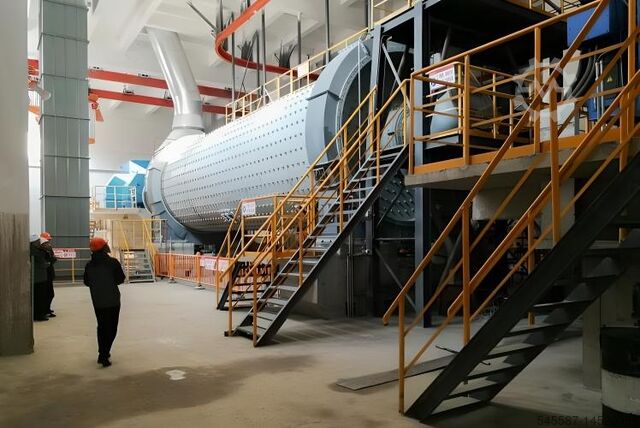
 Zheng Zhou Shi
10,533 km
Cement mill,clinker grinding plant
Clinker grinding mill / cement ball millcement grinding with air classifier
Call
Year of construction: 2025, condition: new, functionality: fully functional, A cement clinker grinding mill is a specialized equipment used to grind the hard nodular clinker into fine powder, which is cement. Most cement is currently ground in ball mills and also vertical roller mills, which are more effective than ball mills.
Ncodsq Nfbhopfx Ad Nsl
Here are key features and information about cement clinker grinding mills:
1. Raw Materials:
- The main raw material for making cement is clinker, which is produced by sintering limestone and clay. Other materials such as gypsum, fly ash, or slag may also be added during the grinding process to achieve specific properties.
2. Grinding Process:
- The clinker and other additives are finely ground in the grinding mill to produce cement. The grinding process is a crucial step in cement production and contributes significantly to the final quality of the product.
3. Types of Mills:
- Ball Mills: Traditional ball mills are commonly used for grinding clinker. They operate by rotating a cylinder with steel grinding balls, causing the balls to fall back into the cylinder and onto the material to be ground.
- Vertical Roller Mills (VRM): VRM technology has become increasingly popular for clinker grinding. These mills use a rotating table with rollers to crush and grind the clinker, providing energy efficiency and a smaller footprint compared to ball mills.
4. Gypsum Addition:
- Gypsum is often added during the grinding process to control the setting time of the cement. It prevents flash setting of the clinker and facilitates the formation of a workable and pumpable cement paste.
5. Quality Control:
- Quality control measures, such as monitoring the fineness of the cement, chemical composition, and other properties, are implemented during the grinding process to ensure the final product meets the required specifications and standards.
6. Clinker Cooling:
- Before grinding, the clinker is produced by heating the raw materials in a kiln. The clinker is then cooled before entering the grinding mill to prevent excessive heat build-up during grinding.
7. Dust Collection and Environmental Considerations:
- Dust collectors and air pollution control systems are often employed to capture and control the dust generated during the grinding process, addressing environmental and safety concerns.
8. Packaging and Storage:
- After grinding, the cement is typically stored in silos before being packaged in bags or dispatched in bulk for distribution to construction sites or for sale in the market.
Cement clinker grinding mills play a crucial role in the cement production process, and advancements in technology continue to improve the efficiency and environmental sustainability of the grinding process.
Listing


 Zheng Zhou Shi
10,533 km
Powder equipment for sand & micro powder
Mingyuan Powder production equipment1.83X11m Micro Powder Ball Grinding Mill
Call
Condition: new, Year of construction: 2025, functionality: fully functional, Ball Mill with Air Classifier: The Ultimate Powder Processing Equipment
In the world of industrial powder production, precision, efficiency, and flexibility are paramount. Whether producing ultra-fine powders for high-tech applications or coarser materials for everyday products, the combination of a Ball Mill with Air Classifier offers unparalleled performance. This dynamic duo provides a comprehensive solution for industries ranging from chemicals and ceramics to paints, plastics, and pharmaceuticals.
This article introduces the ball mill with an air classifier, explores its applications, and highlights the key advantages of this essential powder equipment.
General Introduction to Ball Mill with Air Classifier
ball mill with air classifier is an advanced grinding and classification system designed for efficient, high-quality powder production. The system consists of two main components:
1. Ball Mill: A cylindrical grinding device filled with grinding media (such as steel balls) that operates by rotating around its axis. The raw material is reduced to smaller particle sizes through impact and friction within the mill.
2. Air Classifier: A sophisticated device that separates particles based on size using airflow. Fine particles are carried away, while coarser particles are returned to the ball mill for further grinding.
The combination of these two components creates a closed-loop system that ensures consistent particle size distribution, high efficiency, and minimal waste.
Applications of Ball Mill with Air Classifier
The ball mill with air classifier is a versatile solution used in a wide range of industries to process various materials. Key applications include:
1. Mineral Processing
Nedpfovlwkxox Ad Nocl
The system is widely used in the production of minerals such as calcium carbonate, quartz, feldspar, and talc. These finely ground minerals are essential for industries like ceramics, paints, plastics, and rubber.
2. Cement and Construction Materials
Cement and other construction materials require precise particle size control for optimal performance. The ball mill with air classifier ensures uniformity and enhances the quality of construction materials.
3. Chemicals and Pharmaceuticals
Fine powders play a critical role in the chemical and pharmaceutical industries. From active pharmaceutical ingredients (APIs) to industrial chemicals, this system delivers the consistent quality required for these applications.
4. Paints, Coatings, and Pigments
The production of paints and coatings demands ultra-fine powders to achieve smooth finishes and vibrant colors. The ball mill with air classifier produces high-quality powders for superior results.
#### 5. Food and Agriculture
Food-grade powders such as additives, preservatives, and agricultural products like fertilizers can be efficiently processed using this system, meeting stringent regulatory requirements.
Industries That Benefit from Ball Mill with Air Classifier
Several industries rely on the capabilities of this system to produce fine powders with specific characteristics:
- Ceramics: Produces high-purity powders for tiles, insulators, and advanced ceramics.
- Rubber and Plastics: Creates fillers and additives for improved durability and performance.
- Pharmaceuticals: Ensures consistent particle size for APIs and excipients.
-Construction: Delivers materials for concrete, plaster, and other applications.
Listing


 Zheng Zhou Shi
10,533 km
Construction machine/ sand gravel making
Sand gravel fabrication plant50-600 t/h sand gravel crushing plant
Call
Condition: new, Sand Gravel Fabrication Plant: Essential Solution for Modern Construction Needs
In the construction and infrastructure industry, high-quality sand and gravel are critical raw materials for creating concrete, asphalt, and other foundational elements. A Sand Gravel Fabrication Plant is the cornerstone of producing these materials efficiently and at scale. With advanced technology, versatility, and scalability, these plants cater to a wide range of projects, ensuring consistent quality and meeting the growing demand for construction materials.
This article explores the general introduction, features, and applications of sand gravel fabrication plants, including both stationary and mobile systems.
General Introduction to Sand Gravel Fabrication Plants
A sand gravel fabrication plant is a specialized facility designed to process raw materials such as sand, gravel, and aggregates into construction-grade products. These plants combine various equipment, including crushers, screens, conveyors, washers, and storage units, to convert raw materials into ready-to-use aggregates.
There are two primary types of sand gravel fabrication plants:
Stationary Fabrication Plants:
Fixed installations designed for high-capacity production.
Ideal for large-scale operations and long-term projects.
Mobile Sand Gravel Fabrication Plants:
Portable systems that can be transported to different project sites.
Perfect for temporary operations and projects in remote locations.
Both types are equipped with advanced machinery and automation systems to ensure high efficiency, precision, and sustainability.
Applications of Sand Gravel Fabrication Plants
Sand gravel fabrication plants are indispensable across multiple industries due to their ability to produce high-quality aggregates. Key applications include:
1. Construction and Infrastructure
Produces sand and gravel for concrete, asphalt, and base materials.
Supports large-scale infrastructure projects such as highways, bridges, airports, and railways.
2. Residential and Commercial Development
Supplies aggregates for building foundations, driveways, landscaping, and drainage systems.
Plays a vital role in residential housing and commercial property construction.
3. Road Construction
Provides high-quality crushed stones and sand for roadbeds, pavements, and highways.
Ensures durability and longevity of road surfaces.
4. Mining and Quarrying
Efficiently processes mined materials into usable aggregates.
Enhances productivity in quarrying operations with optimized material handling systems.
Njdpfxsvlwqlj Ad Necl
5. Environmental Restoration
Supplies aggregates for erosion control, land reclamation, and shoreline protection projects.
Facilitates sustainable environmental rehabilitation efforts.
6. Recycling of Construction Waste
Mobile sand gravel fabrication plants are ideal for recycling concrete and asphalt.
Converts waste materials into usable aggregates, reducing landfill burden and promoting sustainability.
Stationary vs. Mobile Sand Gravel Fabrication Plants
Stationary Fabrication Plants
Best For: Long-term, large-scale projects and industrial operations.
Advantages:
High-capacity production.
Robust and durable structures.
Advanced automation for minimal manual intervention.
Listing


 Zheng Zhou Shi
10,533 km
Filtration system / mining separator
Ore beneficiation plant for gold copperOre dressing plant for zinc lead nickel
Call
Condition: new, Year of construction: 2025, functionality: fully functional, power: 400 kW (543.85 HP), Ore Beneficiation Plant for Nickel, Copper, Zinc, Graphite, Gold, Silver, Chrome, Quartz/Silica
In today’s competitive mining and metallurgical industry, maximizing ore value is critical. Our state-of-the-art Ore Beneficiation Plant offers a complete solution designed to increase the content and quality of raw ore, transforming it into a marketable product ready for further processing or direct sale. Engineered for a wide range of minerals—including nickel, copper, zinc, graphite, gold, silver, chrome, and quartz/silica—our ore beneficiation plant delivers exceptional performance, efficiency, and reliability.
Introduction
Mining operations around the world face the challenge of processing ores that are often low in grade and require extensive refinement to be economically viable. Beneficiation—the process of increasing the concentration of valuable minerals—plays a vital role in reducing operational costs, enhancing recovery, and ultimately, ensuring profitability. Our ore beneficiation plant, also known as an ore processing plant or mine dressing plant, integrates advanced technology and robust engineering to deliver an efficient crushing, grinding, classifying, and separation process.
Designed to handle a wide variety of ores, our plant is the ideal solution for mining companies looking to optimize their extraction and processing operations. Whether you’re processing nickel, copper, zinc, graphite, gold, silver, chrome, or quartz/silica, our plant provides the versatility and performance needed to meet today’s rigorous industrial standards.
## What Is an Ore Beneficiation Plant?
An ore beneficiation plant is a facility where raw ore is processed to improve its quality and increase the concentration of valuable minerals. The plant typically includes several stages of processing:
1. Crushing: The raw ore is reduced in size to allow for more efficient downstream processing.
2. Grinding: Further size reduction to liberate the valuable minerals from the waste material.
3. Classifying: Separation of the ore into different size fractions using screening and hydrocyclones.
4. Separation: Employing various physical processes such as magnetic separation, flotation, or gravity separation to concentrate the valuable minerals.
5. Dewatering: Removal of excess water to prepare the concentrate for further processing or shipping.
Nodpoq Nw Uqefx Ad Nocl
This integrated process not only boosts the metal content but also minimizes waste, thereby improving overall cost efficiency and environmental sustainability.
Listing


 Zheng Zhou Shi
10,533 km
Ball Mill for Ore mining & sand grinding
batch ball mill & wet mining ball mill2400X4500 ball mill
Call
Condition: new, fuel type: electric, Year of construction: 2025, machine/vehicle number: 2700x4500, Equipment: low noise, Main Technical parameters of the ball mill
Drum diameter: 2400mm
Drum length: 4500mm
Motor power: 320KW
Max input size: 25mm
Capacity:35-60 t/h
Weight: 72Tons
Ball loading: 30Tons
Besides this model, we also have the other models like 2700x4500, 3200x4500, 1830x13000mm, and so on, and we can also offer customerization service, we can also provide complete grinding solution for various industries like cement, quartz, ore beneficiation plant, and so on, welcome to contact us for more info.
A ball mill is a common grinding machine used to grind and blend materials for use in mineral processing, including ore mining and the production of silica (silicon dioxide). When it comes to ore mining and silica grinding, the characteristics of the ore and the final product requirements will play a crucial role in selecting the appropriate ball mill.
Here are some considerations for using a ball mill in ore mining and silica grinding:
1. Ore Characteristics:
- Hardness: The hardness of the ore determines the type of ball mill that is most suitable. Harder ores may require a more robust and wear-resistant ball mill.
- Particle Size Distribution: The initial particle size of the ore affects the grinding process. Different ores may require different approaches to achieve the desired particle size.
2. Silica Grinding:
- Silica Content: If the primary goal is to grind silica, it's important to consider the initial silica content and the desired final particle size. Silica grinding often requires special attention to prevent excessive wear on the milling equipment.
3. Ball Mill Type:
- Overflow vs. Grate Discharge: The type of discharge from the ball mill can impact the final product and the grinding efficiency. Overflow mills are generally used for most grinding applications, while grate discharge mills are more suitable for certain types of ores.
4. Mill Size and Capacity:
- Mill Diameter and Length: The size of the ball mill should be selected based on the amount of material to be ground and the desired throughput.
- Capacity: Ensure that the chosen ball mill has the capacity to handle the required volume of material efficiently.
5. Grinding Media:
- Material and Size: The choice of grinding media (balls or cylpebs) and their size depends on the hardness of the ore and the desired final particle size. Different grinding media materials can impact the purity of silica during grinding.
6. Liners and Lifting Aids:
- Liners: Consider the type of liners used in the ball mill to protect the shell and optimize the grinding process.
- Lifting Aids: Some mills use lifting aids to enhance the grinding action and promote better mixing of the material.
7. Control and Monitoring Systems:
- Automation: Utilize control systems to automate the milling process and ensure optimal performance.
- Monitoring: Regularly monitor the milling process to adjust parameters as needed for consistent and efficient operation.
8. Safety Measures:
- Safety Systems: Implement safety features to protect personnel and equipment during operation.
Always follow the manufacturer's recommendations and guidelines for operation and maintenance to ensure safe and efficient use of the ball mill in ore mining and silica grinding applications.
Ncodpfxjq Igiij Ad Nsl
Listing


 Zheng Zhou Shi
10,533 km
Crushing equipment
Mingyuan stone crusher machinegravel & aggregate production equipment
Call
Condition: new, Year of construction: 2025, Gravel and aggregate production equipment is used to crush, screen, and process stones, rocks, and other materials for the construction industry. This equipment is essential in producing various types of aggregates, including crushed stone, gravel, sand, and recycled concrete, which are used in the construction of roads, buildings, bridges, and other infrastructure projects. Here are some common types of equipment used in gravel and aggregate production:
1. Jaw Crusher:
- Jaw crushers are primary crushers used to break down large rocks into smaller, more manageable pieces. They are essential for the initial stage of aggregate production.
2. Impact Crusher:
- Impact crushers are used to crush rocks and stones with the help of impact force. They are suitable for shaping and producing fine aggregates.
Nedpfx Ajq Nxz Dsd Njcl
3. Cone Crusher:
- Cone crushers are often used for secondary and tertiary crushing in aggregate production. They produce well-shaped and finely graded aggregates.
4. Vertical Shaft Impact (VSI) Crusher:
- VSI crushers are designed for shaping and producing high-quality artificial sand. They are suitable for processing materials with high abrasiveness.
5. Screens:
- Vibrating screens are used to separate different sizes of aggregates. They classify the material based on particle size and ensure that the final products meet specified gradation requirements.
6. Scalping Screens:
- Scalping screens are used to remove oversized materials before they reach the primary crusher. This helps to optimize the crushing process and prevent damage to the equipment.
7. Washing Equipment:
- Washing equipment, such as sand screws or log washers, is used to remove impurities and fine particles from aggregates. This is particularly important for producing high-quality concrete sand.
8. Conveyors:
- Conveyors are used to transport materials between different stages of the crushing and screening process. They play a crucial role in enhancing efficiency in material handling.
9. Stackers and Reclaimers:
- Stackers are used to create stockpiles of processed aggregates, while reclaimers are used to retrieve the material from the stockpile. Both are essential for efficient material storage and handling.
10. Crushing Plants:
- Complete crushing plants include various types of crushers, screens, and conveyors integrated into a single system. These plants are designed to handle large volumes of material efficiently.
Listing


 Freiberg am Neckar
18,600 km
Linear axis
KUKAKRC4 Linearachse 1500/3T(2)
Call
Condition: good (used), Year of construction: 2014, functionality: fully functional, overall weight: 2,200 kg, KUKA KRC4 linear axis 1500/3T
Article number: 8143983
Serial number: 143983
The KUKA KRC4 linear axis is a high-precision and robust motion unit that is ideal for industrial applications. It ensures precise control of motion sequences and plays a central role in automation processes and robotic systems within production.
Ncjdpsvzxg Tefx Ad Nsl
Its stable construction ensures consistently reliable performance, even in the most demanding applications.
Listing


 Canada
12,411 km
Gear Testing Machine
KLINGELNBERG-OERLIKONCS 200
Call
Condition: good (used), Year of construction: 2002, Clampable cutter head type (max.) 460 mm
Cutter head weight (max.) 150 kg
Mounting disc diameter for cutter heads (Ø) 360 mm
Mounting cone for cutter heads Nominal diameter Ø 58,227 mm
travel -z axis 200 mm
diagram-drawing enlargement ±10 - ± 500 µm
weight of the machine ca. 2,3 t
dimensions of the machine ca. 2 x 1,5 x 2,03 m
In the manufacturing process for spiral-toothed bevel gears, the quality of the
gear cutting gear cutting tools used plays a decisive role. Particularly in
high gear cutting quality and a long service life can only be achieved with
precisely can only be achieved with precisely adjusted cutterheads.
The Oerlikon cutterhead setting and testing device CS 200 enables quick and
easy setting of the individual knives and simple adjustment of the individual
knives, it checks the position and documents the measurement results. The
measuring sequence on the CNC-controlled testing device is partially automated:
The individual actions for carrying out the actions for carrying out the
sequence are displayed on the screen via the operator guidance. The positioning
of the individual knives in the cutter head and the height of the knife tips is
largely automatic thanks to a special sequence and is simultaneously documented
by means of a run-out diagram. A subsequent measuring sequence checks the
radial position of the inner and outer cutting edges of all knives in the
cutterhead. If individual test parameters on the knives do not correspond to the
the tolerance specifications, this can be individually repositioned. The
combination of semi-automated setting sequence, operator-guided set-up actions
and automatic operator-guided set-up actions and automatic measuring sequence,
cutterheads can be can be set conveniently, quickly and with high precision.
Operator-guided setting and test sequence
- Graphic display of the cutter head design and the measurement results with
Nodpew N S E Asfx Ad Njcl
tolerance check
- Instructions for the operator in plain text Instructions for the operator in
plain text (without coded information)
- Simple assignment of the measurement results to the knives
- Documentation of the setting and measurement results via printer- Setting and
test sequence suitable for ARCON®, RSR, Spirapid, SPIRON®, TRI-AC® types
- Interface for neutral data
Listing


 Canada
12,411 km
Gear Testing Machine
KLINGELNBERG-OERLIKONCS 200
Call
Condition: good (used), Year of construction: 2004, Clampable cutter head type (max.) 460 mm
Cutter head weight (max.) 150 kg
Mounting disc diameter for cutter heads (Ø) 360 mm
Mounting cone for cutter heads Nominal diameter Ø 58,227 mm
travel -z axis 200 mm
diagram-drawing enlargement ±10 - ± 500 µm
weight of the machine ca. 2,3 t
dimensions of the machine ca. 2 x 1,5 x 2,03 m
In the manufacturing process for spiral-toothed bevel gears, the quality of the
gear cutting gear cutting tools used plays a decisive role. Particularly in
high gear cutting quality and a long service life can only be achieved with
precisely can only be achieved with precisely adjusted cutterheads.
The Oerlikon cutterhead setting and testing device CS 200 enables quick and
Nodsul Efmjpfx Ad Nocl
easy setting of the individual knives and simple adjustment of the individual
knives, it checks the position and documents the measurement results. The
measuring sequence on the CNC-controlled testing device is partially automated:
The individual actions for carrying out the actions for carrying out the
sequence are displayed on the screen via the operator guidance. The positioning
of the individual knives in the cutter head and the height of the knife tips is
largely automatic thanks to a special sequence and is simultaneously documented
by means of a run-out diagram. A subsequent measuring sequence checks the
radial position of the inner and outer cutting edges of all knives in the
cutterhead. If individual test parameters on the knives do not correspond to the
the tolerance specifications, this can be individually repositioned. The
combination of semi-automated setting sequence, operator-guided set-up actions
and automatic operator-guided set-up actions and automatic measuring sequence,
cutterheads can be can be set conveniently, quickly and with high precision.
Operator-guided setting and test sequence
- Graphic display of the cutter head design and the measurement results with
tolerance check
- Instructions for the operator in plain text Instructions for the operator in
plain text (without coded information)
- Simple assignment of the measurement results to the knives
- Documentation of the setting and measurement results via printer- Setting and
test sequence suitable for ARCON®, RSR, Spirapid, SPIRON®, TRI-AC® types
- Interface for neutral data
Listing


 Oberkochen
18,554 km
Cross cut saw
SALVAMACLegend 500
Call
Condition: used, cutting width max. 310 mm
Cutting height max. 125 mm
Saw blade diameter 500 mm
Motor output 5,5 kW
SALVAMAC LEGEND 500 – The semi-automatic under-table cross-cut saw
----- -----
Maximum cutting area: 220x125/ 260x100/ 285x80/ 310x50 mm.
When sawing stacked boards h max. 100 mm.
The structure is made entirely of thick-walled and reinforced throughout
painted steel. Solid floor mounting system with flanged steel feet
for the mounting hole.
Bimanual safety cutting control in ergonomic position.
Engine power of the saw motor 5.5 kW.
Adjustable cutting speed via a pneumatic controller.
Maximum system for weight balance and longevity. Shock absorbing system.
Independent pneumatic adjustment options to adapt to different
Types of processing.
Durable and easily replaceable saw blade adjustment bar.
HM circular saw blade, diameter 500 mm, Z=108.
Pneumatic upper workpiece clamping press with electro-pneumatic control.
Presser movement system using innovative ball bearings with double dust protection
and automatic lubrication system.
CE-compliant electrical system. The CE models must come with it as standard
At least 1 meter long support plates/roller tables must be provided at the
inlet and outlet.
Ncedpfx Asv Uq Tled Nel
Technical data:
-----
Saw cross section max. mm. 220x125, 260x100, 285x80, 310x50
Saw blade motor power: 5.5 kW
Saw blade diameter: 500 mm
Saw blade type: HM Z=108
Saw blade rotation speed: 2800 rpm
Air consumption per cycle: 5 Nl
Intake port: 1 x 120 mm / 1 x 100 mm
Air pressure: 6 - 8 bar
Voltage: V 400/50 Hz, 3 phase
Worktop height: 900 mm +- 20 mm
Color: Ral 7035
Machine additionally equipped with:
-----
2 m infeed table (right of the saw) with unpowered rollers:
Painted steel frame with galvanized wheels. load capacity 230 kg,
Diameter 60 mm, distance 250 mm, width 320 mm. The space between the roles
is enclosed in painted steel.
Including lateral guidance.
2 m outfeed table (left of the saw) with unpowered rollers:
Painted steel frame with galvanized wheels. Load capacity 230 kg, diameter
60 mm, distance 250 mm, width 320 mm. The space between the rollers is of
enclosed in painted steel.
Includes side guide, stop guide and millimeter scale.
2 pieces of strong pneumatic stops with a width of 200 mm
-----
Total price ex works: on request!
-----
Image and video not original, show identical model
Further options such as longer inlet/outlet, stop systems on request!
(technical data according to the manufacturer without guarantee!)
Listing

 Czech Republic
18,211 km
Electrospinning machine // Nano Spider
Elmarco Czech Republic1x Unit NS 8S1600U + NSAC2000
Call
Condition: like new (used), Year of construction: 2020, operating hours: 100 h, functionality: fully functional, machine/vehicle number: - NS8S1600U, 1x Unit NS 8S1600U + NSAC2000 (Air Conditioner Unit).
This technology enables the development and manufacturing of very homogeneous nanofibre membranes for technical industrial filtration and medical device production components (API).
The compactness and porosity of the nano-fibre membrane make it suitable for surface filtration and microfiltration. The membrane's use considerably increases filtration efficiency and prolongs the filter's service life (number of regeneration cycles).
The Nanospider TM technology is also suitable for the production of nano-fibre membranes permeable to vapours for clothes.
We design the resulting nanofiber layer according to the type of application and the desires of our customers.
Production capacity of 20,000,000m2/year for PA6 on cellulose, basis weight: 0,03 g/m2
Possibility of individual formatting of the width of the output role (up to 1600 mm).
Ncsdpfx Ajxmhb Hjd Nsl
Inspection Protocol from June 23, 2025, when the technology was tested by Elmarco, the original producer.
Listing


 Fumane (Verona)
18,643 km
Complete Bottling Line
Call
Condition: used, operating hours: 500 h, Used Water Complete Bottling Line Flat Drinks 300 bph 18.9L CapSnap
The CapSnap Adapta Series is a modular integrated bottle washing, filling, and capping system. It is the perfect solution for medium-sized HOD water bottling operations. Designed for adaptability – these machines can be configured to handle both 3-Gallon and 5-Gallon bottles. This complete system effectively handles 300 – 600 BPH.
Manufacturer: CAP SNAP – Portola – USA
Year of production: 1999 (completely refurbished in 2015 and since then it has worked only 500 hours)
Capacity: 300 bph
Required energy sources: air 6 bar, power 40 kW, cleaning water supply 2 bar and filling water supply
Line composition:
Semi-automatic cap removal device: This device is used to remove caps from bottles.
Entrance conveyor: On this conveyor belt, the bottles are manually placed.
Prewash with cold water through nozzles: This is the first stage of washing, using cold water.
Wash with warm water and detergent through nozzles: This is the second stage of washing, which uses warm water at 50°C with detergent.
Rinse with cold water and disinfectant through nozzles: This is the last washing stage, which uses cold water and disinfectant.
Bottle filling outlet conveyor: The bottles are filled here, two at a time.
UV Filter: The water is filled through a UV filter, which is built into the water inlet of the bottle.
Transport of filled bottles to the capper: Here, the bottles are transported from the filler to the capper.
Dosage caps through disinfectant on the bottle: Here, the caps are disinfected and ready to be put on the bottles.
Bottle cap cylinder: Here the bottle cap is applied.
Ncedovgud Sspfx Ad Njl
Output conveyor: From here, the bottles are manually loaded onto pallets.
Each part of this system has a specific role in the process of bottle filling, and all together they form a functional production Used Water Complete Bottling Line.
Listing


 Fumane (Verona)
18,643 km
Complete Bottling Line
Call
Condition: used, Used Bottling Line KRONES for Glass Bottles up to 20000 bph
Introduction to the Bottling Line KRONES
Initially, the used KRONES bottling line for glass bottles is highly sought after in industrial settings due to its reliability and efficiency. Comprising a range of top-tier components, the Complete Bottling Line KRONES ensures seamless performance, effectively meeting the stringent demands of high-volume production.
Main Components
Firstly, the KRONES K-131-669 filling monoblock, manufactured in 2016, stands as the centerpiece of the Complete Bottling Line KRONES. Capable of handling a remarkable 20,000 bottles per hour, it is complemented by the 1998 KRONES 472-072 depalletizer and the 2000 Gronemeyer RINSER 8983-400-4. Consequently, this collective setup facilitates a smooth and uninterrupted workflow from bottle unloading to the filling process in the Complete Bottling Line KRONES.
Ncodpfxsvgvwmj Ad Nel
Quality Control of the Used Bottling Line KRONES
Maintaining product quality is paramount in any bottling operation. Therefore, the 1999 KRONES CHECKMAT inspector plays a pivotal role in this regard in the Complete Bottling Line KRONES. With advanced functionalities encompassing not only level control but also meticulous label inspection, it ensures that every product meets the desired standards. Furthermore, the 2000 ACI TA20 2 AE bottle dryer guarantees that bottles are impeccably prepared for subsequent labeling and packaging stages, effectively eliminating any potential issues that may arise from moisture.
Labeling and Packaging
Efficient labeling and packaging are essential components of the KRONES bottling line. Consequently, the 1999 KRONES STARTMATIC K-080-669 excels in these areas. With precise label application capabilities, coupled with the ability to print directly onto glass bottles, it not only streamlines operations but also elevates brand presentation in the Used bottling line KRONES for glass bottles up to 20000 bph. Complementing this is the 1999 SMI SMI/7507 case packer and the 1997 FRANPACK Typ 121971214 pallet wrapper, ensuring that products are securely packaged and ready for distribution.
Operational Status and Specifications
The KRONES bottling line is in flawless working condition, and meets the demands of modern production environments. With a remarkable throughput of 20,000 bottles per hour, the line promises to enhance operational efficiency while maintaining product quality. Specifically designed for glass containers and primarily catering to beer production, it guarantees precise and consistent fills, ultimately resulting in superior product quality and customer satisfaction.
In summary, the KRONES bottling line represents a sound investment for businesses seeking to optimize their bottling operations. With its robust construction, cutting-edge features, and proven track record, it is poised to deliver exceptional performance and elevate production standards to new heights.
Listing


 Fumane (Verona)
18,643 km
Blow Molding Machine
SMIFORMSR 8
Call
Condition: used, Year of construction: 2005, Used Blow Molding Machine SMIForm SR8 year 2005 12000 bph
The Used Blow Molding Machine SMIForm SR8 year 2005 12000 bph efficiently delivers continuous production in the bottling sector. Manufactured in 2005, this machine currently operates and, importantly, remains available for on-site inspection until March 2025.
Technical Features of the Used Blow Molding Machine SMIForm SR8 year 2005 12000 bph
This SMIform machine, model SR8, features 8 cavities for bottle formation. Consequently, this configuration produces 12,000 bottles of 0.5 liters per hour. For larger formats, such as bottles of 1.5 liters and 2 liters, it achieves a production speed of 9,600 bph.
Moreover, the 18-81 bottle neck type guarantees compatibility with a wide range of caps and closures, making it adaptable to diverse production needs. Thus, this standard ensures precise sealing and airtight closures..
Main Components of the Used Blow Molding Machine SMIForm SR8 year 2005 12000 bph
This SMIform machine integrates a preform loader, a preform elevator, and a preform orientator, which work in harmony to provide an automated and efficient feeding process.
Njdpsvv E Hisfx Ad Nocl
Preform loader: This component loads preforms from the storage area or initial container and transfers them seamlessly to the elevator system. Consequently, it ensures continuous feeding without manual interruptions.
Preform elevator: The elevator lifts the preforms from the lower level to the machine’s operating level, ensuring a continuous flow to the orientator and minimizing downtime. Therefore, production proceeds smoothly.
Preform orientator: The orientator positions and aligns each preform correctly before inserting them into the blow molding cavities. Additionally, using mechanical guides or vibrations, it prevents misaligned preforms from entering the process.
The integrated tipper tilts and discharges large quantities of preforms, typically stored in containers or boxes, in a controlled manner. Subsequently, the tipper feeds the preforms into the production line, maintaining a consistent flow while preventing overloads and blockages. By automating this process, the tipper reduces manual handling and significantly increases safety and productivity.
The unscrambler plays a key role in separating and aligning the preforms before their insertion into the blow molding cavities. Specifically, by applying rotation and vibration, the unscrambler ensures optimal positioning, minimizing errors and machine stoppages. Hence, the combined action of the tipper and unscrambler maximizes production line efficiency and guarantees product quality.
Furthermore, the machine’s rotary configuration facilitates continuous and stable production, which is ideal for high-intensity manufacturing. Its rotary technology, as a result, distributes heat evenly during the blowing process, ensuring high-quality output.
Safety and Documentation
The blow molding machine includes technical manuals and safety protections.
Listing


 Fumane (Verona)
18,643 km
Complete Bottling Line
Call
Condition: used, operating hours: 2,001 h, Used Bottling Line for baby powder milk 18000 cphs
The bottling line for baby powder milk at 18,000 cans per hour operates as a fully adutomated system that ensures high efficiency and precision. Each machine in this line optimizes production flow, reduces waste, and meets the strict quality standards required in the food sector
Key features of the Used Bottling Line for baby powder milk 18000 cph
Depalletization
The process starts with the Jorgensen depalletizer (2000), an advsanced system that handles preformed cans. This machine integrates a Siemens S7 PLC and Danfoss frequency converters, enabling precise production flow management. Additionally, the system includes an empty pallet collection station and an infeed buffer for 5 pallets, which facilitate continuous processing without interruptions.
Rinsing machine
Next, the cans move through the air rinsing machine, which removes particles and impurities using a high-pressure compressed air jet. This process prevents contamination while maintaining optimal hygienic conditions before filling. As a result, the product remains safe and meets regulatory requirements.
Scoop Placement machine in this bottling line for baby powder milk
The scoop placement machine (Hoppmann, 2014) plays a critical role in ensuring the accuracy of scoop insertion. This machine, which has a capacity of 360 scoops per minute, features a high-capacity buffer hopper, dedicated conveyor belts, and an automated insertion unit. Consequently, it places scoops with exceptional precision in each can.
Filling machine
The powder filling machine (Mannesmann Dematic / Colby Powder Systems, 2000) performs the filling process efficiently. This machine employs a dual-stage weighing system with automatic feedback, allowing precise dosage adjustments. The CRF 24H model reaches a maximum capacity of 300 cans per minute for 99 mm cans and 150 cans per minute for 127 mm cans. Moreover, the Mettler Toledo Garvens scale (2020) ensures weight conformity, enhancing production consistency…
Production Capacity
Ncodpfx Adevzxgys Nol
The line accommodates various filling capacities, making it highly versatile:
400-gram cans: up to 18,500 cans per hour.
800 / 850 / 900-gram cans: up to 10,200 cans per hour.
Pre-seamers
In this used line for baby powder milk, following filling, the can bottom unpacker and pre-seamer prepare the cans for final sealing. The Siemens S7 PLC integrated into the system ensures precise control. Additionally, the Ferrum pre-seamers (2000), with models F504EC for 127 mm cans and F505EC for 99 mm cans, provide strong adhesion before the final sealing step.d
Quality Control
To guarantee product integrity, the high care room control station supervises all production stages. Equipped with a PLC and production management software, this station allows operators to monitor and adjust processes as needed.
We make it easier for you to find: "roles"
You will receive new offers immediately and free of charge via e-mail
You can easily terminate the search request at any time
Used Roles (107)
Search Machineseeker now with more than 200,000 used machines:Browse through the most popular machine descriptions:
This may be of interest to you

Machineseeker agrees three-year extension as European Championship sponsor

10 valuable tricks for buying used machines online

Machineseeker remains title sponsor of the EHF Champions League

Photo gallery: the 10 strongest forklift trucks in the world

Photo gallery: The World's 10 biggest excavators

Olympic Games: Machineseeker supports “Team Germany” in Paris

Get information now
+44 20 806 810 84
+44 20 806 810 84
List now
*per listing / month


