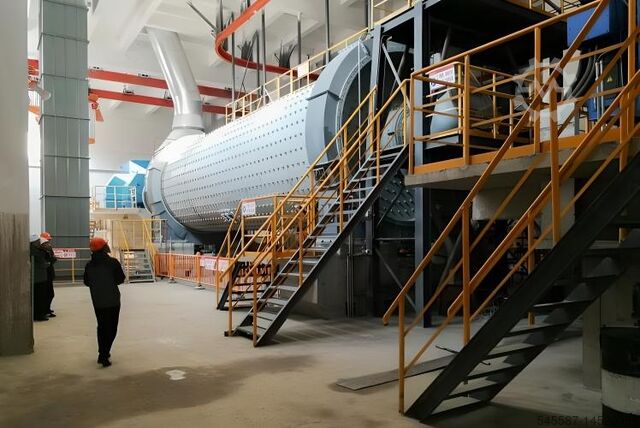
Used Grinding Mill for sale (13,774)
Sort results
- Lowest price Highest price
- Newest listings Oldest listings
- Shortest distance Farthest distance
- Newest year of manufacture Oldest year of manufacture
- Latest update Oldest update
- Manufacturer A to Z Manufacturer Z to A
- Relevance
- Lowest price
- Price
- Highest price
- Price
- Newest listings
- Release date
- Oldest listings
- Release date
- Shortest distance
- Distance
- Farthest distance
- Distance
- Newest year of manufacture
- Year of construction
- Oldest year of manufacture
- Year of construction
- Latest update
- Update
- Oldest update
- Update
- Manufacturer A to Z
- Manufacturer
- Manufacturer Z to A
- Manufacturer
- designation from A to Z
- Description
- designation from Z to A
- Description
- Model from A to Z
- Model
- Model from Z to A
- Model
- Lowest reference
- Ref.No.
- Highest reference
- Ref.No.
- Shortest runtime
- Runtime
- Longest duration
- Runtime
- Relevance
- Relevance
Listing
Zheng Zhou Shi
10,533 km
Powder grinding machine
Fine powder grinding mill, clinker millSuperfine ball mill for micro powder
Call
Condition: new, Year of construction: 2025, A superfine ball mill is a type of milling machine that is used to grind materials into very fine particles. This type of ball mill has some distinctive features that make it especially suitable for processing even the hardest materials with low contamination and minimal wear. It is commonly used in various industries, including pharmaceuticals, minerals, pigments, and chemicals, for producing micro powder or nanoparticles.
Here are some key features and considerations for a superfine ball mill for micro powder:
1. High Grinding Efficiency: Superfine ball mills are designed to achieve high grinding efficiency by utilizing grinding media with a relatively small size, leading to a large surface area for grinding.
Iedpeq Nf Uwofx Ah Nsht
2. Precision Control: These mills often come with advanced control systems to regulate parameters like rotation speed, temperature, and grinding time, allowing precise control over the particle size distribution.
3. Specialized Design: The mill is typically designed with features to minimize contamination, such as using materials resistant to wear and corrosion. Some mills also have cooling systems to prevent overheating during the milling process.
4. Variety of Materials: Superfine ball mills can handle a wide range of materials, including both brittle and fibrous substances. They are often used for milling hard materials that require fine grinding, such as ceramics, minerals, or pigments.
5. Size Reduction to Micro or Nano Level: The primary goal of a superfine ball mill is to reduce particle size to the micro or even nano level. This is achieved by the intense grinding action that occurs within the mill.
6. Classifier System: Some superfine ball mills incorporate a classifier system to control the particle size distribution more precisely. This allows for the separation of fine particles from coarser ones during the milling process.
7. Batch or Continuous Operation: Depending on the specific design, these mills can operate in either batch or continuous mode, offering flexibility based on the production requirements.
8. Safety Measures: Safety features may be included, such as monitoring and control systems to prevent overloading, overheating, or other potential issues during operation.
When selecting a superfine ball mill for micro powder production, it's important to consider the specific requirements of your application, the characteristics of the materials you're working with, and the desired final particle size distribution. Always follow the manufacturer's guidelines for operation, maintenance, and safety to ensure optimal performance and longevity of the equipment.
Listing
Zheng Zhou Shi
10,533 km
Fine Powder Grinding Plant
Cement mill & Ultrafine Grinding MillFine Powder Grinding Plant
Call
Condition: new, functionality: fully functional, Year of construction: 2025, Cement Mill & Ultrafine Grinding Mill
🏗️ Introduction to Cement Mill & Ultrafine Grinding Mill
In the world of construction and materials processing, achieving the right particle size is essential. Introducing the Cement Mill and Ultrafine Grinding Mill—two pivotal machines designed to deliver superior grinding performance for cement production and ultrafine materials. Let’s dive into their features and applications! 💼
🔥 What is a Cement Mill?
A Cement Mill is a crucial piece of equipment in cement production. It grinds clinker, gypsum, and other additives to produce fine cement powder. This machine ensures the optimal particle size for high-quality cement, essential for building robust structures. 🚀
🔧 What is an Ultrafine Grinding Mill?
An Ultrafine Grinding Mill is designed to produce extremely fine powders from various raw materials, such as minerals, chemicals, and industrial waste. It operates at high efficiency, delivering ultra-fine materials for advanced applications like coatings, plastics, and ceramics. 🌟
💼 Key Benefits of Using Cement Mill & Ultrafine Grinding Mill
1. High Efficiency: Both mills are engineered for maximum efficiency, ensuring rapid processing times and reduced energy consumption. 🌿💡
2. Superior Grinding Performance: Achieve consistent, high-quality output with precise control over particle size. 🏭
3. Versatility: Suitable for a wide range of materials, making them essential for various industrial applications. 🌳
4. Durability and Reliability: Built with robust materials, these mills offer long-lasting performance in demanding industrial environments. 💪
📈 Applications in Industry
Cement Mill Applications:
Iedpfsq Nyydjx Ah Njht
1. Cement Production: Essential for producing high-quality cement for construction projects.
2. Infrastructure Development: Used in creating concrete for roads, bridges, and buildings.
Ultrafine Grinding Mill Applications:
1. Mineral Processing: Producing ultra-fine powders for advanced material applications.
2. Chemical Manufacturing: Used in creating fine chemicals for various industrial processes.
3. Environmental Applications: Grinding industrial waste for recycling and reuse. ♻️
🌟 Conclusion
Whether you’re in construction, materials processing, or advanced manufacturing, the Cement Mill and Ultrafine Grinding Mill are indispensable tools. Their efficiency, versatility, and superior performance make them a valuable addition to any production line. Contact us today to learn more about these innovative machines and how they can revolutionize your operations! 📞
Listing
Zheng Zhou Shi
10,533 km
Cement mill,clinker grinding plant
Clinker grinding mill / cement ball millcement grinding with air classifier
Call
Year of construction: 2025, condition: new, functionality: fully functional, A cement clinker grinding mill is a specialized equipment used to grind the hard nodular clinker into fine powder, which is cement. Most cement is currently ground in ball mills and also vertical roller mills, which are more effective than ball mills.
Here are key features and information about cement clinker grinding mills:
1. Raw Materials:
- The main raw material for making cement is clinker, which is produced by sintering limestone and clay. Other materials such as gypsum, fly ash, or slag may also be added during the grinding process to achieve specific properties.
2. Grinding Process:
- The clinker and other additives are finely ground in the grinding mill to produce cement. The grinding process is a crucial step in cement production and contributes significantly to the final quality of the product.
3. Types of Mills:
- Ball Mills: Traditional ball mills are commonly used for grinding clinker. They operate by rotating a cylinder with steel grinding balls, causing the balls to fall back into the cylinder and onto the material to be ground.
- Vertical Roller Mills (VRM): VRM technology has become increasingly popular for clinker grinding. These mills use a rotating table with rollers to crush and grind the clinker, providing energy efficiency and a smaller footprint compared to ball mills.
4. Gypsum Addition:
Ihodpfxjq Nfbho Ah Njt
- Gypsum is often added during the grinding process to control the setting time of the cement. It prevents flash setting of the clinker and facilitates the formation of a workable and pumpable cement paste.
5. Quality Control:
- Quality control measures, such as monitoring the fineness of the cement, chemical composition, and other properties, are implemented during the grinding process to ensure the final product meets the required specifications and standards.
6. Clinker Cooling:
- Before grinding, the clinker is produced by heating the raw materials in a kiln. The clinker is then cooled before entering the grinding mill to prevent excessive heat build-up during grinding.
7. Dust Collection and Environmental Considerations:
- Dust collectors and air pollution control systems are often employed to capture and control the dust generated during the grinding process, addressing environmental and safety concerns.
8. Packaging and Storage:
- After grinding, the cement is typically stored in silos before being packaged in bags or dispatched in bulk for distribution to construction sites or for sale in the market.
Cement clinker grinding mills play a crucial role in the cement production process, and advancements in technology continue to improve the efficiency and environmental sustainability of the grinding process.

Get information now
+44 20 806 810 84
+44 20 806 810 84
List now
*per listing / month
Listing
Zheng Zhou Shi
10,533 km
Mill / grinding mill
Batch Ball Mill, Silica grinding millQuartz ball mill, silica powder grinding
Call
Year of construction: 2025, condition: new, ceramic ball mill ,Batch ball mill ,also called ceramic ball mill ,it is used for fine grinding of feldspar,quartz,clay,ore and so on.The ceramic ball mill is mainly used for material mixing, grinding,uniform product fineness,and saving power.It can be dry or wet.The machine can use different liner types according to production needs to meet different needs.The fineness of the grinding operation is controlled by the grinding time
ceramic ball mill Working principle
when ball mill working,steel balls inside drum will rotate with the drum to some height,and then steel balls fall down with materials to reach the point of grinding.
Ihedpfx Ahevzx Auj Not
Working Principle of Ceramic ball mill
ceramic ball mill ,Intermittent ball mill grinding operation is finished in the cylinder body. When the cylinder rotates, materials ascend to a certain height and then fall along a certain path due to the balls' gravity. Two forces are generated on the balls inside. One is the force on balls through tangent direction; the other is a opposite force in the contrast to the diameter of balls, as a result of the force generated when the balls slide down. These two forces will constitute a couple for the steel balls. The balls are squeezed between the cylinder and the adjacent steel balls, so the couple can make unequal-sized friction force. The balls will orbit along with the cylinder axis and then fall down, which can produce a strong impact force on the ores in the cylinder body and, as a result, the ores will be crushed. In conclusion, the ores in the cylinder body are mainly crushed by composite effect of peeling force, impact force and extrusion force.
Ceramic ball mill also named Intermittent ball mill which adopts the wet intermittent operation, is used for fine grinding and mixing the material such as feldspar, quartz, clay ceramic raw materials. The discharging and the mud size can through through 1000 sieve pore. This machine is high milling machinery, materials should be Broken in the fineness of the state into the grinding mill to get the highest efficiency and economic benefits.
The cement mill is key equipment for the grinding process of the cement clinker after the crushing process of it. It is mainly used in the cement silicate product industry. After long term design and manufacture of the cement mill, our company now has series of cement mill with various specifications to meet with different requirement from our customers.
Features of Cement Mill
Our company adopts suitable transmission methods according to different specifications. We have brim drive and center drive as transmission form. The cylinder adopts new type step lining to increase the grinding area. And it is easily repairable and changeable. The new designed separate-chambered structure adopts flexible lifting blade and fixed lifting blade and it is easily fixed and repaired.
Working Principle of Cement Mill
The cylinder will rotate by the transmission device. Due to the inertial centrifugal force, the steel balls will stick on the liner plate and rotate with the cylinder together. When the steel balls come to a certain height, it will fall down by gravity and impact the raw material. And the repeated going-up, falling down, slide and roll of the steel balls can grind the raw material together with the liner plates.
Listing
Zheng Zhou Shi
10,533 km
Roll forming line
Rod ball mill / Rod Grinding MillFor Sand and mining beneficiation plant
Call
Condition: new, Year of construction: 2025, We have various kinds of ball grinding mill such as batch ball mill, rod mill, cement ball mill, mining ball mill, welcome to contact our team for further details according to your specific requirements.
Ihsdpfx Aheq I Nw Ie Not
Discover more used machines
Listing
Zheng Zhou Shi
10,533 km
Roll forming line
ball grinding mill for mining &fine sandsilica/Barite/limestone powder plant
Call
Condition: new, Year of construction: 2025, power: 300 kW (407.89 HP), A ball mill is a key equipment in the grinding process of barite. It is designed to grind and blend solid or hard materials into smaller pieces, particularly powder. In a barite grinding plant, ball mill is often used for grinding barite into an ultrafine powder for various applications.
Here are key features and aspects of a ball mill used for barite grinding in a plant:
1. Mill Structure:
- The ball mill for barite grinding typically consists of a horizontal cylindrical shell with ends that are flanged and bolted on. The ends may contain openings for feeding and discharging the barite.
2. Grinding Media:
- Steel or ceramic balls are commonly used as grinding media in the ball mill. The grinding media helps in the grinding process by reducing the size of the barite particles.
3. Rotation:
- The mill rotates on its horizontal axis. The rotational motion of the mill, driven by a motor, causes the grinding media to cascade and grind the barite.
4. Feed and Discharge:
Ihsdpfx Ahoq Ngafe Nst
- Barite is typically fed into the ball mill through a hopper or a conveyor. The ground barite particles are discharged from the mill through a discharge end.
5. Control System:
- Modern ball mills are equipped with control systems to monitor and regulate critical parameters, such as mill speed, feed rate, and temperature. This allows for precise control of the grinding process.
6. Size Reduction:
- The primary purpose of the ball mill is to reduce the size of barite particles. Grinding occurs as the barite is subjected to the impact and friction forces of the grinding media.
7. Classification:
- Depending on the desired fineness, a classification system may be integrated into the ball mill to separate fine particles from coarse ones. This ensures that the final product meets the required specifications.
8. Dust Collection:
- A dust collection system may be incorporated to capture and collect fine particles generated during the grinding process, ensuring a clean and safe working environment.
9. Liners:
- The interior of the ball mill is often lined with wear-resistant materials, such as steel or rubber, to protect the mill shell from abrasion and ensure longer equipment life.
10. Application in Barite Processing:
- The ball mill in a barite grinding plant is a crucial piece of equipment for processing barite ore into a fine powder. This powder is used in various industries, including oil and gas drilling, coatings, and pharmaceuticals.
11. Safety Features:
- Safety features, such as monitoring devices and emergency shutdown systems, are typically incorporated into ball mills to ensure safe operation.
The specific design and features of a ball mill for barite grinding can vary among different manufacturers and applications. It is essential to follow proper procedures and guidelines for the operation and maintenance of the equipment to ensure optimal performance and longevity.
Listing
Zheng Zhou Shi
10,533 km
Coal ball mill, coal ball grinding mill
Mingyuan Ball Mill For Fine PowderPowder grinding mill for coal, silica
Call
Condition: new, functionality: fully functional, power: 55 kW (74.78 HP), Year of construction: 2025, A coal ball mill, also known as a coal grinding mill, is a type of grinder used to grind and blend materials for use in mineral dressing processes, paints, pyrotechnics, ceramics, and selective laser sintering. It is a cylindrical device used to grind or mix coal, ores, chemicals, and other materials mechanically.
Here are key features and aspects of a coal ball mill:
1. Cylindrical Structure:
- The coal ball mill typically consists of a horizontal cylindrical shell. The inner surface of the shell is usually lined with abrasion-resistant material such as steel or rubber to protect it from wear.
2. Grinding Media:
- Grinding media, such as steel balls or ceramic balls, are placed inside the coal ball mill to assist in the grinding process. The rotation of the mill causes the grinding media to cascade and grind the coal particles.
3. Coal Feed and Discharge:
Iedpfx Aeq Nf U Esh Nsht
- Coal is typically fed into the mill through a central feed pipe, and the ground coal particles are discharged through a discharge end. The size of the coal particles is reduced during the grinding process.
4. Rotational Motion:
- The coal ball mill rotates on its horizontal axis. The rotation of the mill is controlled by a motor, and the speed can be adjusted to control the grinding process and particle size.
5. Air Sweeping:
- Some coal ball mills incorporate an air-swept design. Air is introduced into the mill to facilitate drying and transport of the pulverized coal out of the mill. This design helps in controlling the moisture content of the coal and aids in the grinding process.
6. Drying and Grinding:
- In addition to grinding, the coal ball mill may also have a drying function. This is particularly important if the coal being processed contains moisture. The drying and grinding functions are often achieved simultaneously in some coal mills.
7. Control System:
- Modern coal ball mills are equipped with control systems to monitor and regulate key parameters such as mill speed, feed rate, and temperature. This allows for optimization of the grinding process and efficient coal processing.
8. Application:
- Coal ball mills are commonly used in coal-fired power plants and other industries where coal is used as a fuel. They are part of the coal pulverization system, which grinds coal into fine powder for combustion in boilers.
9. Safety Features:
- Safety features, such as monitoring devices and emergency shutdown systems, are often incorporated into coal ball mills to ensure safe operation.
10. Wear Protection:
- Wear-resistant materials are used in critical areas of the coal ball mill to withstand the abrasive nature of coal and extend the life of the mill components.
Coal ball mills play a crucial role in coal pulverization processes in power plants, contributing to the efficient combustion of coal for electricity generation. The specific design and features of coal ball mills can vary among different manufacturers and applications.
Listing
Zheng Zhou Shi
10,533 km
Grinding mill
Abrasive Aluminium Oxide Grinding PlantMicrosilica powder Grinding Mill
Call
Condition: new, functionality: fully functional, Year of construction: 2025, Microsilica, also known as silica fume or condensed silica fume, is a byproduct of producing silicon metal or ferrosilicon alloys. Microsilica powder grinding mills are used to process microsilica powder for various applications, including the production of high-performance concrete, refractory materials, and other specialty products. Grinding mills play a crucial role in reducing microsilica particles to the desired fineness. Here are some key aspects related to microsilica powder grinding mills:
1. Mill Types:
- Ball Mill: A traditional ball mill is commonly used for grinding microsilica. It relies on the impact and attrition forces to reduce particle size. It is effective for both wet and dry grinding.
- Vertical Roller Mill (VRM): VRM technology is known for its energy efficiency and the ability to grind materials into a narrow particle size distribution. It is suitable for grinding microsilica.
2. Grinding Process:
- The grinding process involves feeding microsilica particles into the grinding mill. The grinding media (balls or rollers) inside the mill crush and grind the microsilica particles into a fine powder.
3. Particle Size Distribution:
- Controlling the particle size distribution is crucial for achieving the desired properties in the final product. The grinding mill should be equipped with mechanisms to control and monitor particle size distribution.
4. Mill Design and Components:
- The design of the grinding mill, including the type of grinding media, liners, and the grinding chamber, influences the efficiency and performance of the milling process for microsilica.
5. Air Classification (Optional):
- In some cases, air classification systems are integrated into the grinding process to separate fine particles from coarser ones, ensuring a more uniform product.
Isdjq Nxp Sopfx Ah Neht
6. Control Systems:
- Advanced grinding mills often come with automated control systems to regulate various parameters such as feed rate, mill speed, and product fineness.
7. Material Handling:
- Efficient material handling systems are essential to transport microsilica to and from the grinding mill. This may involve pneumatic or mechanical conveying systems.
8. Cooling Systems:
- Grinding processes generate heat, and efficient cooling systems are often integrated to maintain the temperature within a controlled range.
9. Dust Collection:
- Microsilica powder grinding can produce airborne dust. Dust collection systems are necessary to maintain a clean and safe working environment.
10. Quality Assurance:
- Grinding mills for microsilica should be equipped with quality assurance features, such as in-line particle size analysis, to ensure consistency in the final product.
When selecting a microsilica powder grinding mill, factors such as production capacity, energy efficiency, and the required particle size distribution should be considered. Additionally, mills should be chosen based on the specific characteristics of the microsilica being processed and the intended application of the final product.
Listing
Sierakowska Huta
17,772 km
Copy milling machine, pattern milling machine, grinding machine
PadeUINZE 6T 2500
Call
Condition: used, Year of construction: 1997, Catalogue number 7724
TECHNICAL DATA
- number of working spindles: 6 pcs
- spindles pressed pneumatically onto the material
- milling units adjustable up/down, right/left, and at angles
- 6 pneumatic clamps
- stepless feed speed adjustment
- max milling height: 130mm
- max milling length: 2500mm
- max milling width: 330mm
- shaft diameter: 40mm
Motor power:
- milling units 1-2: 2 × 5.5kW
- milling units 3-4: 2 × 4.5kW
- milling units 5-6 universal (sanding or milling): 2 × 4.5kW
- extraction nozzle diameter: 10x152mm
- air supply requirement: 6-8 bar
- dimensions (L/W/H): 8000x3000x2420mm
- weight: approx. 6000kg
ADVANTAGES
– Italian manufacture
– For through-feed processing of curved elements according to template
– 6 milling units
– Not repainted
– Safety guards
Ijdpfx Aow Rv Ahjh Neht
– Original DTR + CE documentation
– Used machine in very good condition
Net price: 46,900 PLN
Net price: 11,160 EUR (based on 4.2 EUR exchange rate)
(Prices may change depending on exchange rate fluctuations)
Listing
Töltéstava
18,077 km
Grinding Mill
LabStarLS1
Call
Condition: ready for operation (used), Year of construction: 2006, functionality: fully functional, The NETZSCH LabStar LS1 is a highly flexible and compact laboratory agitator bead mill designed for wet grinding and dispersion tasks in research, development, and small-batch production.
Iedpfx Ahsxmh D Uo Njht
Good working condition.
Check our other listings as well.
Listing
Wiefelstede
18,341 km
Profile edge milling and grinding machine
ArminiusST-20
Call
Condition: good (used), Year of construction: 1995, Profile edge grinding and milling machine, edge grinding machine, edge grinder, grinding machine
-with copier
-2x: milling heads
-Power: 1.5 kW
-Speed: 3000-6000 rpm
Iodpfxscg Al Ss Ah Neht
-1x: grinding head
-Power: 1.1 kW
-Speed: 500-1500 rpm
-Milling and grinding heads in thickness: adjustable
-Max. Workpiece thickness: 40 mm
-Max. Corner radius: 40 mm
-Dimensions: 1200/1600/H1520 mm
-Weight: 782 kg
Listing
Chişinău
17,253 km
Grinding / Milling equipment
Jehmlich (Germany)REKORD B-SSt-ex
Call
Condition: like new (used), Year of construction: 2020, functionality: fully functional, machine/vehicle number: 20025431, year of last overhaul: 2025, nominal power: 30 kW (40.79 HP), total height: 4,500 mm, REKORD B-SSt-ex Milling Plant – Explosion Protected, with ATEX Relief Valve
-Suitable for: Sugar and substitutes (such as maltitol), Salt, Sodium glutamate, Malt, Cocoa, Milk powder
-For installation and operation in ATEX dust zone 22
-Built entirely in stainless steel AISI 316L
COMPLIANCE
-EU Machinery Directive 2006/42/EC
-EU ATEX Directive 2014/34/EC
-EU Food Contact Directive EGV 1935/2004
Grinding Stock:
-Product: Sugar and substitutes (such as maltitol), Salt, Sodium glutamate, Malt, Cocoa, Milk powder
-Feed size: ≤ 1.5 mm
-Final size: 95% ≤ 20–30 µm, adjustable by speed and feed rate
-Throughput: 300–500 kg/h, depending on fineness
PIN MILL
-Design size: 315 mm
-Housing: Pressure shock resistant, swing-out door with safety interlock
-Grinding elements: Pin rotor and stator
-Speed: 12,000 min⁻¹ / 200 m/s
-Drive motor: max. 22.5 kW; IE3
-Bearings: Heavy-duty, auto-lubricated
-Seal: Labyrinth gasket with sealing gas
LOADING HOPPER WITH SECURITY SIEVE & ATEX ROTARY VALVE
-Volume: 100 L
-Stainless steel sieve (3.15 × 0.8 mm) removes lumps and impurities
-Adjustable feed rate, factory set for target throughput
-Pneumatic slide gate for fast outlet control
-Flame-tight rotary valve, ATEX certified
Ihodpexql Swsfx Ah Nst
-Magnetic separator under valve
-Pneumatic conveying to mill
AGITATED BUFFER CONTAINER WITH FILTER
-Free-fall discharge from mill to 200-L ATEX buffer (70–100 kg capacity)
-Equipped with agitator and level control (auto stop at fill limit)
-Pressure-shock resistant, protected by flame-free relief valve
-Pulse-Jet filter with differential pressure monitoring
-Compressed air system (tanks, tubes, valves) included
-Suction blower for continuous air transport and product flow; purified air vented outside
DISCHARGE SYSTEM
-Screw conveyor with frequency-regulated drive
-Flame-tight discharge rotary valve (ATEX)
-Outlet for bag filling up to 55 kg or cart loading
UTILITIES
-Power: ≈ 30 kW, 3~400 V, 50 Hz, IP 55, TN-C
-Compressed air (oil/water-free): 12–15 Nm³/h, ≥ 6.1 bar
CONTROL UNIT
-SIEMENS 15″ HMI and PLC S7-1200
-Ethernet data and error output to master control system
-Remote maintenance capability
-Drives: min. IP55, colour RAL 5017
-DANFOSS frequency inverters
*Control cabinet installed outside explosion zone
Listing
Zheng Zhou Shi
10,533 km
Powder equipment for sand & micro powder
Mingyuan Powder production equipment1.83X11m Micro Powder Ball Grinding Mill
Call
Condition: new, Year of construction: 2025, functionality: fully functional, Ball Mill with Air Classifier: The Ultimate Powder Processing Equipment
In the world of industrial powder production, precision, efficiency, and flexibility are paramount. Whether producing ultra-fine powders for high-tech applications or coarser materials for everyday products, the combination of a Ball Mill with Air Classifier offers unparalleled performance. This dynamic duo provides a comprehensive solution for industries ranging from chemicals and ceramics to paints, plastics, and pharmaceuticals.
This article introduces the ball mill with an air classifier, explores its applications, and highlights the key advantages of this essential powder equipment.
General Introduction to Ball Mill with Air Classifier
ball mill with air classifier is an advanced grinding and classification system designed for efficient, high-quality powder production. The system consists of two main components:
1. Ball Mill: A cylindrical grinding device filled with grinding media (such as steel balls) that operates by rotating around its axis. The raw material is reduced to smaller particle sizes through impact and friction within the mill.
2. Air Classifier: A sophisticated device that separates particles based on size using airflow. Fine particles are carried away, while coarser particles are returned to the ball mill for further grinding.
The combination of these two components creates a closed-loop system that ensures consistent particle size distribution, high efficiency, and minimal waste.
Applications of Ball Mill with Air Classifier
The ball mill with air classifier is a versatile solution used in a wide range of industries to process various materials. Key applications include:
1. Mineral Processing
The system is widely used in the production of minerals such as calcium carbonate, quartz, feldspar, and talc. These finely ground minerals are essential for industries like ceramics, paints, plastics, and rubber.
2. Cement and Construction Materials
Cement and other construction materials require precise particle size control for optimal performance. The ball mill with air classifier ensures uniformity and enhances the quality of construction materials.
3. Chemicals and Pharmaceuticals
Fine powders play a critical role in the chemical and pharmaceutical industries. From active pharmaceutical ingredients (APIs) to industrial chemicals, this system delivers the consistent quality required for these applications.
4. Paints, Coatings, and Pigments
The production of paints and coatings demands ultra-fine powders to achieve smooth finishes and vibrant colors. The ball mill with air classifier produces high-quality powders for superior results.
Ijdevlwkxopfx Ah Nsht
#### 5. Food and Agriculture
Food-grade powders such as additives, preservatives, and agricultural products like fertilizers can be efficiently processed using this system, meeting stringent regulatory requirements.
Industries That Benefit from Ball Mill with Air Classifier
Several industries rely on the capabilities of this system to produce fine powders with specific characteristics:
- Ceramics: Produces high-purity powders for tiles, insulators, and advanced ceramics.
- Rubber and Plastics: Creates fillers and additives for improved durability and performance.
- Pharmaceuticals: Ensures consistent particle size for APIs and excipients.
-Construction: Delivers materials for concrete, plaster, and other applications.
Listing
Zheng Zhou Shi
10,533 km
Ball Mill for Ore mining & sand grinding
batch ball mill & wet mining ball mill2400X4500 ball mill
Call
Condition: new, fuel type: electric, Year of construction: 2025, machine/vehicle number: 2700x4500, Equipment: low noise, Main Technical parameters of the ball mill
Drum diameter: 2400mm
Drum length: 4500mm
Motor power: 320KW
Max input size: 25mm
Capacity:35-60 t/h
Weight: 72Tons
Ball loading: 30Tons
Besides this model, we also have the other models like 2700x4500, 3200x4500, 1830x13000mm, and so on, and we can also offer customerization service, we can also provide complete grinding solution for various industries like cement, quartz, ore beneficiation plant, and so on, welcome to contact us for more info.
A ball mill is a common grinding machine used to grind and blend materials for use in mineral processing, including ore mining and the production of silica (silicon dioxide). When it comes to ore mining and silica grinding, the characteristics of the ore and the final product requirements will play a crucial role in selecting the appropriate ball mill.
Here are some considerations for using a ball mill in ore mining and silica grinding:
1. Ore Characteristics:
- Hardness: The hardness of the ore determines the type of ball mill that is most suitable. Harder ores may require a more robust and wear-resistant ball mill.
- Particle Size Distribution: The initial particle size of the ore affects the grinding process. Different ores may require different approaches to achieve the desired particle size.
2. Silica Grinding:
- Silica Content: If the primary goal is to grind silica, it's important to consider the initial silica content and the desired final particle size. Silica grinding often requires special attention to prevent excessive wear on the milling equipment.
3. Ball Mill Type:
- Overflow vs. Grate Discharge: The type of discharge from the ball mill can impact the final product and the grinding efficiency. Overflow mills are generally used for most grinding applications, while grate discharge mills are more suitable for certain types of ores.
4. Mill Size and Capacity:
- Mill Diameter and Length: The size of the ball mill should be selected based on the amount of material to be ground and the desired throughput.
- Capacity: Ensure that the chosen ball mill has the capacity to handle the required volume of material efficiently.
5. Grinding Media:
- Material and Size: The choice of grinding media (balls or cylpebs) and their size depends on the hardness of the ore and the desired final particle size. Different grinding media materials can impact the purity of silica during grinding.
6. Liners and Lifting Aids:
- Liners: Consider the type of liners used in the ball mill to protect the shell and optimize the grinding process.
- Lifting Aids: Some mills use lifting aids to enhance the grinding action and promote better mixing of the material.
7. Control and Monitoring Systems:
- Automation: Utilize control systems to automate the milling process and ensure optimal performance.
- Monitoring: Regularly monitor the milling process to adjust parameters as needed for consistent and efficient operation.
8. Safety Measures:
Ijdpfx Aheq Igiij Nsht
- Safety Systems: Implement safety features to protect personnel and equipment during operation.
Always follow the manufacturer's recommendations and guidelines for operation and maintenance to ensure safe and efficient use of the ball mill in ore mining and silica grinding applications.
Listing
Korschenbroich
18,581 km
Roller milling cutter grinding machine
KlingelnbergSNC 30
Call
Condition: excellent (used), Year of construction: 1988, functionality: fully functional, Technical Data
Grinding/Workpiece Diameter: up to approx. 300 mm (partially up to 350 mm)
Grinding Length/Stroke: approx. 550 mm (slide travel)
Module range (for hobbing cutter resharpening): min. module approx. 0.5 to max. module approx. 25
Isdpfoxtiunsx Ah Njht
Number of flutes: typically 1–99 pieces (depending on tool set)
Grinding wheel diameter: approx. 150–300 mm
Grinding wheel speed: up to about 2,700 rpm
Centre distance (workpiece spindle): typical range 400–800 mm
Swivel/Pitch range: e.g. grinding wheel head swivel 0–15°
Machine weight and space requirement: approx. 4.2–4.9 t weight; space approx. 3 × 2.6 × 2.3 m
Electrical data: operating voltage e.g. 380 V three-phase, control 24 V, auxiliary voltage 220 V
Listing
Bünde
18,405 km
Milling Graver Grinding Machine
KaempfSTM 2 aehnlich Deckel S1
Call
Condition: used, dia. of draw-in collets 4 - 24 mm
max. radius to grind 12 mm
grinding range 4 - 24 mm
grinding wheel-diameter 100 mm
total power requirement 0,4 kW
weight of the machine ca. 100 kg
Ihjdpfov Dxzpsx Ah Nst
dimensions of the machine ca. 1 x 0,6 x 0,4 m
Machine has 19 clamping devices 4-14 mm, 12 pieces of grinding wheels 100 mm,
puller for grinding wheel.
Machine dealer with own stock of 1600 m².
Listing
Tönisvorst
18,574 km
Milling and grinding machine
BrandSP 50 SEO 30 / KS
Call
Condition: excellent (used), Milling and grinding machine
Ihjdpfjxmgcvox Ah Njt
Make: Brand
Type: SP 50 SEO 30 / KS
Year of manufacture: 1997
Belt sanding unit KS 30
Belt width: 120 mm
Belt length: 2100 mm
Belt speed: 14 m/s
Profile sanding unit DS 40
0.75 kW
1000 rpm
Spindle stub diameter: 30 x 100 mm
Listing
Rödermark
18,557 km
Shaft grinding, polishing, and milling machine
PFERDR - Mammut
Call
Year of construction: 1977, condition: used, machine/vehicle number: 11 U, Technical data:
- Speeds: 850 to 12,000 rpm
- Flexible shaft approx. 2 m
- Mobile undercarriage
- Suitable for grinding and polishing tools
- Drive: 380 V / 1.0 HP
Isdpfx Aewy Ulzjh Noht
- Space requirements approx. W 500 x H 1000 x D 500 mm
- Weight approx. 45 kg
- Mobile undercarriage
Listing
Hessisch Lichtenau
18,422 km
Multi-speed machine with flexible shaft, milling spindle, grinding spindle, flexible shaft
BIAXMB 4-2
Call
Condition: used, Multi-speed machine with flexible shaft BIAX type MB 4-2
Ihjdpefim Tisfx Ah Not
Machine no. No. 9/50/55 Year of construction approx. 1970
Length of the flexible shaft: 2 meters
Speed: 900 - 9000 rpm infinitely variable
Motor speed: 3000 rpm
Motor power: 1.2 kW = 1.5 HP
Mains connection: 380 Volt, 50 Hz
- Handle straight grinder with collet Ø 6 mm
- Swivel and rotatable base
- Transport trolley with 2 drawers
Overall dimensions: 850 x 550 x 1100
Weight: approx. 80 kg
good condition
Universal for milling, grinding and polishing work
Listing
Tatabánya
18,030 km
Ball mill, grinding mill
Call
Condition: ready for operation (used), Ball Mill, Grinding Mill, Used Equipment
Overall dimensions: 1700 x 1170 x 1660 mm
Weight: 1500 kg
Electrical specifications: 400V
Ihodpfeu Hkdxjx Ah Nst
Drum diameter: 880 mm
Drum length: 880 mm
Volume: 535 liters
Listing
Tatabánya
18,030 km
BALL MILL, GRINDING MILL
Call
Condition: ready for operation (used), Ball Mill, Grinding Mill, Used Machine
Overall Dimensions: 2020 x 1060 x 1850 mm
Ihsdjuk Au Njpfx Ah Nst
Weight: 1680 kg
Electrical Data: 400V; 2.2KW; 7A; 700 RPM
Drum Diameter: 1000 mm
Drum Length: 1000 mm
Porcelain Lined
Trust Seal
Dealers certified through Machineseeker

Listing
Wijk bij Duurstede
18,571 km
Grinding mill / granulator
RSS Recycling Shredders & Solutions800 serie maalmolen
Call
Condition: new, Year of construction: 2025, functionality: fully functional, We deliver the machines where you want them, install them if you wish by mutual agreement.
Optional: stainless steel drain element, stainless steel storage silo, blower, pipes approx 3 meters.
Grinder 800 series 22 kW or 37 kW
3 x 2 blade set configuration.
Bwj3E79Mpn
2 x stators
screen deck your request
With Variablele Frequency controller, Optional
Product discharge and storage in various options in combination extra favorably priced
Motor power adaptable.
Other adjustments can be discussed such as a rotor adjustment, more blades e.g. 5 rows of blades or heavy duty version.
Delivery / time in consultation.
Isdpfxst Iw Huj Ah Njht
Call or email us for consultation or if you have questions, please respond with your name, company name, and correct phone number.
Without these correct details RSS Recycling Shredders and Solutions (Netherlands) cannot respond.
Listing
Kölleda
18,340 km
Profile milling and grinding machine
KuhlmeyerUFSM
Call
Condition: used, Year of construction: 1994, functionality: fully functional, total length: 6,800 mm, total width: 2,400 mm, total height: 2,000 mm, table length: 2,200 mm, Universal grinding machine type USM with milling and sanding units
UNIVERSAL MILLING AND SANDING MACHINE TYPE UFSM
Suitable for machining straight and profiled edges on panel-shaped workpieces, the ends of strips and posts, stair treads, etc.
Design:
1. BASE MACHINE, length: approx. 6,800 mm, machine table length: 2,200 mm for a maximum workpiece length of 2,000 mm, drive for automatic table reciprocating motion, feed rate in the range of 4 - 40 m/min. Continuously adjustable
2. Workpiece clamping device TR, 0-80 mm
3. Profile milling unit, working from below, P = 3.7 kW and n = 6000 rpm
4. Profile milling unit, scanning from above, P = 1.5 kW and n = 6000 rpm
Ihedpfewf U Awsx Ah Njt
5. Sanding unit S 2000 K, for grinding straight edges, P = 2.4/3.0 kW
6. 2 x Sanding units S 2000 x 60 DF, for grinding the lower and upper radius, P = 0.6/0.9 kW
7. Digital electronic, travel-dependent tool control for precise tool insertion and removal, independent of the feed rate
Listing
Kampen
18,495 km
Grinding mill impact mill fine impact mill
Netzsch conduxCUM300/S-DSF
Call
Condition: ready for operation (used), Year of construction: 2005, functionality: fully functional, machine/vehicle number: CUM300/S-DSF, Netzsch condux grinding mill completely in original condition.
Are herbs ground with it.
motor:
Siemens
22kw
40.5A
2945 RPM
Mill:
used at most 2 years in operation
incl. grinding plate
incl. grinding rotor
incl. pipework intake and fall air
Lock:
Coperion 150mm lock.
hosokawa mill
Ijdpoudygbofx Ah Njht
Listing
Bad Sooden-Allendorf
18,404 km
Combined milling and grinding machine
ArminiusS-85-NFB4B
Call
Year of construction: 1978, condition: not inspected (used), machine/vehicle number: 1177, Connected load approx. 18 kW
working width 140 mm
Feed below consists of:
conveyor belt 8800 x 60 mm bottom
conveyor belt 8800 x 40 mm for stem
Top feed consists of:
Conveyor belt 7140 x 40 mm top
Ihodpsiw D T Ijfx Ah Not
Aggregates:
pos. 1 - scoring unit 2,2 kW 3000 rpm.
pos. 2 - milling unit 3 kW 6000 rpm.
pos. 3 - milling unit 5,5 kW 6000 rpm.
pos. 5 - belt grinding unit 2,2 kW 120 x 2060
pos. 8 - belt grinding unit 2,2 kW 120 x 2060 / frame grinding belt
pos. 4, 6, 7, 9 - profile and edge breaking units
Suction connection pieces 5x100 mm, 1x120 mm
We make it easier for you to find: "grinding mill"
You will receive new offers immediately and free of charge via e-mail
You can easily terminate the search request at any time
Used Grinding Mill (13,774)
Search Machineseeker now with more than 200,000 used machines:Browse through the most popular machine descriptions:
This may be of interest to you

Get information now
+44 20 806 810 84
+44 20 806 810 84
List now
*per listing / month