Used Johnford 2Vs Turret Mill for sale (10,989)
Sort results
- Lowest price Highest price
- Newest listings Oldest listings
- Shortest distance Farthest distance
- Newest year of manufacture Oldest year of manufacture
- Latest update Oldest update
- Manufacturer A to Z Manufacturer Z to A
- Relevance
- Lowest price
- Price
- Highest price
- Price
- Newest listings
- Release date
- Oldest listings
- Release date
- Shortest distance
- Distance
- Farthest distance
- Distance
- Newest year of manufacture
- Year of construction
- Oldest year of manufacture
- Year of construction
- Latest update
- Update
- Oldest update
- Update
- Manufacturer A to Z
- Manufacturer
- Manufacturer Z to A
- Manufacturer
- designation from A to Z
- Description
- designation from Z to A
- Description
- Model from A to Z
- Model
- Model from Z to A
- Model
- Lowest reference
- Ref.No.
- Highest reference
- Ref.No.
- Shortest runtime
- Runtime
- Longest duration
- Runtime
- Relevance
- Relevance
Listing
Hörsching
18,310 km
Vertical machining center
JOHNFORD2VS Turret Mill
Call
Condition: ready for operation (used), functionality: fully functional, JOHNFORD 2VS TURRET MILL
Excellent Condition!
• R8 spindle
• 42" x 9" table
• 2-axis DRO
• Work light
• Coolant
Machine cleaned and serviced
Price: €4,250 ex works
JOHNFORD 2VS FRÄSMASCHINE
Ausgezeichneter Zustand!
• R8-Spindel
• 42" x 9" Tisch
• 2-Achsen-Digitalanzeige (DRO)
• Arbeitsleuchte
• Kühlmittelanlage
Bjdpfey Tt S Tex Acnedg
Maschine gereinigt und gewartet
Preis: 4.250 € ab Werk
Listing
Erith
18,792 km
Milling machine
**USED CHESTER**942VS Turret Milling Machine
Call
Condition: excellent (used), Year of construction: 2011, functionality: fully functional, machine/vehicle number: NX1102193, SPECIFICATION
Table size 1244 x 230mm
Longitudinal traverse 700mm
Cross traverse 300mm
Bodpoy S Shwjfx Acnedg
Vertical traverse 405mm
Quill travel 125mm
Quill feeds 0.045-0.086mm/rev
Quill diameter 86mm
Quill taper R8
Spindle motor 2.2kW
Spindle speeds (inf. Variable) 50-3500rpm
Weight 1200Kg
Machine in Metric execution
MACHINE EQUIPPED WITH
Sino 3 axis DRO system
Longitudinal power feed
One shot centralised lubrication system
Low voltage halogen worklight
Spindle guard
Coolant system
Listing
United Kingdom
18,421 km
Vertical turret milling machine
XYZ Machine ToolsSMX 5000
Call
Condition: used, Year of construction: 2008, XYZ SMX 5000 CNC Vertical Turret Milling Machine With Prototrak SMX Control
Table Dimension 1,930 x 355mm (4 'T' Slots). Maximum Table Load 850kg. Axis Travel 'X'=1,524mm, 'Y'=596mm, 'Z'=520mm. Quill Ø116mm. Quill Travel 127mm. Spindle Nose to Table 620mm. Spindle Centre To Column Face 520mm. Speed Range 40-5,000rpm (7.5kW Motor). Spindle Taper ISO40. Power Drawbar. S/No. 11100 (2008).
With Coolant System, Table Guarding, Work Light, Vertex Heavy Duty Vice (Jaw Width 205mm), Indexing Head 3 Jaw Chuck 200mm, Centre Height 170mm, 8 Drawer Steel Cabinet With Contents Of Spindle Tooling & Clamp Sets. Approx Overall Dimensions L5,805 x W3,143 x H2,690mm. Weight 3,100kg. Note: Machine Had Control Upgrade 2023.
Bdodpfx Acjzvp E Eonog

Get information now
+44 20 806 810 84
+44 20 806 810 84
List now
*per listing / month
Listing
Mamer
18,734 km
CNC vertical turret lathe with C-axis and milling function
SCHIESS FRORIEP32 DS250/320
Call
Condition: not inspected (used), Faceplate: 2500 mm
Swinging diameter: 3200 mm
Max. turning height under tool: 2500 mm
Max. workpiece height under support: 2780 mm
Max. workpiece weight: 25 tons
Cross slide: 2000 mm
Ram travel, vertical: 1600 mm
Ram travel, horizontal: 1800 mm
Ram cross-section: 250 x 300 mm
Bodpfjzdk A Ujx Acnodg
Smallest distance between two rams: 1150 mm
Faceplate drive: 71 kW
Faceplate speed: 125 rpm
Milling drive motor: 18 kW
Milling drive speed: 1600 rpm
Milling drive torque: 710 Nm
Listing
Erith
18,792 km
Vertical machining center
**USED XYZ**1500 Turret Milling Machine
Call
Condition: excellent (used), Year of construction: 2002, functionality: fully functional, machine/vehicle number: 9725, SPECIFICATION
Table size 1070 x 230mm
Longitudinal traverse 660mm
Cross traverse 250mm
Vertical traverse 380mm
Quill travel 125mm
Bdodpfxoy Uuuxj Acneg
Quill feeds 0.038 – 0.152mm/rev
Quill diameter 86mm
Quill taper R8
Spindle motor 2.2kW
Spindle speeds (inf. Variable) 50 – 3500rpm
Approx. weight 950Kg
Machine in Metric execution
MACHINE EQUIPPED WITH
Newall Topaz 2 axis DRO system
Low voltage halogen worklight
Guarding
Coolant system
Listing
Rowley Regis
18,727 km
Milling machine
Clausing 4VSQ MLLPWR3 Axis CNC Turret Milling Machine
Call
Condition: excellent (used), Year of construction: 2018, Clausing Colchester 4VSQ MLLPWR CNC Turret Milling Machine
Acu-rite Mill Power 3 Axis CNC Control
Table Size 1370 x 254mm
Travels:
X – 1050mm
Y – 390mm
Z (Quill) – 115mm
Z (Knee) – 355mm
Vari Speed Head
Spindle Taper IS040
Spindle Speeds Low 60 – 500rpm
Spindle Speeds High 55 – 4300rpm
Weight: 1850Kgs
3 Phase Electrics
Manufactured: 2018
Complete with:
Vice
Interlocking Table Guards
Air Draw Bar
Tooling Packaged (ISO40)
Power Rise and Fall to Knee
Auto Lube
Worklight
Coolant & Swarf Guards / Tray
Bsdpfxox Af I Ae Acnodg
*For sale with Jet Machinery Ltd*
Jet Machinery Stock No: #79028
Machine Serial Number: TC0015
Cost: £12,500.00 + VAT
Whilst every effort has been made to ensure that the above information is accurate it is not guaranteed. We advise prospective purchasers to check any vital details.
Health and Safety At Work Act 1974: It is not reasonably practical for ourselves as suppliers to ensure that for your application the goods comply with requirements of the Act with respect to guarding etc. Prospective purchasers should ensure that a guarding specialist inspect the goods prior to use.
Listing
Rowley Regis
18,727 km
Milling machine
XYZ Machine Tools2000 Turret Milling Machine
Call
Condition: excellent (used), Year of construction: 2017, XYZ 2000 Turret Milling Machine (2017)
(Ex College)
3 Axis Newhall DRO (X, Y & Knee)
Spindle Taper R8
Spindle speeds to 500 – 4200 rev/min
Table Size 1270 x 254mm
Table Travel:
X - 812mm
Y - 406mm
Knee Travel:
Z - 406mm
Quill Travel
Z - 127mm
For sale with Jet Machinery Ltd
Jet Machinery Stock No: #79047
Machine Serial Number: 12907
Bdedpfsxxb Rrox Acnsg
Cost: £9,950.00 + VAT
Whilst every effort has been made to ensure that the above information is accurate it is not guaranteed. We advise prospective purchasers to check any vital details.
Health and Safety At Work Act 1974: It is not reasonably practical for ourselves as suppliers to ensure that for your application the goods comply with requirements of the Act with respect to guarding etc. Prospective purchasers should ensure that a guarding specialist inspect the goods prior to use.
Auction
Ends in
d
h
min
s
Auction ended
Bayern
18,561 km
CNC lathe
JohnfordSL 60
Condition: ready for operation (used), Year of construction: 2006, functionality: fully functional, turning length: 1,040 mm, turning diameter: 580 mm, spindle speed (max.): 3,500 rpm, travel distance X-axis: 250 mm, travel distance Z-axis: 1,040 mm, TECHNICAL DETAILS
Bsdpfx Acjzu Rzrjnjdg
Turning diameter: 580 mm
Turning length: 1,040 mm
Spindle speed: 3,500 rpm
Travel range X-axis: 2,500 mm
Travel range Z-axis: 1,040 mm
Tailstock diameter: 85 mm
MACHINE DETAILS
CNC control: Fanuc 18T-C
Dimensions & Weight
Dimensions (L × W × H): 4,650 × 2,320 × 2,060 mm
Machine weight approx.: 7,200 kg
EQUIPMENT
VDI turret with 12 driven tool stations
Chip conveyor
Machine without tailstock
Foot switch
Chuck
Turning chuck
Listing
Zheng Zhou Shi
10,533 km
Crushing equipment
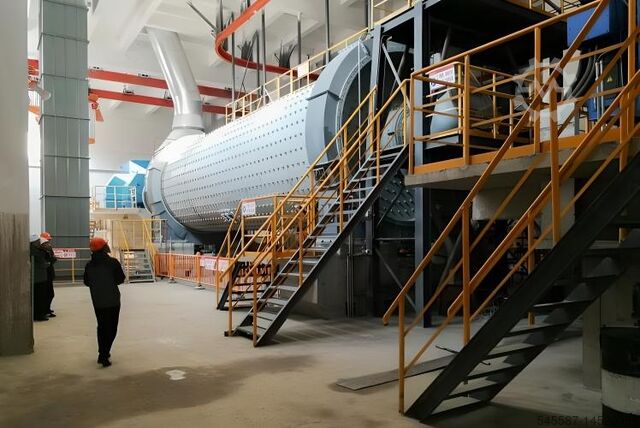
Mingyuan Dry and Wet Ball MillCustomerizable Model for ball mill plant
Call
Condition: new, functionality: fully functional, Year of construction: 2026, Dry and Wet Ball Mill: Structure, Operation, and Technical Details
A ball mill is a fundamental grinding device used in mineral processing, cement manufacturing, chemical production, and other industrial applications. It works by rotating a cylindrical shell filled with grinding media—usually steel balls—causing impact and friction that reduce materials to fine powder. Based on the grinding environment, ball mills are classified into dry and wet types, each suited for specific materials and process requirements.
Working Principle
Both dry and wet ball mills operate on the same mechanical principle. The rotating cylinder, driven by a motor through a gear system, lifts the grinding media and material along the inner wall. As the rotation continues, the balls fall under gravity, striking and grinding the material. The difference lies in the presence or absence of a liquid medium during grinding.
Dry Ball Mill
A dry ball mill is used when the material must remain moisture-free or when water could affect product quality. It is commonly applied in cement clinker, limestone, quartz, and refractory material grinding. The discharge can be either grate type or overflow type, depending on the desired fineness.
Technical Features:
Feeding size: ≤25 mm
Discharge size: 0.075–0.4 mm
Capacity: 0.65–90 t/h
Liner material: High manganese steel or wear-resistant alloy
Drive system: Gear-driven or direct-coupled motor
Dust control: Equipped with air exhaust and dust collector
Advantages:
Suitable for materials sensitive to moisture
No drying process required after grinding
Lower corrosion risk and simpler maintenance
Easier material classification and separation
Bsdpfsq Nx Alox Acnedg
Limitations:
Dry grinding produces more dust and heat, requiring efficient ventilation and dust collection systems.
Wet Ball Mill
A wet ball mill operates with water or another liquid medium added to the material. The slurry formed during grinding improves efficiency by reducing friction and preventing excessive heat buildup. It is widely used in ore beneficiation, ceramics, and chemical industries.
Technical Features:
Feeding size: ≤25 mm
Discharge size: 0.074–0.2 mm
Capacity: 0.65–615 t/h
Liner material: Rubber or high-chromium steel
Discharge method: Overflow or grate type
Auxiliary equipment: Classifier, pump, and thickener for slurry circulation
Advantages:
Higher grinding efficiency and finer particle size
Reduced dust and noise levels
Continuous operation suitable for beneficiation circuits
Better control of particle uniformity
Limitations:
Requires drying if the final product must be in powder form and involves more complex slurry handling.
The selection between dry and wet grinding depends on the material characteristics, downstream process, and environmental conditions. Dry mills are preferred for materials that must stay moisture-free, while wet mills are ideal for fine grinding and slurry-based processes.
Conclusion
Dry and wet ball mills share the same mechanical structure but differ in their grinding environment and application scope. The dry type offers simplicity and low maintenance for moisture-sensitive materials, while the wet type provides higher efficiency and finer output for mineral and chemical processing. Understanding their technical parameters and operational differences ensures optimal equipment selection, improved productivity, and reliable performance in industrial grinding operations.
Listing
Zheng Zhou Shi
10,533 km
Glass grinding machine
Henan Mingyuan Ceramic /Silica Ball MillBatch ball mill for glass ceramic making
Call
Condition: new, Year of construction: 2026, power: 7.5 kW (10.20 HP), Batch ball mills find applications in various industries where the processing of materials in discrete batches is required. The versatility of batch ball mills makes them suitable for a range of applications. Here are some common batch ball mill applications:
1. Ceramics Industry:
- *Glaze Preparation:* Batch ball mills are extensively used in the ceramics industry for preparing glazes. Raw materials such as feldspar, quartz, and clay are ground with ceramic balls to achieve the desired particle size for glaze formulation.
2. Chemical Industry:
- *Material Grinding:* Batch ball mills are used for grinding and blending various chemical materials. This includes the production of pigments, dyes, and other specialty chemicals where precise particle size control is crucial.
3. Pharmaceuticals:
- *Drug Formulation:* In pharmaceutical manufacturing, batch ball mills are used for grinding and blending powders to create drug formulations. The controlled environment provided by these mills is essential for maintaining the integrity of pharmaceutical compounds.
Bsdpfsq I N H Nex Acnsdg
4. Food Industry:
- *Ingredient Mixing:* Batch ball mills may find application in the food industry for mixing and grinding ingredients. This can include the production of food additives, flavorings, and other powdered or granular products.
5. Mining and Minerals Processing:
- *Ore Grinding:* Batch ball mills are used in mining and minerals processing for grinding minerals and ores. The controlled grinding helps in obtaining the desired particle size for subsequent processes, such as mineral separation or extraction.
6. Paints and Coatings:
- *Pigment Dispersion:* In the paints and coatings industry, batch ball mills are employed for dispersing pigments into paint formulations. Achieving a uniform particle size is crucial for the quality and appearance of the final coating.
7. Building Materials:
- *Raw Material Grinding:* Batch ball mills are used in the preparation of raw materials for the production of building materials, such as cement and concrete. Grinding of materials like limestone and clay helps in obtaining the desired fineness for subsequent processes.
8. Electronic Materials:
- *Ceramic Powder Processing:* In the electronics industry, batch ball mills can be employed for processing ceramic powders used in the production of electronic components and insulating materials.
9. Research and Development:
- *Material Testing:* Batch ball mills are often used in research and development laboratories for testing and optimizing material formulations. They provide a controlled environment for small-scale processing and experimentation.
10. Customized Applications:
- *Specialized Processes:* Batch ball mills can be adapted for various specialized processes in different industries where precise grinding and mixing are required. Custom modifications can be made based on specific application requirements.
When using a batch ball mill, it's important to consider factors such as the type of material being processed, desired particle size, and the specific requirements of the end product. Additionally, following the manufacturer's guidelines and maintaining proper operating conditions are essential for efficient and effective milling processes.
Technical details
We have different options for different requirements, please contact our team for more info.
Listing
Zheng Zhou Shi
10,533 km
Powder grinding machine
Fine powder grinding mill, clinker millSuperfine ball mill for micro powder
Call
Condition: new, Year of construction: 2026, A superfine ball mill is a type of milling machine that is used to grind materials into very fine particles. This type of ball mill has some distinctive features that make it especially suitable for processing even the hardest materials with low contamination and minimal wear. It is commonly used in various industries, including pharmaceuticals, minerals, pigments, and chemicals, for producing micro powder or nanoparticles.
Here are some key features and considerations for a superfine ball mill for micro powder:
1. High Grinding Efficiency: Superfine ball mills are designed to achieve high grinding efficiency by utilizing grinding media with a relatively small size, leading to a large surface area for grinding.
2. Precision Control: These mills often come with advanced control systems to regulate parameters like rotation speed, temperature, and grinding time, allowing precise control over the particle size distribution.
Bodpfx Aceq Nf Uwsnjdg
3. Specialized Design: The mill is typically designed with features to minimize contamination, such as using materials resistant to wear and corrosion. Some mills also have cooling systems to prevent overheating during the milling process.
4. Variety of Materials: Superfine ball mills can handle a wide range of materials, including both brittle and fibrous substances. They are often used for milling hard materials that require fine grinding, such as ceramics, minerals, or pigments.
5. Size Reduction to Micro or Nano Level: The primary goal of a superfine ball mill is to reduce particle size to the micro or even nano level. This is achieved by the intense grinding action that occurs within the mill.
6. Classifier System: Some superfine ball mills incorporate a classifier system to control the particle size distribution more precisely. This allows for the separation of fine particles from coarser ones during the milling process.
7. Batch or Continuous Operation: Depending on the specific design, these mills can operate in either batch or continuous mode, offering flexibility based on the production requirements.
8. Safety Measures: Safety features may be included, such as monitoring and control systems to prevent overloading, overheating, or other potential issues during operation.
When selecting a superfine ball mill for micro powder production, it's important to consider the specific requirements of your application, the characteristics of the materials you're working with, and the desired final particle size distribution. Always follow the manufacturer's guidelines for operation, maintenance, and safety to ensure optimal performance and longevity of the equipment.
Listing
Zheng Zhou Shi
10,533 km
Powder grinding mill
ball mill for mining &fine powder makingsilica/Barite/limestone powder plant
Call
Condition: new, Year of construction: 2026, power: 300 kW (407.89 HP), Ball Mill for Mining & Fine Powder Making:
A ball mill is a fundamental grinding device widely used in mining, metallurgy, cement, and chemical industries. It is designed to grind ores and other materials into fine powder through impact and attrition between steel balls and the material inside a rotating cylindrical shell. In mining plants, ball mills are essential for ore beneficiation, while in powder-making industries, they ensure uniform particle size and high surface area for further processing.
Working Principle
The ball mill operates on the principle of impact and friction. As the cylindrical shell rotates around its horizontal axis, the grinding media—usually steel or ceramic balls—are lifted along the inner wall by centrifugal force and friction. When they reach a certain height, they fall freely, striking and grinding the material below. This repeated motion breaks down the material into fine particles. The process can be carried out in dry or wet conditions depending on the application.
Structural Composition
A standard ball mill consists of several main components:
Feeding part: Ensures uniform material input through a feeder or screw conveyor.
Discharging part: Can be grate type or overflow type, depending on the discharge method.
Rotating part: The cylindrical shell made of steel plates, lined with wear-resistant liners.
Transmission system: Includes motor, reducer, small transmission gear, and electrical control.
Grinding media: Steel or ceramic balls of various diameters for efficient grinding.
The internal liner design and ball size distribution are optimized to achieve maximum grinding efficiency and minimal energy consumption.
Technical Details/Typical Specifications:
Feeding size: ≤25 mm
Discharge size: 0.074–0.4 mm
Capacity: 0.65–615 t/h (depending on model and material hardness)
Cylinder speed: 18–38 r/min
Power: 18.5–4500 kW
Liner material: High manganese steel, rubber, or alloy steel
Grinding media load: 30–45% of cylinder volume
Operating Modes:
Dry grinding: Used for materials that must remain moisture-free, such as cement clinker, limestone, and quartz.
Wet grinding: Common in ore beneficiation, where water or slurry improves grinding efficiency and particle uniformity.
Application in Mining and Powder Production
In mining operations, ball mills are used after crushing to further reduce ore size and liberate valuable minerals. They are integrated into grinding circuits with classifiers, hydrocyclones, and flotation systems. The ground material is classified by size, and oversized particles are returned to the mill for regrinding. This closed-circuit system ensures consistent product fineness and efficient energy use.
In fine powder production, ball mills are used to produce materials such as silicate, ceramic powder, refractory materials, and chemical raw materials. The uniform particle size achieved by ball milling enhances product quality and performance in downstream applications.
Conclusion
Bdjdpfx Ajq Ngafecnjg
A ball mill is an indispensable piece of equipment for both mining and fine powder making. Its ability to grind materials into fine, uniform particles makes it vital for ore beneficiation and industrial powder production. With flexible configurations, high efficiency, and reliable operation, modern ball mills provide a cost-effective and energy-efficient solution for large-scale grinding, ensuring consistent quality and productivity across diverse applications.
Listing
Zheng Zhou Shi
10,533 km
Fine Powder Grinding Plant
Cement mill & Ultrafine Grinding MillFine Powder Grinding Plant
Call
Condition: new, functionality: fully functional, Year of construction: 2026, Cement Mill & Ultrafine Grinding Mill
🏗️ Introduction to Cement Mill & Ultrafine Grinding Mill
In the world of construction and materials processing, achieving the right particle size is essential. Introducing the Cement Mill and Ultrafine Grinding Mill—two pivotal machines designed to deliver superior grinding performance for cement production and ultrafine materials. Let’s dive into their features and applications! 💼
🔥 What is a Cement Mill?
A Cement Mill is a crucial piece of equipment in cement production. It grinds clinker, gypsum, and other additives to produce fine cement powder. This machine ensures the optimal particle size for high-quality cement, essential for building robust structures. 🚀
🔧 What is an Ultrafine Grinding Mill?
An Ultrafine Grinding Mill is designed to produce extremely fine powders from various raw materials, such as minerals, chemicals, and industrial waste. It operates at high efficiency, delivering ultra-fine materials for advanced applications like coatings, plastics, and ceramics. 🌟
💼 Key Benefits of Using Cement Mill & Ultrafine Grinding Mill
1. High Efficiency: Both mills are engineered for maximum efficiency, ensuring rapid processing times and reduced energy consumption. 🌿💡
2. Superior Grinding Performance: Achieve consistent, high-quality output with precise control over particle size. 🏭
3. Versatility: Suitable for a wide range of materials, making them essential for various industrial applications. 🌳
4. Durability and Reliability: Built with robust materials, these mills offer long-lasting performance in demanding industrial environments. 💪
Bodeq Nyydspfx Acnodg
📈 Applications in Industry
Cement Mill Applications:
1. Cement Production: Essential for producing high-quality cement for construction projects.
2. Infrastructure Development: Used in creating concrete for roads, bridges, and buildings.
Ultrafine Grinding Mill Applications:
1. Mineral Processing: Producing ultra-fine powders for advanced material applications.
2. Chemical Manufacturing: Used in creating fine chemicals for various industrial processes.
3. Environmental Applications: Grinding industrial waste for recycling and reuse. ♻️
🌟 Conclusion
Whether you’re in construction, materials processing, or advanced manufacturing, the Cement Mill and Ultrafine Grinding Mill are indispensable tools. Their efficiency, versatility, and superior performance make them a valuable addition to any production line. Contact us today to learn more about these innovative machines and how they can revolutionize your operations! 📞
Listing
Zheng Zhou Shi
10,533 km
Mill / grinding mill
Batch Ball Mill, Silica grinding millQuartz ball mill, silica powder grinding
Call
Year of construction: 2026, condition: new, ceramic ball mill ,Batch ball mill ,also called ceramic ball mill ,it is used for fine grinding of feldspar,quartz,clay,ore and so on.The ceramic ball mill is mainly used for material mixing, grinding,uniform product fineness,and saving power.It can be dry or wet.The machine can use different liner types according to production needs to meet different needs.The fineness of the grinding operation is controlled by the grinding time
ceramic ball mill Working principle
when ball mill working,steel balls inside drum will rotate with the drum to some height,and then steel balls fall down with materials to reach the point of grinding.
Working Principle of Ceramic ball mill
ceramic ball mill ,Intermittent ball mill grinding operation is finished in the cylinder body. When the cylinder rotates, materials ascend to a certain height and then fall along a certain path due to the balls' gravity. Two forces are generated on the balls inside. One is the force on balls through tangent direction; the other is a opposite force in the contrast to the diameter of balls, as a result of the force generated when the balls slide down. These two forces will constitute a couple for the steel balls. The balls are squeezed between the cylinder and the adjacent steel balls, so the couple can make unequal-sized friction force. The balls will orbit along with the cylinder axis and then fall down, which can produce a strong impact force on the ores in the cylinder body and, as a result, the ores will be crushed. In conclusion, the ores in the cylinder body are mainly crushed by composite effect of peeling force, impact force and extrusion force.
Ceramic ball mill also named Intermittent ball mill which adopts the wet intermittent operation, is used for fine grinding and mixing the material such as feldspar, quartz, clay ceramic raw materials. The discharging and the mud size can through through 1000 sieve pore. This machine is high milling machinery, materials should be Broken in the fineness of the state into the grinding mill to get the highest efficiency and economic benefits.
The cement mill is key equipment for the grinding process of the cement clinker after the crushing process of it. It is mainly used in the cement silicate product industry. After long term design and manufacture of the cement mill, our company now has series of cement mill with various specifications to meet with different requirement from our customers.
Features of Cement Mill
Bdjdpfxovzx Auo Acnog
Our company adopts suitable transmission methods according to different specifications. We have brim drive and center drive as transmission form. The cylinder adopts new type step lining to increase the grinding area. And it is easily repairable and changeable. The new designed separate-chambered structure adopts flexible lifting blade and fixed lifting blade and it is easily fixed and repaired.
Technical Details
We have different models and options for different requirements, please contact us for more info.
Listing
Zheng Zhou Shi
10,533 km
Ball Mill for Ore mining & sand grinding
batch ball mill & wet mining ball mill2400X4500 ball mill
Call
Condition: new, fuel type: electric, Year of construction: 2026, machine/vehicle number: 2700x4500, Equipment: low noise, Main Technical parameters of the ball mill
Drum diameter: 2400mm
Drum length: 4500mm
Motor power: 320KW
Max input size: 25mm
Capacity:35-60 t/h
Weight: 72Tons
Bdedpfxoq Igiij Acnsg
Ball loading: 30Tons
Besides this model, we also have the other models like 2700x4500, 3200x4500, 1830x13000mm, and so on, and we can also offer customerization service, we can also provide complete grinding solution for various industries like cement, quartz, ore beneficiation plant, and so on, welcome to contact us for more info.
A ball mill is a common grinding machine used to grind and blend materials for use in mineral processing, including ore mining and the production of silica (silicon dioxide). When it comes to ore mining and silica grinding, the characteristics of the ore and the final product requirements will play a crucial role in selecting the appropriate ball mill.
Here are some considerations for using a ball mill in ore mining and silica grinding:
1. Ore Characteristics:
- Hardness: The hardness of the ore determines the type of ball mill that is most suitable. Harder ores may require a more robust and wear-resistant ball mill.
- Particle Size Distribution: The initial particle size of the ore affects the grinding process. Different ores may require different approaches to achieve the desired particle size.
2. Silica Grinding:
- Silica Content: If the primary goal is to grind silica, it's important to consider the initial silica content and the desired final particle size. Silica grinding often requires special attention to prevent excessive wear on the milling equipment.
3. Ball Mill Type:
- Overflow vs. Grate Discharge: The type of discharge from the ball mill can impact the final product and the grinding efficiency. Overflow mills are generally used for most grinding applications, while grate discharge mills are more suitable for certain types of ores.
4. Mill Size and Capacity:
- Mill Diameter and Length: The size of the ball mill should be selected based on the amount of material to be ground and the desired throughput.
- Capacity: Ensure that the chosen ball mill has the capacity to handle the required volume of material efficiently.
5. Grinding Media:
- Material and Size: The choice of grinding media (balls or cylpebs) and their size depends on the hardness of the ore and the desired final particle size. Different grinding media materials can impact the purity of silica during grinding.
6. Liners and Lifting Aids:
- Liners: Consider the type of liners used in the ball mill to protect the shell and optimize the grinding process.
- Lifting Aids: Some mills use lifting aids to enhance the grinding action and promote better mixing of the material.
7. Control and Monitoring Systems:
- Automation: Utilize control systems to automate the milling process and ensure optimal performance.
- Monitoring: Regularly monitor the milling process to adjust parameters as needed for consistent and efficient operation.
8. Safety Measures:
- Safety Systems: Implement safety features to protect personnel and equipment during operation.
Always follow the manufacturer's recommendations and guidelines for operation and maintenance to ensure safe and efficient use of the ball mill in ore mining and silica grinding applications.
Listing
Zheng Zhou Shi
10,533 km
Roll forming line
Rod ball mill / Rod Grinding MillFor Sand and mining beneficiation plant
Call
Condition: new, Year of construction: 2026, We have various kinds of ball grinding mill such as batch ball mill, rod mill, cement ball mill, mining ball mill, welcome to contact our team for further details according to your specific requirements.
Bdedpfx Aceq I Nw Ijneg
Listing
Zheng Zhou Shi
10,533 km
Cement mill,clinker grinding plant
Clinker grinding mill / cement ball millcement grinding with air classifier
Call
Year of construction: 2026, condition: new, functionality: fully functional, A cement clinker grinding mill is a specialized equipment used to grind the hard nodular clinker into fine powder, which is cement. Most cement is currently ground in ball mills and also vertical roller mills, which are more effective than ball mills.
Here are key features and information about cement clinker grinding mills:
1. Raw Materials:
- The main raw material for making cement is clinker, which is produced by sintering limestone and clay. Other materials such as gypsum, fly ash, or slag may also be added during the grinding process to achieve specific properties.
2. Grinding Process:
- The clinker and other additives are finely ground in the grinding mill to produce cement. The grinding process is a crucial step in cement production and contributes significantly to the final quality of the product.
3. Types of Mills:
- Ball Mills: Traditional ball mills are commonly used for grinding clinker. They operate by rotating a cylinder with steel grinding balls, causing the balls to fall back into the cylinder and onto the material to be ground.
- Vertical Roller Mills (VRM): VRM technology has become increasingly popular for clinker grinding. These mills use a rotating table with rollers to crush and grind the clinker, providing energy efficiency and a smaller footprint compared to ball mills.
4. Gypsum Addition:
- Gypsum is often added during the grinding process to control the setting time of the cement. It prevents flash setting of the clinker and facilitates the formation of a workable and pumpable cement paste.
Bodpfx Asq Nfbhscnodg
5. Quality Control:
- Quality control measures, such as monitoring the fineness of the cement, chemical composition, and other properties, are implemented during the grinding process to ensure the final product meets the required specifications and standards.
6. Clinker Cooling:
- Before grinding, the clinker is produced by heating the raw materials in a kiln. The clinker is then cooled before entering the grinding mill to prevent excessive heat build-up during grinding.
7. Dust Collection and Environmental Considerations:
- Dust collectors and air pollution control systems are often employed to capture and control the dust generated during the grinding process, addressing environmental and safety concerns.
8. Packaging and Storage:
- After grinding, the cement is typically stored in silos before being packaged in bags or dispatched in bulk for distribution to construction sites or for sale in the market.
Cement clinker grinding mills play a crucial role in the cement production process, and advancements in technology continue to improve the efficiency and environmental sustainability of the grinding process.
Technical details
We have different options for different requirements, please contact our team for more info.
Listing
Zheng Zhou Shi
10,533 km
Crushing equipment
Hammer crusher /Hammer milllimestone, coal gangue,concrete crusher
Call
Condition: new, power: 55 kW (74.78 HP), Year of construction: 2026, A hammer crusher is a machine that uses high-speed rotating hammers to crush and break materials into smaller pieces. It is commonly used in various industries, including mining, cement, construction, metallurgy, and chemical processing. The basic principle of a hammer crusher involves a central rotor with hammers or blades that rotate and impact the material being crushed against a hard surface.
Here are the key features and components of a typical hammer crusher:
1. Rotor:
- The rotor is a central component of the hammer crusher. It usually consists of a shaft with multiple discs or hammers attached.
- The rotor's rotation causes the hammers to swing outward, impacting the material.
2. Hammers:
- Hammers are the striking or crushing elements attached to the rotor. They can be fixed or pivotally attached.
- The material is crushed as the hammers impact it, generating kinetic energy.
3. Casing or Housing:
- The casing or housing encloses the rotor and hammers, providing structural support and safety.
- It also serves to contain the crushed material and direct it to the desired discharge point.
4. Grate Bars or Screens:
- Positioned at the bottom of the crusher casing, grate bars or screens control the size of the crushed material by allowing smaller particles to pass through while keeping larger ones inside for further crushing.
5. Impact Plate:
- Located near the bottom of the crusher, the impact plate absorbs the impact energy generated by the hammers and prevents excessive wear on the casing.
6. Drive System:
- The hammer crusher is powered by a motor connected to the rotor through a drive belt or coupling.
Bjdeq I Nxdopfx Acnjdg
- The motor provides the necessary power to rotate the rotor, enabling the hammers to crush the material.
7. Adjustable Discharge:
- Some hammer crushers feature an adjustable discharge, allowing users to control the size of the crushed material by adjusting the gap between the impact plate and the hammers.
8. Applications:
- Hammer crushers are used for crushing a variety of materials, including coal, limestone, gypsum, aggregates, and various minerals.
- They are commonly employed in the mining industry for primary and secondary crushing of ore.
- In the cement industry, hammer crushers are used to crush limestone and other materials before they are mixed into the raw meal.
9. Maintenance and Safety:
- Regular maintenance is essential to ensure the efficient operation of a hammer crusher. This includes checking and replacing worn hammers, inspecting the rotor, and lubricating moving parts.
- Safety features, such as access doors and safety guards, are typically incorporated to prevent accidents during operation and maintenance.
Technical Specifications (Typical MINGYUAN Series)
Model Category,Max Feed Size,Capacity (t/h),Motor Power (kW),Rotor Speed (rpm)
Small (PC-400), ≤100mm, 5 – 10, 11, "1,000"
Medium (PC-800),≤200mm, 20 – 50, 55, 750 – 900
Heavy (PC-1200),≤350mm, 80 – 110, 132 – 160, 600 – 750
Heavy Hammer,"≤1,200mm", "500 – 1,000+ ","400 – 1,000" ,Variable
Listing
Zheng Zhou Shi
10,533 km
Ball mill for powder and mining plant
Mingyuan Ball Mill For Fine PowderPowder grinding mill for coal, silica
Call
Condition: new, functionality: fully functional, power: 55 kW (74.78 HP), Year of construction: 2026, Ball Mill for Powder and Mining Plant: Structure, Function, and Technical Details
A ball mill is a key grinding machine widely used in mining, metallurgy, cement, chemical, and powder-making industries. It is designed to grind various ores and other materials into fine powder through impact and attrition between steel balls and the material inside a rotating cylindrical shell. In mining plants, ball mills are essential for ore beneficiation, preparing materials for flotation, magnetic separation, or leaching processes. In powder production, they ensure uniform particle size and high surface area for further processing.
Working Principle
The ball mill operates on a simple yet effective principle: as the cylindrical shell rotates around its horizontal axis, the grinding media (steel or ceramic balls) are lifted along the inner wall by centrifugal force and friction. When they reach a certain height, they fall freely, striking and grinding the material below. This repeated motion causes both impact and abrasion, reducing the material to the desired fineness. The grinding process can be performed in dry or wet conditions depending on the application.
Structural Composition
A standard ball mill consists of several main components:
Feeding part: Equipped with a feeder or screw conveyor to ensure uniform material input.
Discharging part: Can be grate type or overflow type, depending on the discharge method.
Rotating part: The cylindrical shell made of steel plates, lined with wear-resistant liners.
Transmission system: Includes motor, reducer, small transmission gear, and electrical control.
Grinding media: Steel balls or ceramic balls of different diameters for efficient grinding.
The internal liner design and ball size distribution are optimized to achieve maximum grinding efficiency and minimal energy consumption.
Technical Details
Typical Specifications:
Feeding size: ≤25 mm
Discharge size: 0.074–0.4 mm
Capacity: 0.65–615 t/h (depending on model and material hardness)
Cylinder speed: 18–38 r/min
Power: 18.5–4500 kW
Liner material: High manganese steel, rubber, or alloy steel
Grinding media load: 30–45% of cylinder volume
Operating Modes:
Dry grinding: Suitable for materials that must remain moisture-free, such as cement clinker, limestone, and quartz.
Wet grinding: Common in ore beneficiation, where water or slurry improves grinding efficiency and particle uniformity.
Application in Mining Plants
In mining operations, ball mills are used after crushing to further reduce ore size and liberate valuable minerals. They are integrated into grinding circuits with classifiers, hydrocyclones, and flotation systems. The ground material is classified by size, and oversized particles are returned to the mill for regrinding. This closed-circuit system ensures consistent product fineness and efficient energy use.
Common Applications:
Gold, copper, iron, and zinc ore grinding
Bdjdpfx Ajq Nf U Eecnsg
Cement clinker and slag processing
Silicate and ceramic powder production
Coal and mineral powder preparation
Conclusion
A ball mill is an indispensable piece of equipment in both powder production and mining beneficiation plants. Its ability to grind materials into fine, uniform particles makes it vital for downstream processes such as flotation, sintering, and chemical reactions.
Listing
Dortmund
18,510 km
Universal vertical milling head + special attachment
ORADEA / EURO-MILLFUS 32
Call
Condition: like new (used), 1 unused universal vertical milling head, suitable for an ORADEA / EURO-MILL FUS 32
Design: “MAHO”, ISO 40 shank, quill stroke 100 mm, designed drive power approx. 3-4 kW, max. speed 2000 rpm, …
Optional accessories:
- Multiplier, gear ratio 1:4, ISO 40 shank Price: EUR 499.00
- Attachment for automatic feed device for the vertical milling head quill, “MAHO” system, 6 feeds 0.02 - 0.2 mm/rev Price: EUR 1,880.00
Bjdpfx Aeddtwbjcnjdg
- Cross milling head, additional head for the vertical milling head with spindle taper ISO 30, rotatable, 360 degrees Price: EUR 585.00
plus statutory VAT.
Siegfried Volz Werkzeugmaschinen
Rüschebrinkstr. 151-153
DE - 44143 Dortmund - Wambel / Germany
Listing
Lemmer
18,478 km
CNC Mill Cinch Mill 20
Cinch Mill20
Call
Condition: good (used), Year of construction: 2013, travel distance X-axis: 1,000 mm, travel distance Y-axis: 500 mm, travel distance Z-axis: 530 mm, spindle speed (max.): 8,000 rpm, table width: 406 mm, table length: 1,372 mm, rotational speed (max.): 8,000 rpm, overall weight: 3,100 kg, space requirement width: 2,280 mm, space requirement length: 2,900 mm, space requirement height: 2,550 mm, Equipment: documentation/manual, rotational speed infinitely variable, X-axis: 1.000 mm
Y-axis: 500 mm
Z-axis: 530 mm
Table size: 406 x 1.372 mm
Spindle nose: BT 40
Spindle speeds: 1 - 8.000 rpm
Controller: Fagor
Featured with:
- Cooling unit
- User Manuals
Bdodpfx Acevpl I Tenjg
Country of origin: Taiwan
Motor power: 10 HP
Machine LxWxH: 2.900 x 2.280 x 2.550 mm
Machine weight: 3.100 kg
Trust Seal
Dealers certified through Machineseeker

Listing
Ennepetal
18,538 km
Machining centre
MATRA JOHNFORDDMC-2100H
Call
Condition: used, Year of construction: 2001, x-travel 2050 mm
y-travel 1100 mm
Bedpforw Dknex Acnsdg
z-travel 800 mm
Control Fanuc 18iM Super Cap II
turning speeds 60-6000 U/min
tool magazin: 60
tool taper BT50
total power requirement 26 kW
weight of the machine ca. 23,6 t
required space 6,3 x 3,3 x 3,8 m
Listing
Bramshall
18,680 km
Continuous Ball Mill
Hardinge Conical Ball Mill6'-0" x 36" HCBM
Call
Condition: used, HARDINGE Conical Ball Mill
6’-0” dia x 36” ball mill for the dry grinding of industrial minerals.
Mill fitted with Manganese steel liners for operation will steel ball grinding media.
White Metal Bearings on trunnions.
90 kW Motor fitted (could be reduced to 75 kW).
Mill with countershaft drive but could be converted to gearbox.
Bedpjzvgvnjfx Acnodg
Listing
Bramshall
18,680 km
Steel lined continuous ball mill
HARDINGE Conical Ball Mill10'-0" x 84" HCBM
Call
Condition: used, 10’-0” x 84” HARDINGE CONICAL BALL MILLS
Bjdpezvgdlefx Acnsdg
MILL SPECIFICATION
Model : 10’-0” x 84” HCBM
Overall Dimensions : 3050 mm diameter x 5185 mm long.
Installed Power : 400 kW
Absorbed Power : 320 kW
Mill Speed : 20 rpm
Lining : Chrome Iron Cast Liner Plates
Media : Steel Balls (30 tonne required)
Drive : Girth Gear and Pinion, Gearbox and Slip Ring Motor
Trunnion Bearings : No.1 Mill - Cooper Split Roller Bearings
No.2 Mill – White Metal Bearings
The mills were operated by British Chrome & Chemicals Ltd (later Elementis Chromium), at their site in Cleveland, UK, processing Chrome Ore to a fineness of 99% passing 45 µm.
The first mill, with the white metal bearings, was installed in around 1970.
The second mill, with the Cooper Split Roller Bearings was installed in 1980. This mill is offered with a new set of Cooper Trunnion Bearings.
Both mills were in operation until the site closed in 2009 and have been in storage ever since.
Equipment is offered in "as is" condition with no warranty given or implied. PPDS can offer full refurbishment services. Inspection is invited at our premises in Uttoxeter, Staffordshire, United Kingdom (close to East Midlands, Birmingham and Manchester airports).
Powder Process Design Services Ltd has been supplying equipment and systems to the industrial minerals sector for over 20 years. We specialise in the design and supply of minerals processing systems using a combination of new and s/hand refurbished equipment. With approaching 40 years experience we aim to deliver projects that meet and indeed exceed expectations. We have satisfied customers throughout the world, including, the United States, South America, New Zealand, South Africa the Middle East and the UK and Ireland.
Please check out our other listings and subscribe to our stock list.
Auction
Auction ended
Nordrhein-Westfalen
18,549 km
Cutting Mill
Cutting Mill
Year of construction: 2021, condition: ready for operation (used), functionality: fully functional, The machine is unused!
TECHNICAL DETAILS
Rotor: Open rotor
Grinding mechanism: 650 mm × 550 mm
Application: Grinding of, for example, lumps
MACHINE DETAILS
Power: 22 kW
Voltage: 380 V
Frequency: 50 Hz
Current consumption: 42.5 A
Speed: 1,470 rpm
Protection class: IP55
Insulation class: F
Operating mode: S1 – Continuous operation
Sound level: 71 dB(A)
Weight: approx. 190 kg
EQUIPMENT
Control system
Star/delta connection possible
Bsdpszr Hziofx Acnjdg
Spare parts can be supplied for an additional charge.
We make it easier for you to find: "johnford 2vs turret mill"
You will receive new offers immediately and free of charge via e-mail
You can easily terminate the search request at any time
This may be of interest to you

Get information now
+44 20 806 810 84
+44 20 806 810 84
List now
*per listing / month