Used Ball Forming Attachment for sale (13,661)
Sort results
- Lowest price Highest price
- Newest listings Oldest listings
- Shortest distance Farthest distance
- Newest year of manufacture Oldest year of manufacture
- Latest update Oldest update
- Manufacturer A to Z Manufacturer Z to A
- Relevance
- Lowest price
- Price
- Highest price
- Price
- Newest listings
- Release date
- Oldest listings
- Release date
- Shortest distance
- Distance
- Farthest distance
- Distance
- Newest year of manufacture
- Year of construction
- Oldest year of manufacture
- Year of construction
- Latest update
- Update
- Oldest update
- Update
- Manufacturer A to Z
- Manufacturer
- Manufacturer Z to A
- Manufacturer
- designation from A to Z
- Description
- designation from Z to A
- Description
- Model from A to Z
- Model
- Model from Z to A
- Model
- Lowest reference
- Ref.No.
- Highest reference
- Ref.No.
- Shortest runtime
- Runtime
- Longest duration
- Runtime
- Relevance
- Relevance
Listing
Krotoszyn
17,941 km
Ball forming attachment
VEMAGBall Control 235
Call
Condition: excellent (used), Year of construction: 2011, functionality: fully functional, VEMAG BALL CONTROL 235 | Forming attachment for meatballs, croquettes, and cylinders
Manufacturer: VEMAG Maschinenbau GmbH
Model / Type: Ball Control 235
Serial number: 235.0038
Fpedpfx Adszgx Dlj Isi
Year of manufacture: 2011
Power supply: 400 - 460 V | 3 Ph | 50/60 Hz | 9 A
Power: 5 kW
Rated short-circuit current (SCCR): 5 kA rms
Electrical schematic number: 235.890.002d
Maximum portioning capacity: up to 250 portions/min per outlet (depending on the product and portion size)
Number of outlets: 4-row filling distributor
The professional, multi-stream VEMAG Ball Control 235 attachment is a technologically advanced peripheral device designed to work with VEMAG's industrial vacuum fillers. This machine is a key component in convenience food production lines in medium and large meat processing, ready-to-eat, fish processing, and bakery plants. It is used for the precise, multi-row forming of masses and fillings into repeatable, three-dimensional shapes, such as perfect meatballs, croquettes, rissoles, fish fingers, cheese balls, and potato dumplings. The heart of the device is a 4-channel flow distributor, which divides the flow of filling from the filler into four perfectly equal rows, guaranteeing consistent weight and identical geometry for each individual product. An advanced servo-drive system controls the cutting plates, synchronizing directly with the main computer of the filler, and is responsible for the cutting and shaping process. The formed products are directly and smoothly deposited onto an integrated conveyor belt, from where they can go directly to packaging, freezing, or further heat treatment systems.
Listing
Krotoszyn
17,941 km
Ball and cylinder forming machine
VemagBallControl XXL
Call
Condition: excellent (used), Year of construction: 2021, functionality: fully functional, Ball and cylinder forming machine
Brand Vemag
Model BallControl XXL
Year of production 2021
⁃ For forming meat balls and cylinders
Fpsdpfsv Ihd Usx Ad Ioi
⁃ Capacity up to 200 strokes per minute depending on portion size for unfilled products
⁃ For connection to the main VEMAG HP-E series filling machine
Flow distributor
⁃ Base unit, flow distributor pipes, connecting pipes in a stainless steel housing,
⁃ The distributor is mounted on a movable slider, which facilitates assembly and disassembly,
⁃ Servo drive of the cut-off plates - with full control via the VEMAG filling computer,
⁃ Metal safety guards,
⁃ Mobile design,
⁃ Frame made of stainless steel,
⁃ Dosing directly onto a 1 x 1 m tray, ⁃ Dosing onto a 1 x 1 m tray
⁃ Belt width 1000 mm,
⁃ With metal tray dispenser 1m x 1m
⁃ Trolley for dismantled parts for washing and hooks for hanging molding sets x 2pcs.
Listing
Susuz
16,862 km
Ballast leveling
GalenGalen Reglaj Attachment(Ballast Leveling
Call
Condition: new, Reglaj Attachment( Ballast Leveling Bucket)
Fsdsv Spfzopfx Ad Iepi
Designed to improve sub-rail stability, our Reglaj Attachment is used for ballast leveling operations.
For more detailed information, please feel free to contact us.

Get information now
+44 20 806 810 84
+44 20 806 810 84
List now
*per listing / month
Listing
Cerovac
17,972 km
Line for forming cevapcici and cevapi
Call
Condition: used, Line for forming cevapcici and cevapi (grinder with mixer, portioning device and belt transporter)
Fpedpfx Aog Atrvod Ioi
Listing
Zheng Zhou Shi
10,533 km
Ball mill for powder and mining plant
Mingyuan Ball Mill For Fine PowderPowder grinding mill for coal, silica
Call
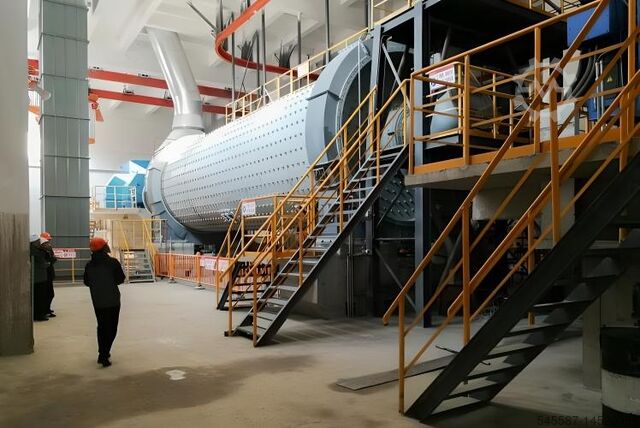
Condition: new, functionality: fully functional, power: 55 kW (74.78 HP), Year of construction: 2026, Ball Mill for Powder and Mining Plant: Structure, Function, and Technical Details
A ball mill is a key grinding machine widely used in mining, metallurgy, cement, chemical, and powder-making industries. It is designed to grind various ores and other materials into fine powder through impact and attrition between steel balls and the material inside a rotating cylindrical shell. In mining plants, ball mills are essential for ore beneficiation, preparing materials for flotation, magnetic separation, or leaching processes. In powder production, they ensure uniform particle size and high surface area for further processing.
Working Principle
The ball mill operates on a simple yet effective principle: as the cylindrical shell rotates around its horizontal axis, the grinding media (steel or ceramic balls) are lifted along the inner wall by centrifugal force and friction. When they reach a certain height, they fall freely, striking and grinding the material below. This repeated motion causes both impact and abrasion, reducing the material to the desired fineness. The grinding process can be performed in dry or wet conditions depending on the application.
Structural Composition
A standard ball mill consists of several main components:
Feeding part: Equipped with a feeder or screw conveyor to ensure uniform material input.
Discharging part: Can be grate type or overflow type, depending on the discharge method.
Rotating part: The cylindrical shell made of steel plates, lined with wear-resistant liners.
Transmission system: Includes motor, reducer, small transmission gear, and electrical control.
Grinding media: Steel balls or ceramic balls of different diameters for efficient grinding.
The internal liner design and ball size distribution are optimized to achieve maximum grinding efficiency and minimal energy consumption.
Technical Details
Typical Specifications:
Feeding size: ≤25 mm
Discharge size: 0.074–0.4 mm
Capacity: 0.65–615 t/h (depending on model and material hardness)
Cylinder speed: 18–38 r/min
Power: 18.5–4500 kW
Liner material: High manganese steel, rubber, or alloy steel
Fpjdpfxsq Nf U Ej Ad Ioi
Grinding media load: 30–45% of cylinder volume
Operating Modes:
Dry grinding: Suitable for materials that must remain moisture-free, such as cement clinker, limestone, and quartz.
Wet grinding: Common in ore beneficiation, where water or slurry improves grinding efficiency and particle uniformity.
Application in Mining Plants
In mining operations, ball mills are used after crushing to further reduce ore size and liberate valuable minerals. They are integrated into grinding circuits with classifiers, hydrocyclones, and flotation systems. The ground material is classified by size, and oversized particles are returned to the mill for regrinding. This closed-circuit system ensures consistent product fineness and efficient energy use.
Common Applications:
Gold, copper, iron, and zinc ore grinding
Cement clinker and slag processing
Silicate and ceramic powder production
Coal and mineral powder preparation
Conclusion
A ball mill is an indispensable piece of equipment in both powder production and mining beneficiation plants. Its ability to grind materials into fine, uniform particles makes it vital for downstream processes such as flotation, sintering, and chemical reactions.
Listing
Zheng Zhou Shi
10,533 km
Crushing equipment
Mingyuan Dry and Wet Ball MillCustomerizable Model for ball mill plant
Call
Condition: new, functionality: fully functional, Year of construction: 2026, Dry and Wet Ball Mill: Structure, Operation, and Technical Details
A ball mill is a fundamental grinding device used in mineral processing, cement manufacturing, chemical production, and other industrial applications. It works by rotating a cylindrical shell filled with grinding media—usually steel balls—causing impact and friction that reduce materials to fine powder. Based on the grinding environment, ball mills are classified into dry and wet types, each suited for specific materials and process requirements.
Working Principle
Both dry and wet ball mills operate on the same mechanical principle. The rotating cylinder, driven by a motor through a gear system, lifts the grinding media and material along the inner wall. As the rotation continues, the balls fall under gravity, striking and grinding the material. The difference lies in the presence or absence of a liquid medium during grinding.
Dry Ball Mill
A dry ball mill is used when the material must remain moisture-free or when water could affect product quality. It is commonly applied in cement clinker, limestone, quartz, and refractory material grinding. The discharge can be either grate type or overflow type, depending on the desired fineness.
Technical Features:
Feeding size: ≤25 mm
Discharge size: 0.075–0.4 mm
Capacity: 0.65–90 t/h
Liner material: High manganese steel or wear-resistant alloy
Drive system: Gear-driven or direct-coupled motor
Dust control: Equipped with air exhaust and dust collector
Advantages:
Suitable for materials sensitive to moisture
No drying process required after grinding
Lower corrosion risk and simpler maintenance
Easier material classification and separation
Limitations:
Dry grinding produces more dust and heat, requiring efficient ventilation and dust collection systems.
Wet Ball Mill
A wet ball mill operates with water or another liquid medium added to the material. The slurry formed during grinding improves efficiency by reducing friction and preventing excessive heat buildup. It is widely used in ore beneficiation, ceramics, and chemical industries.
Technical Features:
Feeding size: ≤25 mm
Fpsdeq Nx Alopfx Ad Isi
Discharge size: 0.074–0.2 mm
Capacity: 0.65–615 t/h
Liner material: Rubber or high-chromium steel
Discharge method: Overflow or grate type
Auxiliary equipment: Classifier, pump, and thickener for slurry circulation
Advantages:
Higher grinding efficiency and finer particle size
Reduced dust and noise levels
Continuous operation suitable for beneficiation circuits
Better control of particle uniformity
Limitations:
Requires drying if the final product must be in powder form and involves more complex slurry handling.
The selection between dry and wet grinding depends on the material characteristics, downstream process, and environmental conditions. Dry mills are preferred for materials that must stay moisture-free, while wet mills are ideal for fine grinding and slurry-based processes.
Conclusion
Dry and wet ball mills share the same mechanical structure but differ in their grinding environment and application scope. The dry type offers simplicity and low maintenance for moisture-sensitive materials, while the wet type provides higher efficiency and finer output for mineral and chemical processing. Understanding their technical parameters and operational differences ensures optimal equipment selection, improved productivity, and reliable performance in industrial grinding operations.
Listing
Zheng Zhou Shi
10,533 km
Mill / grinding mill
Batch Ball Mill, Silica grinding millQuartz ball mill, silica powder grinding
Call
Year of construction: 2026, condition: new, ceramic ball mill ,Batch ball mill ,also called ceramic ball mill ,it is used for fine grinding of feldspar,quartz,clay,ore and so on.The ceramic ball mill is mainly used for material mixing, grinding,uniform product fineness,and saving power.It can be dry or wet.The machine can use different liner types according to production needs to meet different needs.The fineness of the grinding operation is controlled by the grinding time
ceramic ball mill Working principle
when ball mill working,steel balls inside drum will rotate with the drum to some height,and then steel balls fall down with materials to reach the point of grinding.
Working Principle of Ceramic ball mill
Fpsdpfxevzx Aue Ad Iji
ceramic ball mill ,Intermittent ball mill grinding operation is finished in the cylinder body. When the cylinder rotates, materials ascend to a certain height and then fall along a certain path due to the balls' gravity. Two forces are generated on the balls inside. One is the force on balls through tangent direction; the other is a opposite force in the contrast to the diameter of balls, as a result of the force generated when the balls slide down. These two forces will constitute a couple for the steel balls. The balls are squeezed between the cylinder and the adjacent steel balls, so the couple can make unequal-sized friction force. The balls will orbit along with the cylinder axis and then fall down, which can produce a strong impact force on the ores in the cylinder body and, as a result, the ores will be crushed. In conclusion, the ores in the cylinder body are mainly crushed by composite effect of peeling force, impact force and extrusion force.
Ceramic ball mill also named Intermittent ball mill which adopts the wet intermittent operation, is used for fine grinding and mixing the material such as feldspar, quartz, clay ceramic raw materials. The discharging and the mud size can through through 1000 sieve pore. This machine is high milling machinery, materials should be Broken in the fineness of the state into the grinding mill to get the highest efficiency and economic benefits.
The cement mill is key equipment for the grinding process of the cement clinker after the crushing process of it. It is mainly used in the cement silicate product industry. After long term design and manufacture of the cement mill, our company now has series of cement mill with various specifications to meet with different requirement from our customers.
Features of Cement Mill
Our company adopts suitable transmission methods according to different specifications. We have brim drive and center drive as transmission form. The cylinder adopts new type step lining to increase the grinding area. And it is easily repairable and changeable. The new designed separate-chambered structure adopts flexible lifting blade and fixed lifting blade and it is easily fixed and repaired.
Technical Details
We have different models and options for different requirements, please contact us for more info.
Listing
Zheng Zhou Shi
10,533 km
Glass grinding machine
Henan Mingyuan Ceramic /Silica Ball MillBatch ball mill for glass ceramic making
Call
Condition: new, Year of construction: 2026, power: 7.5 kW (10.20 HP), Batch ball mills find applications in various industries where the processing of materials in discrete batches is required. The versatility of batch ball mills makes them suitable for a range of applications. Here are some common batch ball mill applications:
1. Ceramics Industry:
- *Glaze Preparation:* Batch ball mills are extensively used in the ceramics industry for preparing glazes. Raw materials such as feldspar, quartz, and clay are ground with ceramic balls to achieve the desired particle size for glaze formulation.
2. Chemical Industry:
- *Material Grinding:* Batch ball mills are used for grinding and blending various chemical materials. This includes the production of pigments, dyes, and other specialty chemicals where precise particle size control is crucial.
3. Pharmaceuticals:
- *Drug Formulation:* In pharmaceutical manufacturing, batch ball mills are used for grinding and blending powders to create drug formulations. The controlled environment provided by these mills is essential for maintaining the integrity of pharmaceutical compounds.
Fodpfx Adeq I N H Ne Iopi
4. Food Industry:
- *Ingredient Mixing:* Batch ball mills may find application in the food industry for mixing and grinding ingredients. This can include the production of food additives, flavorings, and other powdered or granular products.
5. Mining and Minerals Processing:
- *Ore Grinding:* Batch ball mills are used in mining and minerals processing for grinding minerals and ores. The controlled grinding helps in obtaining the desired particle size for subsequent processes, such as mineral separation or extraction.
6. Paints and Coatings:
- *Pigment Dispersion:* In the paints and coatings industry, batch ball mills are employed for dispersing pigments into paint formulations. Achieving a uniform particle size is crucial for the quality and appearance of the final coating.
7. Building Materials:
- *Raw Material Grinding:* Batch ball mills are used in the preparation of raw materials for the production of building materials, such as cement and concrete. Grinding of materials like limestone and clay helps in obtaining the desired fineness for subsequent processes.
8. Electronic Materials:
- *Ceramic Powder Processing:* In the electronics industry, batch ball mills can be employed for processing ceramic powders used in the production of electronic components and insulating materials.
9. Research and Development:
- *Material Testing:* Batch ball mills are often used in research and development laboratories for testing and optimizing material formulations. They provide a controlled environment for small-scale processing and experimentation.
10. Customized Applications:
- *Specialized Processes:* Batch ball mills can be adapted for various specialized processes in different industries where precise grinding and mixing are required. Custom modifications can be made based on specific application requirements.
When using a batch ball mill, it's important to consider factors such as the type of material being processed, desired particle size, and the specific requirements of the end product. Additionally, following the manufacturer's guidelines and maintaining proper operating conditions are essential for efficient and effective milling processes.
Technical details
We have different options for different requirements, please contact our team for more info.
Listing
Zheng Zhou Shi
10,533 km
Cement mill,clinker grinding plant
Clinker grinding mill / cement ball millcement grinding with air classifier
Call
Year of construction: 2026, condition: new, functionality: fully functional, A cement clinker grinding mill is a specialized equipment used to grind the hard nodular clinker into fine powder, which is cement. Most cement is currently ground in ball mills and also vertical roller mills, which are more effective than ball mills.
Here are key features and information about cement clinker grinding mills:
Fpodpoq Nfbhofx Ad Iei
1. Raw Materials:
- The main raw material for making cement is clinker, which is produced by sintering limestone and clay. Other materials such as gypsum, fly ash, or slag may also be added during the grinding process to achieve specific properties.
2. Grinding Process:
- The clinker and other additives are finely ground in the grinding mill to produce cement. The grinding process is a crucial step in cement production and contributes significantly to the final quality of the product.
3. Types of Mills:
- Ball Mills: Traditional ball mills are commonly used for grinding clinker. They operate by rotating a cylinder with steel grinding balls, causing the balls to fall back into the cylinder and onto the material to be ground.
- Vertical Roller Mills (VRM): VRM technology has become increasingly popular for clinker grinding. These mills use a rotating table with rollers to crush and grind the clinker, providing energy efficiency and a smaller footprint compared to ball mills.
4. Gypsum Addition:
- Gypsum is often added during the grinding process to control the setting time of the cement. It prevents flash setting of the clinker and facilitates the formation of a workable and pumpable cement paste.
5. Quality Control:
- Quality control measures, such as monitoring the fineness of the cement, chemical composition, and other properties, are implemented during the grinding process to ensure the final product meets the required specifications and standards.
6. Clinker Cooling:
- Before grinding, the clinker is produced by heating the raw materials in a kiln. The clinker is then cooled before entering the grinding mill to prevent excessive heat build-up during grinding.
7. Dust Collection and Environmental Considerations:
- Dust collectors and air pollution control systems are often employed to capture and control the dust generated during the grinding process, addressing environmental and safety concerns.
8. Packaging and Storage:
- After grinding, the cement is typically stored in silos before being packaged in bags or dispatched in bulk for distribution to construction sites or for sale in the market.
Cement clinker grinding mills play a crucial role in the cement production process, and advancements in technology continue to improve the efficiency and environmental sustainability of the grinding process.
Technical details
We have different options for different requirements, please contact our team for more info.
Listing
Zheng Zhou Shi
10,533 km
Powder grinding mill
ball mill for mining &fine powder makingsilica/Barite/limestone powder plant
Call
Condition: new, Year of construction: 2026, power: 300 kW (407.89 HP), Ball Mill for Mining & Fine Powder Making:
A ball mill is a fundamental grinding device widely used in mining, metallurgy, cement, and chemical industries. It is designed to grind ores and other materials into fine powder through impact and attrition between steel balls and the material inside a rotating cylindrical shell. In mining plants, ball mills are essential for ore beneficiation, while in powder-making industries, they ensure uniform particle size and high surface area for further processing.
Working Principle
The ball mill operates on the principle of impact and friction. As the cylindrical shell rotates around its horizontal axis, the grinding media—usually steel or ceramic balls—are lifted along the inner wall by centrifugal force and friction. When they reach a certain height, they fall freely, striking and grinding the material below. This repeated motion breaks down the material into fine particles. The process can be carried out in dry or wet conditions depending on the application.
Structural Composition
A standard ball mill consists of several main components:
Feeding part: Ensures uniform material input through a feeder or screw conveyor.
Discharging part: Can be grate type or overflow type, depending on the discharge method.
Rotating part: The cylindrical shell made of steel plates, lined with wear-resistant liners.
Transmission system: Includes motor, reducer, small transmission gear, and electrical control.
Grinding media: Steel or ceramic balls of various diameters for efficient grinding.
The internal liner design and ball size distribution are optimized to achieve maximum grinding efficiency and minimal energy consumption.
Technical Details/Typical Specifications:
Feeding size: ≤25 mm
Discharge size: 0.074–0.4 mm
Capacity: 0.65–615 t/h (depending on model and material hardness)
Cylinder speed: 18–38 r/min
Power: 18.5–4500 kW
Liner material: High manganese steel, rubber, or alloy steel
Grinding media load: 30–45% of cylinder volume
Operating Modes:
Dry grinding: Used for materials that must remain moisture-free, such as cement clinker, limestone, and quartz.
Wet grinding: Common in ore beneficiation, where water or slurry improves grinding efficiency and particle uniformity.
Application in Mining and Powder Production
In mining operations, ball mills are used after crushing to further reduce ore size and liberate valuable minerals. They are integrated into grinding circuits with classifiers, hydrocyclones, and flotation systems. The ground material is classified by size, and oversized particles are returned to the mill for regrinding. This closed-circuit system ensures consistent product fineness and efficient energy use.
Fpsdpfjq Ngafsx Ad Isi
In fine powder production, ball mills are used to produce materials such as silicate, ceramic powder, refractory materials, and chemical raw materials. The uniform particle size achieved by ball milling enhances product quality and performance in downstream applications.
Conclusion
A ball mill is an indispensable piece of equipment for both mining and fine powder making. Its ability to grind materials into fine, uniform particles makes it vital for ore beneficiation and industrial powder production. With flexible configurations, high efficiency, and reliable operation, modern ball mills provide a cost-effective and energy-efficient solution for large-scale grinding, ensuring consistent quality and productivity across diverse applications.
Listing
Zheng Zhou Shi
10,533 km
Roll forming line
Rod ball mill / Rod Grinding MillFor Sand and mining beneficiation plant
Call
Condition: new, Year of construction: 2026, We have various kinds of ball grinding mill such as batch ball mill, rod mill, cement ball mill, mining ball mill, welcome to contact our team for further details according to your specific requirements.
Fpjdpfx Aoq I Nw Iod Ioi
Listing
Zheng Zhou Shi
10,533 km
Ball Mill for Ore mining & sand grinding
batch ball mill & wet mining ball mill2400X4500 ball mill
Call
Condition: new, fuel type: electric, Year of construction: 2026, machine/vehicle number: 2700x4500, Equipment: low noise, Main Technical parameters of the ball mill
Fpedpfx Asq Igiisd Iei
Drum diameter: 2400mm
Drum length: 4500mm
Motor power: 320KW
Max input size: 25mm
Capacity:35-60 t/h
Weight: 72Tons
Ball loading: 30Tons
Besides this model, we also have the other models like 2700x4500, 3200x4500, 1830x13000mm, and so on, and we can also offer customerization service, we can also provide complete grinding solution for various industries like cement, quartz, ore beneficiation plant, and so on, welcome to contact us for more info.
A ball mill is a common grinding machine used to grind and blend materials for use in mineral processing, including ore mining and the production of silica (silicon dioxide). When it comes to ore mining and silica grinding, the characteristics of the ore and the final product requirements will play a crucial role in selecting the appropriate ball mill.
Here are some considerations for using a ball mill in ore mining and silica grinding:
1. Ore Characteristics:
- Hardness: The hardness of the ore determines the type of ball mill that is most suitable. Harder ores may require a more robust and wear-resistant ball mill.
- Particle Size Distribution: The initial particle size of the ore affects the grinding process. Different ores may require different approaches to achieve the desired particle size.
2. Silica Grinding:
- Silica Content: If the primary goal is to grind silica, it's important to consider the initial silica content and the desired final particle size. Silica grinding often requires special attention to prevent excessive wear on the milling equipment.
3. Ball Mill Type:
- Overflow vs. Grate Discharge: The type of discharge from the ball mill can impact the final product and the grinding efficiency. Overflow mills are generally used for most grinding applications, while grate discharge mills are more suitable for certain types of ores.
4. Mill Size and Capacity:
- Mill Diameter and Length: The size of the ball mill should be selected based on the amount of material to be ground and the desired throughput.
- Capacity: Ensure that the chosen ball mill has the capacity to handle the required volume of material efficiently.
5. Grinding Media:
- Material and Size: The choice of grinding media (balls or cylpebs) and their size depends on the hardness of the ore and the desired final particle size. Different grinding media materials can impact the purity of silica during grinding.
6. Liners and Lifting Aids:
- Liners: Consider the type of liners used in the ball mill to protect the shell and optimize the grinding process.
- Lifting Aids: Some mills use lifting aids to enhance the grinding action and promote better mixing of the material.
7. Control and Monitoring Systems:
- Automation: Utilize control systems to automate the milling process and ensure optimal performance.
- Monitoring: Regularly monitor the milling process to adjust parameters as needed for consistent and efficient operation.
8. Safety Measures:
- Safety Systems: Implement safety features to protect personnel and equipment during operation.
Always follow the manufacturer's recommendations and guidelines for operation and maintenance to ensure safe and efficient use of the ball mill in ore mining and silica grinding applications.
Listing
Bucharest
17,468 km
Roll forming line
LLC Evolutioner roll forming machinedouble facade panel machine SPM-2
Call
Condition: new, Year of construction: 2025, Roll forming metal siding “double façade panel” machine SPM-2
Fpodexghngepfx Ad Iji
Roll forming metal siding “double façade panel” machine SPM-2 is new design product of our company for façade and wall metal panels forming with the necessary configuration.
These double façade panels are very popular in construction business of cladding residential buildings and industrial structures, for the construction of fences of various configurations, gazebos, roofing elements, etc.
The SPM-2 metal siding production line is fully automatic and consists of a rolling part of the machine, an automation system and guillotine cutting shears at the machine exit. The line can have as additional parts a manual or automatic uncoiler for metal rolls, depending on the customer's needs.
As standard version, this metal siding double façade panels roll forming machine SPM-2 makes a flat panel profile, but with the additional equipment, it is possible to roll panels with a microwave or rib shape profile.
To start rolling, it is necessary to install a roll of metal to the decoiler and to put the end of the strip to the first rolling rollers of the equipment and feed it into them. After step by step, to put the metal to the next rollers, adjusting it if necessary.
When metal comes to the cutting device of machine you need to feed metal into cutting knives and to make “zero” cut. After such step, equipment can move to automatic operation mode. The control panel of machine has the ability to set the number of tasks and the length of products, single tasks or to work in multitasking mode. After setting up necessary parameters the machine will automatically roll the metal cladding wall panels and cut them into necessary sizes. Thus, the customer will receive final product as quickly as possible and with the highest possible result. The roll forming speed is adjustable and can be up to 10-15 meters per minute.
The SPM-2 metal wall cladding panels production line has special tools for punching out fastening holes on the side of the panel.
It makes possible for the customer to get more interesting solution options and to offer a wider range of products to the end user.
The rolling part of the machine has 18 pairs of forming steps, ensuring high quality of final product.
You can get machine with protective cover or without it as per your request preferences.
Specifications
Material width (mm) 416
The material thickness (mm) 0,4-0,5
Engine power (kW) 3 + 1,1
Rolling speed (m/min) 10-15
Listing
Susuz
16,862 km
Clamshell
polyp attachment0.4m3
Call
Condition: new, 0.6m3 Polyp attachment from stock
Fodpfx Aovk Dv Eed Ijpi
Rotation is not included
Listing
Wöllstadt
18,539 km
Multitalent C vertical form fill and seal machine
Impuls PackagingFlowpack Multitalent 304 TF 200/80/600 C
Call
Condition: new, Year of construction: 2025, functionality: fully functional, warranty duration: 12 months, The versatile all-rounder combines outstanding workmanship with a broad range of applications. Our machine also offers intuitive operation, optimizing your packaging processes.
A high-quality unwind unit with double automatic roll centering ensures precise material guidance. Furthermore, our active material feed system guarantees optimal web tension for flawless packaging results.
The highly efficient brushless motors and user-friendly color touchscreen control system provide maximum flexibility during format changes, significantly simplifying your packaging operations. The machine is equipped with memory storage for machine parameter settings and can save up to 50 different products.
For this packaging line, we also offer fully and semi-automatic feeding solutions, which can be retrofitted upon request. The machine is available with either left- or right-hand operation and features a rotary cross-sealing unit with an electronic overload protection switch for maximum safety.
Thanks to its performance, versatility, and technological advancement, our machine is ideally suited for packaging food products such as brioches, cakes, candies, pralines, chocolate, as well as pharmaceutical products and various gift items.
If you are looking to optimize your packaging processes with high production capacity and superior quality, Impuls Packaging is your ideal partner.
System features:
1. Chain conveyor belt 2.6 meters in length (other lengths available on request)
2. Adjustable bag former
3. Single film loader + automatic film centering device
4. Rotary end sealing, single sealing jaw
5. Robust central fin seal structure
6. Four servo drive controls
- Active material feed shaft
- Central sealing
- End sealing
Fpodswld Upjpfx Ad Ioi
- Conveyor belt
7. HMI control panel
8. Three individual temperature controllers
9. Housing made of stainless steel 304
10. Documentation in the local language
11. Print mark control
12. Programmable bag length or fully automatic product length detection
13. Standard direction: left to right
Technical Parameters
1. Product length: L120–500 mm
2. Product width: W30–200 mm
3. Product height: H10–80 mm
4. Packaging speed: up to 100 products/min (depending on product, bag length, and material)
5. Maximum film width: 600 mm
6. Connection voltage: 1Ph. 220V 50Hz
7. General power: approx. 4.8 kW
8. Machine weight: approx. 550 kg
9. Machine dimensions: approx. 4280 x 1200 x 1230 mm
Listing
Radom
17,719 km
Tray forming machine
Heiber Schröder CE SpeedformerTray forming machine
Call
Condition: good (used), Heiber Schröder CE Speedformer Tray forming machine
Single-track machine, manufactured by Heiber & Schröder, Germany.
Year of production: 2022.
Description:
The machine can produce packaging such as trays, trays with lids, leak-proof trays (sealed – lined with PE foil), clam-shell (hamburger), French fries (fries), Chinese food (conical), and more.
Includes documentation, tools, accessories, and a cold glue system.
Fpjdpozlafhsfx Ad Iji
Listing
Radom
17,719 km
Tray forming machine
Heiber Schröder CE 1000-2Tray forming machine
Call
Condition: good (used), Heiber Schröder CE 1000-2 Tray forming machine
Two-lane machine, manufactured by Heiber & Schröder, Germany.
Manufactured in 2011.
Description:
The machine can produce packaging such as trays, trays with lids, leak-proof trays (sealed – lined with PE film on the inside), clam-shell (hamburger), French fries (fries), Chinese food (conical), and more.
Fjdpfszlad Dox Ad Iepi
Includes documentation, tools, accessories, and a Nordson hot and cold glue system.
Listing
Pollenzo
18,895 km
TEST. SPECIAL MANDREL. CENTRAL THROUGH ATTACHMENT 57
BIESSE
Call
Condition: used, functionality: unexamined, Ferwood code: RU0011649 - Manufacturer code: K6343K0946 - Condition: Used - Functionality: Not tested - If interested, we offer an overhaul service; please contact us.
Fjdpfx Adowtnnpe Ispi
Listing
Pollenzo
18,895 km
TEST.SPEC.4 MANDREL ATTACHMENT, 2ND LINE, STEP 57
BIESSE
Call
Condition: used, functionality: unexamined, Ferwood Code: RU0011652 - Manufacturer Code: K6343K0944 - Condition: Used - Functionality: Not tested - If interested, we offer an overhaul service, please contact us.
Fpjdpfx Adewtzcys Ioi
Listing
Pollenzo
18,895 km
Ball screw (recirculating ball screw)
REXROTH0766130104D
Call
Condition: like new (used), functionality: fully functional, Ferwood code: RS0003495 - Manufacturer code: 0766130104D - Condition: As new (showroom item) - Functionality: Fully functional - Compatible machine: - If interested, we offer an overhaul service. Please contact us.
Fedpfoymd Rxjx Ad Ispi
Listing
Pollenzo
18,895 km
5-spindle head, central linear attachment, pitch PAS57
BIESSE
Call
Condition: used, functionality: unexamined, Ferwood code: RU0011651 - Manufacturer code: K6343K0949 - Condition: Used - Functionality: Not tested - If interested, we offer reconditioning service, contact us.
Fpjdpfx Ajwtnqked Iei
Trust Seal
Dealers certified through Machineseeker

Listing
Pollenzo
18,895 km
TEST. SPEC. 3 SPINDLES. CENTRAL ATTACHMENT. PASSAGE 57.
BIESSE
Call
Condition: used, functionality: unexamined, Ferwood Code: RU0011653 – Manufacturer Code: K6343K0948 – Condition: Used – Functionality: Not tested – If interested, we offer a refurbishment service, please contact us.
Fpsdpfx Adjwtzd Ds Ioi
Listing
Emskirchen
18,467 km
Casing-In machine Book Forming Press
KolbusEMP - FE
Call
Condition: used, Casing-In / Bucheinhängemaschine - Buchformpresse / Book Forming Press Kolbus EMP - FE
Year 1966
Block size min. 125 x 100 x 6mm / max. 370 x 270 x 80mm
Case size min. 125 x 210mm / max. 370 x 62 mm
Fpsdpevuaqyjfx Ad Iei
Speed up to 36 cycles per minute
Online-Video-Inspection by WhatsApp - MS Zoom - Telegram
On Stock Emskirchen/Nürnberg - Available Immediately - Can be test
Listing
Emskirchen
18,467 km
New Ink Form Roller
BöttcherKBA RA 105
Call
Condition: used, Neue Farbwalzen / New Ink Form Roller Böttcher for KBA RA 105
Neue Farbwalzen / New Ink Form Roller
Hersteller / Manufacturer Böttcher
Böttcher KBA RA 105 Roller 0905480 B 1902
Böttcher KBA RA 105 Roller 0905495 B 1903
Böttcher KBA RA 105 Roller 0905473 B 1703
Böttcher KBA RA 105 Roller 0905472 B 1702
Böttcher KBA RA 105 Roller 0905476 B 1511
Böttcher KBA RA 105 Roller 0905476 B 1601
Böttcher KBA RA 105 Roller 0905476 B 1606
Böttcher KBA RA 105 Roller 0905475 A 1602
Böttcher KBA RA 105 Roller 0905470 B 1702
Böttcher KBA RA 105 Roller 0905474 B 1604
Böttcher KBA RA 105 Roller 0905470 B 1605
Böttcher KBA RA 105 Roller 0905471 B 1605
Böttcher KBA RA 105 Roller 0905475 A 1602
Böttcher KBA RA 105 Roller 0905473 B 1606
Fjdpezk Ei Aofx Ad Iepi
Böttcher KBA RA 105 Roller 0905495 B 1605
Böttcher KBA RA 105 Roller 0905480 B 1605
Böttcher KBA RA 105 Roller 0905472 B 1605
Böttcher KBA RA 105 Roller 0905471 B 1702
Online-Video-Inspection by WhatsApp - MS Zoom - Telegram
On Stock Emskirchen/Nürnberg - Available Immediately - Can be test
Listing
Emskirchen
18,472 km
New Ink Form Roller
BöttcherKBA RA 106
Call
Condition: used, Neue Farbwalzen / New Ink Form Roller Böttcher for KBA RA 106Neue Farbwalzen / New Ink Form Roller
Hersteller / Manufacturer BöttcherBöttcher KBA RA 106 Roller 0905482 A 1701
Böttcher KBA RA 106 Roller 0905481 B 1603
Fpsdperanvrefx Ad Ioi
Böttcher KBA RA 106 Roller 0905481 B 1601
Böttcher KBA RA 106 Roller 0905481 B 1605
Online-Video-Inspection by Skype-Video
We would be very pleased with your visit - more machines on Stock
Available Immediately - Can be inspect
On Stock Emskirchen / Nürnberg - Can be test
We make it easier for you to find: "ball forming attachment"
You will receive new offers immediately and free of charge via e-mail
You can easily terminate the search request at any time
This may be of interest to you

Get information now
+44 20 806 810 84
+44 20 806 810 84
List now
*per listing / month